



Overview of High-Risk Climate Zones
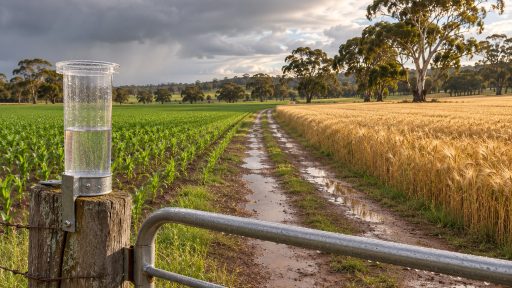
High-risk climate zones face greater exposure to climate-related hazards.
These areas also experience more variable weather patterns over time.
As a result, stakeholders must manage greater long-term uncertainty.
Defining High-Risk Climate Zones
These zones face increased exposure to climate hazards.
Furthermore, they show greater variability in weather patterns.
Additionally, stakeholders recognize greater long-term uncertainty in these areas.
Physical Impacts on Farmland
Soil stability and water availability often change in high-risk zones.
Consequently, land quality may decline or fluctuate unpredictably.
Moreover, extreme events can damage farm infrastructure more frequently.
Market and Financial Effects
Land values can reflect increased climate exposure.
Therefore, financing terms and investor confidence may shift over time.
Additionally, buyers may reassess risk and change transaction dynamics.
Regulatory and Insurance Factors
Regulatory frameworks may evolve to address climate-related land risks.
Moreover, insurance availability and costs can influence land decisions.
Consequently, compliance and coverage concerns shape property management strategies.
Transform Your Agribusiness
Unlock your farm's potential with expert advice tailored to your needs. Get actionable steps that drive real results.
Get StartedPlanning and Adaptation Considerations
Farmers and investors must evaluate site-specific vulnerabilities and resilience.
Furthermore, adaptive land use and infrastructure choices can reduce exposure.
Finally, long-term planning supports more informed real estate decisions.
Identification of Climate Risks
This section identifies droughts, floods, and hurricanes as primary climate risks.
Additionally, it examines how each risk affects agricultural productivity.
These risks can reduce production and increase challenges for agricultural operations.
Droughts
Droughts reduce available soil moisture for crops and pastures.
Consequently, plant growth slows, and yields often decline.
Moreover, droughts increase crop stress and pest susceptibility.
Additionally, droughts constrain water for irrigation and livestock needs.
- Droughts can degrade soil structure and reduce microbial activity.
- Furthermore, drought conditions limit nutrient uptake by plants.
Floods
Floods saturate soils and reduce oxygen availability for roots.
Consequently, floods can cause root decay and crop loss.
Moreover, floods can erode topsoil and remove nutrients.
Flooding can also interrupt agricultural schedules and increase crop management challenges.
- Floodwaters can delay planting and disrupt harvest schedules.
- Additionally, standing water can promote pest and disease outbreaks.
Hurricanes
Hurricanes bring intense winds and heavy rainfall that damage crops.
Furthermore, high winds can physically destroy plants and infrastructure.
Additionally, storm surge can introduce saltwater that stresses soils.
These impacts can create extensive damage across agricultural fields.
- Hurricane impacts often cause widespread field-level destruction.
- Moreover, recovery can require replanting and soil remediation efforts.
Interactions and Cascading Effects
These hazards can interact and create compounded damage patterns.
For example, drought-stressed soils may erode more during subsequent floods.
Moreover, hurricane damage can amplify flooding risks through debris and landscape changes.
Implications for Agricultural Productivity
Each risk reduces predictable yields and increases production variability.
Consequently, farmers may face lower production and higher input needs.
Furthermore, recovery timelines vary and can extend production losses.
Showcase Your Farming Business
Publish your professional farming services profile on our blog for a one-time fee of $200 and reach a dedicated audience of farmers and agribusiness owners.
Publish Your ProfileTherefore, identifying local climate risks helps establish management priorities.
Economic Implications of Owning Farmland in High-Risk Areas
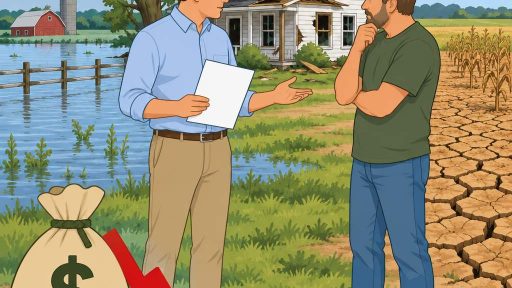
Owning farmland in high-risk areas can alter costs, returns, and long-term financial planning.
These effects influence daily operations, investment decisions, and future resale options.
Therefore, owners must evaluate immediate expenses alongside changing economic pressures.
Insurance Costs and Availability
Insurance costs often increase for farmland exposed to significant climate-related risks.
Consequently, owners face higher annual premiums and less stable coverage terms.
Moreover, insurers may restrict coverage for certain extreme risks.
Therefore, farms may need supplemental or specialized policies for adequate protection.
Additionally, insurers often apply higher deductibles that shift expenses onto owners.
- Higher premiums increase annual operating expenses for owners.
- Limited policy availability can create gaps in financial protection.
- Greater deductibles transfer more risk to landowners.
- Specialized coverage can require additional administrative work.
Property Values and Market Demand
Insurance trends can influence how buyers assess farmland value over time.
Consequently, demand may decline for parcels with persistent risk exposure.
Furthermore, appraisers can account for expected future costs and market perceptions.
As a result, risky parcels may sell for less than comparable lower-risk land.
Moreover, resale prospects can weaken as the pool of interested buyers narrows.
Investment Risks and Financing Challenges
Lenders may evaluate high-exposure farmland more cautiously than lower-risk property.
Therefore, buyers may encounter stricter financing terms or higher borrowing costs.
Some lenders may also require stronger collateral or additional contractual conditions.
Investment risks include immediate expenses and uncertain long-term revenue.
Consequently, expected returns may decline when exposure threatens future productivity.
Additionally, owners may face complicated exit strategies during resale or conversion.
Risk Management and Mitigation Costs
Maintenance and adaptation projects can increase operating expenses for landowners.
For example, owners may fund infrastructure upgrades and protective measures.
However, these projects increase capital requirements and may delay financial returns.
Investor interest can change with regulatory and insurance uncertainty.
Therefore, owners may find fundraising or partnerships harder to secure.
- Adaptation projects increase upfront capital needs for owners.
- Ongoing management costs can reduce net operating income.
- Portfolio diversification can help investors manage concentrated exposure.
Finally, owners must compare short-term gains with long-term climate-related cost trends.
Find Out More: Extreme Weather Patterns and Their Impact on Rural Property Values
Government Support for Farmers in High-Risk Areas
Government programs can help farmers manage hazards while preserving productive agricultural use.
These measures combine financial aid, recovery assistance, and planning requirements.
Together, they connect immediate support with stronger risk management decisions.
Types of Financial Support
Subsidies provide targeted financial assistance to farmers operating on risk-prone land.
Moreover, subsidies often encourage practices that reduce exposure to hazards.
Additionally, programs may offset insurance premium costs for farmers.
Furthermore, grants can fund on-farm infrastructure upgrades and adaptation measures.
- Encourage farmers to adopt risk-reducing practices.
- Support capital investments that improve farm resilience.
- Maintain short-term income stability during stressful periods.
Disaster Assistance and Recovery Programs
Disaster assistance provides rapid funding after damaging events.
Moreover, recovery programs help farmers rebuild infrastructure and resume operations.
Additionally, governments may offer low-interest loans for recovery and adaptation investments.
Furthermore, technical assistance helps farmers plan resilient reconstruction and risk reduction.
- Provide immediate cash flow for resumed operations.
- Facilitate repairs and replace critical equipment.
- Offer planning support for long-term recovery and adaptation.
Land Use Regulations and Risk Management
Land use regulations shape where and how farmers can operate in risky zones.
Moreover, authorities may restrict development to limit hazard exposure.
Showcase Your Farming Business
Publish your professional farming services profile on our blog for a one-time fee of $200 and reach a dedicated audience of farmers and agribusiness owners.
Publish Your ProfileAdditionally, building standards can require construction practices that reduce damage.
Furthermore, planning tools can encourage relocation from the most threatened parcels.
- Restrict new development in areas with persistent hazards.
- Set construction standards that reduce extreme-event damage.
- Use land planning to balance farming with long-term safety.
Eligibility, Application, and Compliance
Farmers typically must meet eligibility criteria before accessing support programs.
Moreover, applications usually require land-status and financial-need documentation.
Additionally, post-award compliance often requires reporting and inspections.
Furthermore, some programs condition payments on specific risk reduction measures.
- Provide documentation that demonstrates program eligibility.
- Meet reporting requirements to retain continued support.
- Follow prescribed mitigation measures when programs require them.
Policy Trade-Offs and Planning Considerations
Policymakers balance short-term relief with long-term resilience goals.
Moreover, support programs can influence farmer decisions through financial incentives.
Additionally, funding choices determine program scope and duration.
Furthermore, coordinated planning across sectors can improve intervention effectiveness.
- Evaluate how programs influence land use decisions over time.
- Consider fairness when allocating limited recovery resources.
- Engage stakeholders to align policies with on-farm realities.
Learn More: The Role of Drought in Shaping Agricultural Real Estate Trends
Adaptive Farming Practices for Climate Resilience
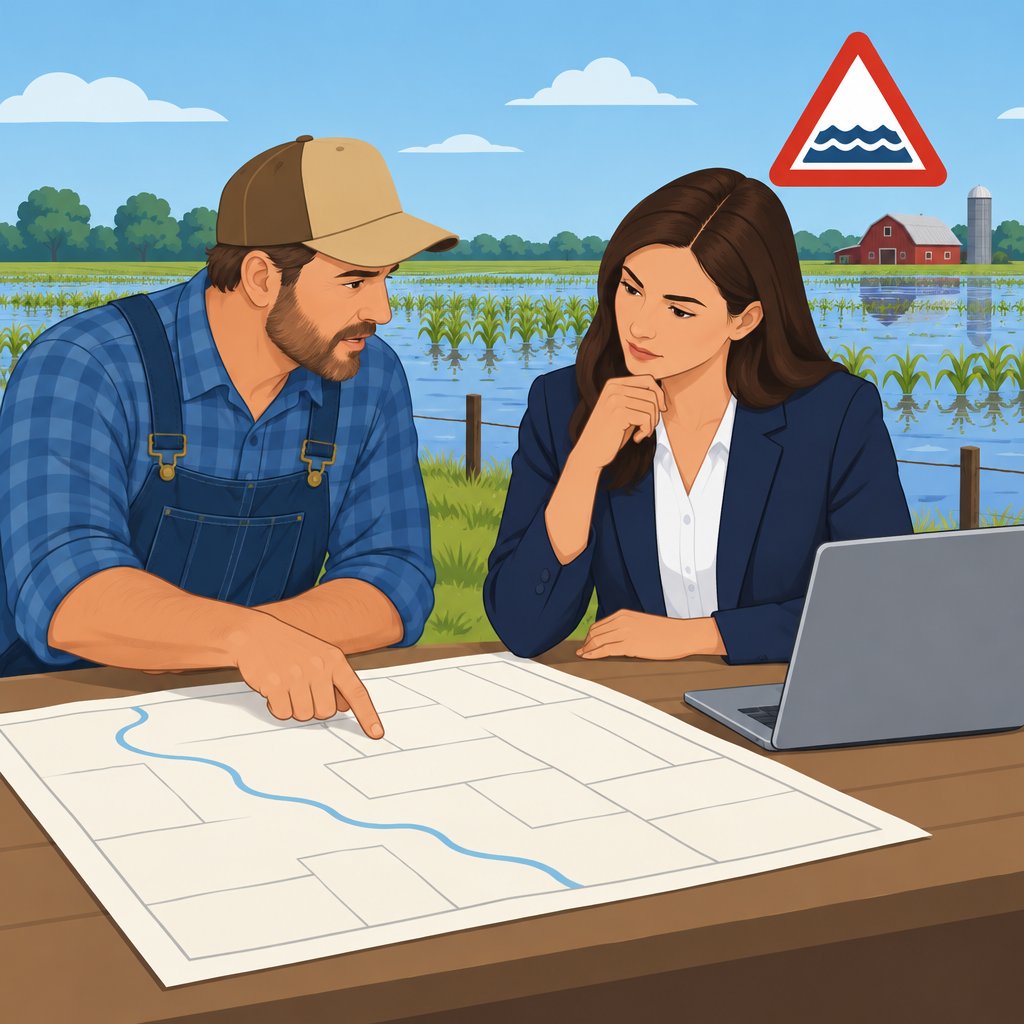
Farmers can strengthen resilience through diversified crops, healthy soil, and careful water management.
These practices support productivity while helping farms respond to changing conditions.
Moreover, regular planning allows farmers to adjust methods as conditions develop.
Crop Diversification
Crop diversification spreads biological risk across multiple crops.
Consequently, farmers can reduce reliance on a single crop.
Furthermore, diversity can improve pest and disease dynamics on the farm.
Spatial and Temporal Strategies
Farmers can distribute crop types across fields and seasons.
Intercropping also places complementary species within the same field.
Meanwhile, cover crops maintain plant cover during fallow periods.
- Rotate different crop types across fields over seasons.
- Intercrop complementary species within the same field.
- Include cover crops during fallow periods to maintain plant cover.
Decision Considerations
Successful diversification depends on available resources and seasonal timing.
Farmers should also consider markets and storage before introducing new crops.
Therefore, careful planning can align new crops with farm capacity.
- Assess crop compatibility with current farm resources.
- Match planting schedules to local seasonal patterns.
- Plan for market and storage capacities before introducing new crops.
Soil Management
Healthy soil supports plant resilience and productivity.
Therefore, management focuses on structure, organic matter, and biodiversity.
These priorities help farmers maintain productive growing conditions.
Practical Techniques
Reduced tillage helps preserve soil structure.
Organic amendments increase soil organic matter.
Additionally, crop rotations can enhance soil biology.
- Adopt reduced tillage to preserve soil structure.
- Integrate organic amendments to increase soil organic matter.
- Promote crop rotations that enhance soil biology.
Monitoring and Adaptation
Regular monitoring shows how soil conditions respond to management.
Farmers can adjust practices according to observed soil responses.
Adaptive thresholds provide guidance when management changes become necessary.
- Monitor soil moisture and texture regularly.
- Adjust practices based on observed soil responses.
- Use adaptive thresholds to guide management changes.
Water Conservation
Water conservation secures irrigation and supports plant needs.
Thus, farmers can improve efficiency by managing water carefully.
Planning also helps farms respond when available water becomes constrained.
Efficiency Strategies
Efficient irrigation should reflect crop water needs.
Surface mulches and ground cover can reduce evaporation.
Rainfall collection can provide stored water when feasible.
- Match irrigation timing to crop water needs.
- Reduce evaporation with surface mulches or ground cover.
- Collect and store rainfall when feasible on the property.
Planning and Management
Water budgets clarify needs across crops and seasons.
Prioritizing critical crops supports decisions during constrained availability.
Showcase Your Farming Business
Publish your professional farming services profile on our blog for a one-time fee of $200 and reach a dedicated audience of farmers and agribusiness owners.
Publish Your ProfileReviewing distribution systems can reduce water losses.
- Develop water budgets for different crops and seasons.
- Prioritize critical crops during constrained water availability.
- Review distribution systems to minimize losses.
Integrating Practices for Resilience
Farmers can combine crop diversity, soil care, and water strategies.
Consequently, integrated approaches can sustain productivity under stress.
Finally, farmers should revisit plans regularly as conditions change.
Delve into the Subject: How Extreme Weather Affects Agricultural Land Value in the USA
Technological Advancements Supporting Climate-Resilient Farming
Technology helps farmers monitor conditions and manage climate-related pressures.
These tools guide timely decisions about resources, field operations, and crop protection.
They also support faster responses when drought, flooding, or other hazards threaten production.
Data and Monitoring Systems
Farmers collect real-time environmental data through sensors and remote monitoring systems.
Additionally, this information guides timing decisions and resource allocation.
Continuous monitoring also helps farmers detect crop stress and hazards early.
Decision Support and Analytics
Analytical platforms convert collected data into practical recommendations for farmers.
Furthermore, predictive models help managers anticipate weather conditions and pest pressures.
Consequently, managers can plan planting and crop protection strategies proactively.
Water Management Technologies
Smart irrigation systems adjust water delivery according to soil and crop needs.
Moreover, sensors reduce waste and encourage efficient water use.
Automated controls enable rapid responses during drought or flood risks.
Protective Growing Technologies
Controlled environments protect crops from extreme weather events.
Furthermore, adaptive coverings and shading moderate temperature and moisture levels.
Meanwhile, improved drainage and diversion designs reduce flood impacts.
Mechanization and Labor Innovations
Automation reduces labor burdens and supports timely field operations.
Furthermore, mechanized solutions maintain consistent planting and harvesting during stressful conditions.
These innovations help managers sustain essential operations when conditions become difficult.
Implementation Considerations
Adoption requires farmers to assess costs, skills, and infrastructure.
Moreover, training and technical support improve long-term technology use.
Additionally, phased deployment can reduce financial and operational risks.
Barriers and Equitable Access
High initial costs and limited connectivity can restrict technology adoption.
Therefore, collaborative programs and tailored financing can broaden access.
These approaches can help more farmers use technologies that support resilience.
Discover More: Impact of Extreme Weather on Farmland Prices in the United States
Successful Farming Adaptations
Property-level adaptations can help farming stakeholders manage changing risks.
These adaptations focus on real estate decisions rather than crop techniques.
Furthermore, stakeholders can connect property planning with operational resilience.
Case Study Framework
This section presents generic case studies focused on property-level adaptations.
Additionally, the cases emphasize real estate solutions rather than crop techniques.
The framework outlines context, stakeholders, adaptation choices, financing, and legal arrangements.
It also highlights measurable indicators and monitoring approaches.
Coastal Property Adaptation
Coastal property owners adjusted real estate features to reduce exposure to rising water.
They also improved access routes and emergency egress for safer operations.
Meanwhile, flexible agreements helped owners manage changing property risks.
Showcase Your Farming Business
Publish your professional farming services profile on our blog for a one-time fee of $200 and reach a dedicated audience of farmers and agribusiness owners.
Publish Your ProfileProperty Design and Physical Measures
Owners adjusted built elements to reduce exposure to rising water.
Moreover, they improved access routes for safer property operations.
They also strengthened emergency egress to support safer responses.
Legal and Financial Tools
Owners used flexible lease terms to manage changing risk profiles.
They also included contingency sale clauses within property arrangements.
Furthermore, financing arrangements connected investment to adaptive milestones.
Inland Floodplain Adaptation
Inland floodplain managers reconfigured property uses across vulnerable acreage.
They prioritized resilient uses where exposure created greater uncertainty.
Consequently, property decisions supported lower-risk and lower-intensity land uses.
Land Use Reconfiguration
Managers reconfigured land parcels to prioritize resilient uses on vulnerable acreage.
They shifted marginal plots toward lower-risk and lower-intensity uses.
This approach aligned land allocation with changing property risks.
Insurance and Property Valuation Strategies
Stakeholders renegotiated insurance responsibilities within tenancy and contract language.
Additionally, they documented property adjustments to support future valuation.
That documentation also supported lending discussions involving adapted properties.
Lease and Ownership Innovations
Some arrangements shifted exposure through cooperative ownership structures.
Partners also used pooled financing to support shared property investments.
Therefore, participants shared upfront costs and maintenance responsibilities more equitably.
Key Real Estate Adaptations Observed
Several property strategies appeared across the described adaptations.
These strategies addressed leases, infrastructure, conservation, and ownership.
Meanwhile, stakeholders connected financial responsibilities with changing risk profiles.
- Flexible lease terms allowed accommodation of changing risk profiles.
- Contingency sale clauses clarified options when risk thresholds were reached.
- Staged infrastructure investments limited exposure and matched funding to need.
- Conservation easements and buffer zones preserved natural defenses around productive areas.
- Cooperative ownership models spread financial risk across multiple stakeholders.
Community and Cooperative Approaches
Communities coordinated land use planning for shared property needs.
They also pooled resources for shared infrastructure.
Thus, cooperation reduced per-owner costs and improved regional adaptive capacity.
Lessons and Transferable Strategies
Case studies emphasize integrating real estate planning into operational adaptation strategies.
Moreover, transparent documentation helps transfer risk-aware property practices during transactions.
Finally, early stakeholder engagement accelerated decisions and strengthened support for changes.
Future Trends and Real Estate Development in Sustainable Farming
Sustainable farming development will increasingly connect resilience, land use, and adaptable partnerships.
Developers and farmers will coordinate property decisions with long term environmental stability.
These priorities will shape design, financing, and market expectations.
Emerging Development Approaches
Developers will emphasize resilience during site planning and project design.
Furthermore, they will align land use with long term environmental stability.
Additionally, developers will pursue flexible tenure models to support changing needs.
Moreover, collaborative arrangements will connect landowners with production partners.
Design and Infrastructure Strategies
Designers will favor elevated placement and integrated natural drainage.
Furthermore, modular buildings will allow adaptable space use over time.
These strategies will help developers coordinate buildings, water, and shared site functions.
- Green corridors will preserve natural buffers and movement spaces.
- Permeable surfaces will support onsite water management and ground recharge.
- Shared infrastructure will lower costs and improve maintenance efficiency.
Land Use and Planning Models
Planners will promote clustered agricultural parcels for coordinated management.
Meanwhile, land stewardship agreements will encourage long term landscape health.
Furthermore, zoning will increasingly reflect multifunctional rural land use.
Showcase Your Farming Business
Publish your professional farming services profile on our blog for a one-time fee of $200 and reach a dedicated audience of farmers and agribusiness owners.
Publish Your ProfileFinancing and Partnership Innovations
Investors will value projects that demonstrate tangible resilience measures.
Consequently, blended finance structures will support larger sustainable developments.
Moreover, developer farmer partnerships will balance operational control and capital needs.
Additionally, adaptive lease terms will distribute climate related risks more equitably.
Market Signals and Demand Drivers
Markets will reward properties that combine productivity with physical resilience.
Furthermore, buyer preferences will favor proven durability and flexible land use.
Meanwhile, listing practices will increasingly highlight resilience features and design elements.
Actionable Steps for Developers and Farmers
First, assess site level vulnerabilities and development opportunities together.
Then, develop phased plans that allow iterative improvements over time.
Next, structure partnerships that align incentives for long term stewardship.
Finally, monitor performance and adjust designs as conditions and needs evolve.