




Introduction to Extreme Weather Patterns
Extreme weather patterns describe unusual and severe atmospheric events.
These events differ significantly from historical climate conditions.
They can involve extreme temperatures, powerful storms, or unusually heavy precipitation.
Additionally, they often begin suddenly and cause significant disruption.
Definition of Extreme Weather Patterns
Extreme weather patterns occur when atmospheric conditions become unusually severe.
These conditions can differ greatly from established regional weather norms.
As a result, affected communities may face immediate risks and lasting disruption.
Common Types of Extreme Weather
Heatwaves bring prolonged periods of excessively high temperatures.
Conversely, cold snaps cause sudden and intense temperature drops.
Hurricanes and cyclones produce powerful winds and heavy rainfall.
Meanwhile, thunderstorms can generate hail, lightning, and strong gusts.
Floods develop when excessive rain or storm surges overwhelm the land.
Droughts occur when rainfall remains significantly below average levels.
Examples of Recent Extreme Weather Events
In 2023, intense flooding affected the Midwest United States.
Similarly, a record-breaking heatwave struck southern France last summer.
Transform Your Agribusiness
Unlock your farm's potential with expert advice tailored to your needs. Get actionable steps that drive real results.
Get StartedTyphoon Maemi caused major damage in South Korea several years ago.
At the same time, widespread wildfires affected Australia during dry, hot conditions.
Implications of Increasing Extreme Weather
Scientists report that climate change increases the frequency of extreme weather events.
Consequently, rural areas often experience greater vulnerability and disruption.
Local communities must adapt to protect lives, property, and agriculture.
Moreover, weather pattern knowledge helps communities predict and reduce damage.
Understanding Climate Change
Climate change results from increasing greenhouse gas emissions in the atmosphere.
These emissions trap heat and gradually warm Earth’s surface.
Consequently, shifting global temperatures affect weather patterns worldwide.
Scientific studies link rising temperatures with stronger storms and heatwaves.
Moreover, climate change influences ocean currents that affect weather systems.
These conditions can favor more extreme and unpredictable weather events.
The Role of Natural Variability
Natural variability describes climate fluctuations that do not result from human activity.
These changes develop over months, years, or decades through natural processes.
For example, El Nino and La Nina alter rainfall and temperature patterns.
Additionally, volcanic eruptions and solar radiation cycles contribute to natural climate shifts.
Therefore, natural factors can combine to produce extreme weather.
However, current weather extremes exceed the normal range of natural variability.
Interactions Between Climate Change and Natural Factors
Climate change can amplify natural variability’s effects on weather events.
For instance, warmer oceans may intensify hurricanes during El Nino years.
Similarly, natural dry spells can combine with climate-driven heatwaves to worsen droughts.
This interaction can increase the frequency and severity of extreme weather events.
Scientists analyze both influences to improve weather prediction and risk assessment.
Implications for Rural Communities
Rural areas often face greater exposure to extreme weather impacts.
Showcase Your Farming Business
Publish your professional farming services profile on our blog for a one-time fee of $200 and reach a dedicated audience of farmers and agribusiness owners.
Publish Your ProfileFloods and storms may threaten farmland and infrastructure in these communities.
Meanwhile, farmers and property owners need scientific information for better planning.
Local experts, including climatologist Emma Rhodes, emphasize climate data in decision-making.
Understanding both influences helps rural communities reduce future risks.
Key Factors Driving Extreme Weather Patterns
Several connected factors influence extreme weather patterns and their potential severity.
These factors include human-driven warming and naturally changing atmospheric conditions.
Together, they shape storms, droughts, heatwaves, and other severe events.
- Greenhouse gas emissions increase global temperatures
- Atmospheric circulation patterns continue to change
- Warming ocean surfaces can intensify storms
- Solar radiation and volcanic activity create natural variability
- Natural phenomena can interact with human influences
Efforts to Monitor and Study Weather Phenomena
Agencies such as the National Climate Center continuously monitor weather trends.
They use satellites, ocean buoys, and ground sensors to collect climate data.
Researchers such as Dr. Alan Kemp develop models for predicting extreme weather events.
These tools help researchers evaluate how future weather patterns might evolve.
Furthermore, collaborative projects strengthen forecasting capabilities worldwide.
Historical Trends of Extreme Weather Events
Historical records show changes in the frequency and intensity of extreme weather events.
Meteorological agencies track these developments with advanced monitoring technology.
Weather station data also reveals important shifts across regions and decades.
Changes in Frequency and Intensity
Storms, heatwaves, droughts, and floods have become more severe in many rural areas.
For example, the Midwest experienced more frequent and intense tornadoes during the 1990s and 2000s.
Meanwhile, the Southwest has endured prolonged drought periods that challenge local communities.
These developments substantially affect rural livelihoods and surrounding ecosystems.
Regional Variations in Weather Patterns
Local geography and climate create distinct weather trends across different regions.
For instance, the Southeast United States has faced increased hurricane activity in recent years.
By contrast, parts of the Northern Plains have recorded rising temperatures and earlier springs.
In California, the Central Valley experiences recurring wildfires linked to extreme heat and dryness.
These shifting conditions produce varied effects on rural land and agriculture.
Therefore, farmers must adapt their strategies to reduce risks and maintain productivity.
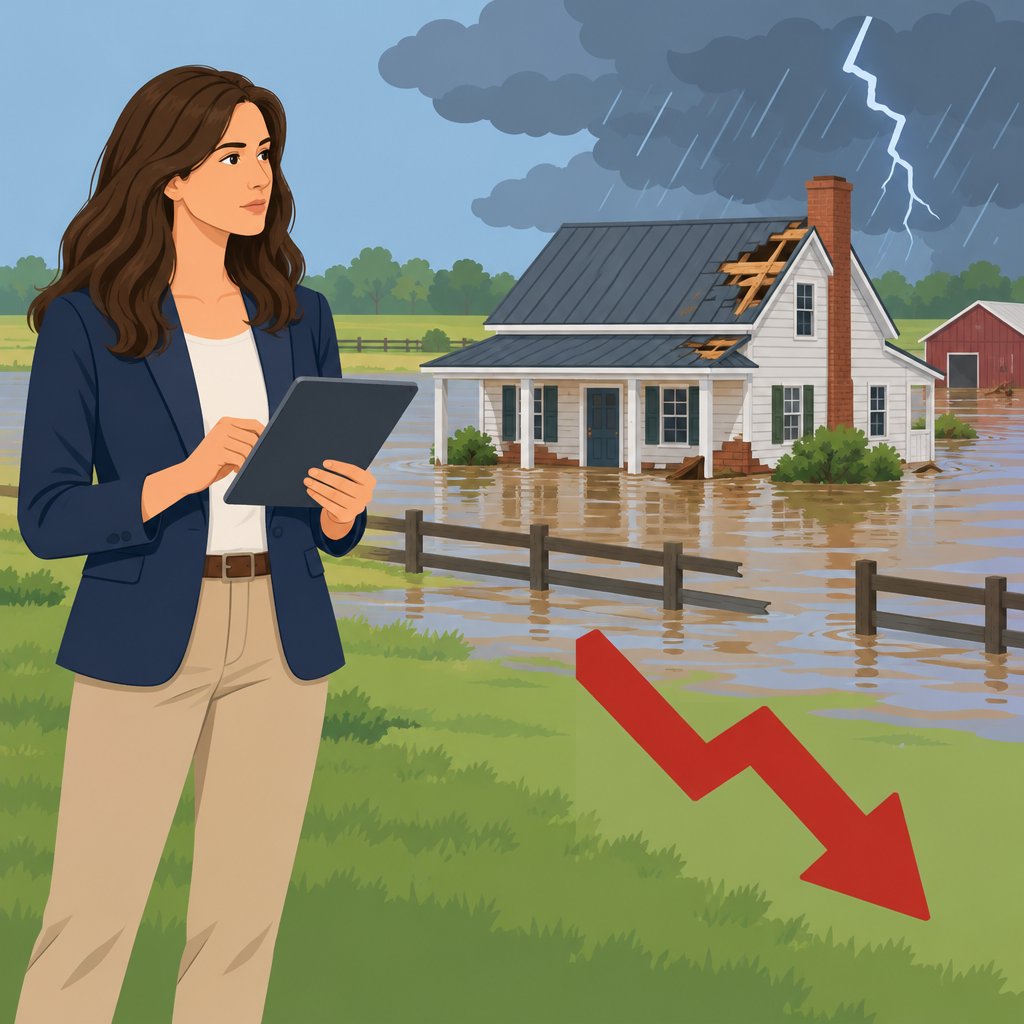
Technological Advances in Data Collection
Recent satellite improvements have increased the accuracy and timeliness of weather data.
Climate modelers such as Dr. Evelyn Sanchez use these tools to analyze long-term patterns.
Additionally, machine learning algorithms help predict extreme events more precisely.
These innovations help policymakers create stronger intervention and preparedness plans.
Furthermore, comprehensive databases help landowners understand property vulnerabilities.
Notable Historical Weather Events Impacting Rural Areas
The 1988 Midwest drought caused extensive crop failures and financial losses for farmers.
Years later, Hurricane Helena devastated coastal rural communities in Georgia during 2004.
The Dust Bowl of the 1930s remains a stark example of prolonged environmental stress.
These events disrupted rural economies and affected property values.
More recently, Mississippi River flooding displaced thousands of residents from their farms.
Such incidents demonstrate why historical knowledge supports preparation for future risks.
Data Trends Across the Decades
Analysis indicates an upward trajectory in extreme weather incidents since the 1970s.
Average annual temperatures have also risen, influencing event severity and duration.
Climatologists report that some rural regions now face previously rare or unseen hazards.
Consequently, greater unpredictability complicates land management and insurance assessment.
Showcase Your Farming Business
Publish your professional farming services profile on our blog for a one-time fee of $200 and reach a dedicated audience of farmers and agribusiness owners.
Publish Your ProfileProperty owners therefore need reliable information about changing local risks.
Strong collaboration between scientists and rural stakeholders can guide adaptive planning.
Uncover the Details: The Role of Drought in Shaping Agricultural Real Estate Trends
Impact of Droughts on Agricultural Productivity and Rural Property Values
Drought reduces crop yields, strains livestock, and weakens rural economies.
These pressures can reduce farm income and rural property demand.
Farmers and communities can use targeted strategies to protect agricultural productivity.
Effects of Drought on Crop Yields
Drought significantly reduces water availability for crops.
Consequently, farmers face lower crop yields during dry spells.
For example, a prolonged Midwest drought diminished corn and soybean output.
Reduced yields cause agricultural producers to lose income.
Moreover, soil quality often deteriorates without adequate moisture.
This decline harms future planting potential and farm sustainability.
Livestock and Drought Stress
Drought also affects livestock by limiting available pasture.
Farmers struggle to feed animals as forage quality declines.
Water scarcity further stresses cattle, sheep, and other livestock.
These challenges increase operating costs for rural farming businesses.
Economic Consequences for Rural Communities
Lower agricultural productivity reduces overall local economic activity.
Businesses supporting farms, including equipment suppliers, experience decreased sales.
In addition, rural employment opportunities may decline as farms cut back.
Residents often face financial insecurity and increased out-migration.
Impact on Rural Property Values
Diminished agricultural output lowers rural land demand.
Consequently, property values commonly decrease in drought-affected areas.
Investors and buyers hesitate to purchase land with uncertain productivity.
Smaller farms suffer especially when drought limits their profitability.
However, land with diversified water resources may retain better value.
Strategies to Mitigate Drought Impacts
Farmers like Lucas Montgomery adopt drought-resistant crop varieties.
They also invest in efficient irrigation systems to conserve water.
Some rural communities create water-management plans to safeguard resources.
Government programs provide financial assistance during severe drought periods.
These actions help stabilize agricultural productivity and property values over time.
Find Out More: How Extreme Weather Affects Agricultural Land Value in the USA
Flooding and Its Direct Consequences on Rural Infrastructure and Real Estate
Flooding directly damages rural infrastructure, agricultural assets, and property markets.
These effects disrupt daily services while increasing costs for residents, farmers, and local authorities.
Additionally, repeated inundation can weaken rural investment and complicate community recovery.
Extent of Flood Damage on Rural Infrastructure
Flooding often causes widespread damage to rural roads and bridges.
Consequently, these disruptions limit access for residents and emergency services.
Transportation difficulties also increase repair costs for local authorities.
Moreover, floodwaters damage water supply systems and septic tanks.
These failures raise public health concerns and require urgent remediation.
Meanwhile, electricity and communication lines frequently suffer flood-related outages in rural areas.
Showcase Your Farming Business
Publish your professional farming services profile on our blog for a one-time fee of $200 and reach a dedicated audience of farmers and agribusiness owners.
Publish Your ProfileTherefore, affected communities face isolation and difficulty coordinating recovery efforts.
Impact on Agricultural Facilities and Equipment
Farm buildings, including barns and storage units, sustain severe water damage during floods.
Additionally, floodwaters can destroy outdoor farm equipment or require expensive repairs.
Such losses reduce farming productivity and profitability.
Furthermore, floodwaters erode soil and degrade agricultural land quality.
This erosion can reduce crop yields across multiple growing seasons.
Consequences for Rural Real Estate Values
Flood-prone properties become less desirable to potential buyers and investors.
As a result, repeated flooding can significantly reduce property values.
Furthermore, insurers often increase premiums for flood-affected homes and land.
This financial burden deters new occupants and lowers market demand.
Meanwhile, local firms such as Meadowbrook Realty report slower transactions in flood-hit zones.
Consequently, rural communities experience lower tax revenues and slower economic growth.
Mitigation Strategies to Protect Rural Assets
Installing levees and flood barriers can reduce damage in vulnerable areas.
Increasingly, farmers use raised storage units to protect equipment from water exposure.
At the community level, leaders promote improved drainage systems to manage excess water.
Local contractors such as Greenwood Engineering specialize in flood-resistant rural infrastructure.
Ultimately, these efforts help restore confidence in rural land investments.
Find Out More: Impact of Extreme Weather on Farmland Prices in the United States
The Role of Severe Storms: Tornadoes, Hurricanes, and Their Economic Impacts
Severe storms can reshape rural property markets through physical damage and financial pressure.
They also influence insurance costs, construction requirements, agricultural activity, and population movement.
Therefore, tornadoes and hurricanes create lasting economic challenges for rural communities.
Influence of Tornadoes on Rural Property Values
Tornadoes frequently strike rural areas across the Midwest and South.
These storms can damage homes, barns, roads, utilities, and other infrastructure.
Consequently, property owners often face significant repair and rebuilding costs.
Insurance companies like Prairie Shield Mutual frequently raise premiums after tornado damage.
As a result, higher insurance costs often discourage potential buyers.
Therefore, rural property values may decline following major tornado outbreaks.
Moreover, residents may relocate, which further reduces demand for local real estate.
Meanwhile, local governments such as Kinsley County’s zoning board may enact stricter building codes.
These regulations can increase construction expenses and affect property affordability.
Thus, tornado frequency and intensity remain critical factors in rural real estate markets.
Economic Effects of Hurricanes on Coastal Rural Communities
Hurricanes primarily affect rural properties along the Gulf Coast and Atlantic seaboard.
Severe winds and flooding can damage homes, farmland, and road networks.
For example, farmers like Miguel Herrera report lost crops after hurricane flooding.
Consequently, destruction reduces agricultural productivity and weakens local economies.
After hurricanes, insurance claims surge and companies reassess their risk models.
Companies such as CoastalGuard Insurance may respond by raising premiums and deductibles.
These higher costs create financial barriers for rural landowners.
Additionally, some buyers avoid hurricane-prone areas because they perceive greater risks.
This hesitation decreases demand and can drive property values downward.
Showcase Your Farming Business
Publish your professional farming services profile on our blog for a one-time fee of $200 and reach a dedicated audience of farmers and agribusiness owners.
Publish Your ProfileFurthermore, state agencies such as the Mississippi Rural Development Office may fund rebuilding.
Despite aid, recovery can move slowly, allowing economic impacts to persist for years.
Common Economic Impacts of Severe Storms on Rural Properties
Severe storms affect rural properties through several connected economic pressures.
Owners, buyers, farmers, and local governments may all face increased financial burdens.
These pressures can influence property demand and broader rural economic health.
- Storm damage to structural assets can decrease immediate property values.
- Increased insurance costs affect current owners and prospective buyers.
- Reduced agricultural output can harm broader rural economic health.
- Population shifts away from high-risk areas can lower housing demand.
- Higher regulatory costs can increase property improvement and maintenance expenses.
Adaptive Strategies and Market Responses
Some property owners invest in storm-resistant construction to reduce potential damage.
For instance, developers like Horizon Land Management promote resilient designs in tornado zones.
Additionally, local banks offer specialized loans for property improvements.
These efforts can stabilize or increase rural property values over time.
Consequently, adaptive measures play a vital role in economic resilience.
Delve into the Subject: How Smart Irrigation Technology Supports Sustainable Land Development
Insurance and Financial Considerations for Rural Property Owners in Extreme Weather Areas
Rural property owners must review insurance and financial plans regularly.
Extreme weather can increase the risk of property damage and financial loss.
Therefore, owners need adequate coverage and practical financial safeguards.
Evaluating Insurance Needs
Rural property owners should assess their insurance coverage regularly.
Extreme weather events can increase property damage and loss risks.
Consequently, adequate coverage remains essential for protecting investments.
Flood, wildfire, and windstorm protection may require separate policies.
Insurance agents such as Clearwater Mutual offer policies tailored to rural properties.
Owners should compare quotes before selecting comprehensive protection at competitive rates.
Furthermore, understanding exclusions helps owners avoid unexpected expenses.
Financial Planning and Risk Management
Proactive financial planning can reduce the effects of extreme weather events.
Rural landowners should establish emergency funds for disaster recovery.
Moreover, diverse income sources can reduce financial vulnerability.
For example, land leases or renewable energy investments can provide steady revenue.
Financial advisors such as Harper & Wells can strengthen risk assessments.
They help owners create customized plans for unpredictable weather risks.
Additionally, government disaster relief programs can provide crucial support.
Impact on Property Values and Financing
Extreme weather events can significantly affect rural property values.
Potential buyers may hesitate because they anticipate future damage risks.
As a result, properties in high-risk zones may sell below market value.
Lenders may also impose stricter financing conditions on these properties.
For instance, banks such as Pioneer Bank may require higher down payments or premiums.
Owners should maintain detailed property records that document resilience measures.
This documentation can reassure lenders and prospective buyers about risk management efforts.
Strategies to Reduce Insurance Costs
Mitigation measures can lower insurance premiums effectively.
Storm-resistant windows and reinforced roofs can protect structures.
Likewise, defensible space around homes can reduce wildfire risks.
Insurance providers such as Evergreen Insurance may recognize these efforts with discounts.
Water diversion systems can also help prevent flood damage.
Showcase Your Farming Business
Publish your professional farming services profile on our blog for a one-time fee of $200 and reach a dedicated audience of farmers and agribusiness owners.
Publish Your ProfileRegular risk assessments ensure that coverage reflects current protective measures.
Ultimately, prevention and insurance can help rural owners manage costs.
Strategies for Mitigating Risks: Preparing Rural Properties for Extreme Weather Events
Rural property owners must identify their land’s specific vulnerabilities.
They should carefully evaluate soil erosion risks and flood-prone areas.
Additionally, local weather patterns can help owners anticipate future threats.
Consulting meteorologists and agricultural extension agents can provide valuable guidance.
Moreover, property topography helps owners locate potential hazards.
Structural Adaptations for Rural Properties
Strengthened buildings can reduce damage during storms and high winds.
For example, owners can reinforce roofs with hurricane straps or metal fasteners.
Storm shutters protect windows from flying debris.
Proper drainage systems prevent water accumulation and flooding hazards.
Furthermore, wind-permeable fences reduce structural stress during strong gusts.
Natural Defenses Against Weather Hazards
Native trees can create windbreaks that buffer extreme winds.
Wetland restoration beside farmland can improve water absorption.
Cover crops help limit soil erosion during heavy rainfall.
Maintained vegetation protects slopes from mudslides and runoff damage.
Meanwhile, forest management can reduce wildfire risks near rural homes.
Emergency Preparedness for Rural Communities
Clear evacuation routes can improve safety during emergencies.
Property owners should maintain supplies such as water and first aid kits.
In addition, communication protocols can keep families connected during isolation.
Regular drills help households update their plans and strengthen readiness.
Engaging neighbors in community plans can strengthen collective resilience.
Technology and Insurance Solutions for Risk Management
Remote sensors can provide early warnings about rising floodwaters and fires.
Drones can help owners inspect large properties after storms.
Comprehensive insurance can cover damage from multiple extreme events.
Consulting insurer representatives helps owners tailor coverage to specific risks.
Finally, weather apps keep owners informed about upcoming threats.
Future Outlook for Rural Property Values Amidst Climate Change
Climate adaptation will increasingly shape rural property values and investment decisions.
Technology, policy support, and community cooperation can strengthen rural resilience.
These factors may help stabilize property values despite continuing climate challenges.
Adapting to Changing Climate Conditions
Rural communities must strengthen their resilience against extreme weather events.
Meanwhile, local governments adopt policies that protect vulnerable areas.
Farmers and landowners increasingly use sustainable land management practices.
Additionally, innovative water management supports more efficient resource use.
Drought-resistant crops also help agricultural operations manage changing conditions.
These adaptations can stabilize property values despite climatic challenges.
Technology and Innovation in Rural Property Markets
Advanced weather forecasting improves preparation for severe storms.
Smart irrigation systems help farmland owners use water efficiently.
Furthermore, renewable energy installations attract investment to rural properties.
Technological advances can reduce risks associated with extreme weather.
Showcase Your Farming Business
Publish your professional farming services profile on our blog for a one-time fee of $200 and reach a dedicated audience of farmers and agribusiness owners.
Publish Your ProfileAs a result, buyers increasingly value properties with climate-smart features.
Market Dynamics and Investment Trends
Climate risks influence rural real estate prices and buyer demand.
Repeated flooding or wildfire threats can cause property values to decline.
Conversely, areas with lower climate vulnerability may attract greater interest.
Environmental certifications and risk assessments now support informed transactions.
Professional appraisers increasingly include climate data in valuation models.
Government Support and Policy Incentives
Governments provide grants and subsidies for climate-resilient infrastructure.
Tax incentives encourage landowners to adopt green technologies.
Emergency relief funds provide essential support after weather-related disasters.
These measures can help maintain property values and community stability.
Continued policy development remains vital for addressing climate challenges.
Community Engagement and Climate Education
Educational programs increase awareness of climate impacts on land value.
Community groups collaborate to develop collective resilience strategies.
Moreover, local networks share practical knowledge about adaptation.
Active engagement strengthens social support systems throughout rural areas.
These efforts can improve long-term outlooks for rural property values.


