




Introduction to Extreme Weather Events and Their Increasing Frequency
Extreme weather events include several hazards that affect environmental and social conditions.
Their sudden impacts can disrupt communities, landscapes, agricultural activities, and rural economies.
Therefore, understanding changing weather patterns helps clarify risks to farmland and rural economies.
Defining Extreme Weather Events
Extreme weather events include hurricanes, droughts, floods, and heatwaves.
These events cause sudden and severe impacts on the environment and society.
Moreover, they disrupt agricultural activities and rural economies.
Recent Trends in Weather Patterns
Scientists have observed a rising frequency of extreme weather events in recent decades.
For example, meteorologist Lisa Hargrave notes changes in storm intensity across the Midwest.
Additionally, data from the National Climate Center confirms more prolonged droughts.
Factors Contributing to Increasing Frequency
Climate change plays a significant role in intensifying extreme weather patterns.
Rising global temperatures alter atmospheric conditions and produce unpredictable events.
Furthermore, deforestation and emissions accelerate these changes.
Impact on Farmland and Agricultural Regions
Extreme weather events directly affect crop yields and soil quality.
For instance, farmer Miguel Sanchez experienced losses after unusual flooding in Iowa.
Consequently, farmland values fluctuate as risks grow across many regions.
Transform Your Agribusiness
Unlock your farm's potential with expert advice tailored to your needs. Get actionable steps that drive real results.
Get StartedExtreme Weather Types Affecting U.S. Farmland
Several extreme weather types create distinct challenges for U.S. farmland.
These hazards can reduce agricultural productivity and damage essential farm resources.
Therefore, farmers must consider drought, flooding, heat, and storms when assessing farmland risks.
- Severe droughts reduce water availability for irrigation.
- Flooding damages crops and farm infrastructure.
- Heatwaves stress plants and livestock.
- Storms cause physical destruction and soil erosion.
Historical Overview of Farmland Prices in the U.S.
Farmland prices in the United States have reflected economic and environmental changes.
During the mid-20th century, land values grew steadily because agricultural expansion increased demand.
Moreover, technological advancements increased yields and strengthened interest in farmland.
Early Trends in Farmland Values
Farmers like Michael Crawford in Iowa capitalized on these positive trends.
However, regional differences influenced the pace of farmland price changes.
For instance, land in California’s Central Valley often commanded higher prices than land elsewhere.
Additionally, agricultural expansion encouraged owners to view farmland as a valuable long-term asset.
Meanwhile, improvements in production supported stronger demand across several farming regions.
Consequently, local conditions shaped how quickly farmland values increased.
Impact of Economic Cycles on Land Prices
Economic recessions have periodically caused farmland prices to decline.
During the 1980s farm crisis, many landowners faced severe financial stress.
In fact, land prices dropped by nearly 30 percent in certain Midwestern states.
Conversely, economic growth encouraged investors to increase their farmland holdings.
Investors such as Greenfield Agricultural Ventures expanded their portfolios during these periods.
As markets moved through these cycles, farmland prices displayed notable volatility.
Role of Government Policies in Shaping Values
Federal and state policies significantly influenced farmland prices over time.
Subsidies and conservation programs affected supply and demand dynamics.
For example, the Conservation Reserve Program encouraged land retirement and reduced market availability.
Farmers like Linda Garcia in Nebraska adjusted their land management strategies accordingly.
Additionally, taxation laws influenced land ownership trends.
Consequently, policy shifts often triggered adjustments in farmland valuation.
Showcase Your Farming Business
Publish your professional farming services profile on our blog for a one-time fee of $200 and reach a dedicated audience of farmers and agribusiness owners.
Publish Your ProfileEnvironmental Factors Before Recent Extreme Weather Events
Historically, droughts and floods periodically affected farmland productivity.
These weather patterns influenced buyer confidence and land values.
Farm managers such as James Patterson monitored environmental risks closely.
Moreover, soil quality and water availability remained critical price determinants.
Regions with stable weather generally maintained higher and steadier land prices.
Nonetheless, extreme weather events remained relatively isolated before recent decades.
Correlation Between Extreme Weather Patterns and Crop Yields
Extreme weather patterns threaten consistent agricultural output.
Farmers and agronomists must adapt to reduce yield fluctuations.
Understanding weather-yield links also guides better farmland valuation decisions.
Influence of Drought on Crop Production
Drought conditions significantly reduce soil moisture essential for crops.
For example, Andrew McClain in Kansas reports lower yields during dry spells.
Moreover, prolonged drought stresses plants, causing stunted growth and poor harvests.
Water scarcity directly limits photosynthesis and reduces crop vitality.
Consequently, corn and soybean production often declines during drought years.
Effects of Flooding on Agricultural Lands
Heavy rainfall and flooding damage root systems and wash away topsoil.
Meanwhile, Lisa Chen in Iowa notes that flooded fields delay planting schedules.
Floodwaters also leach nutrients and deprive crops of essential minerals.
Additionally, standing water fosters plant diseases and pests.
As a result, floods typically reduce yield quality and quantity.
Impact of Temperature Extremes on Growth Cycles
Both heatwaves and unexpected frosts disrupt normal crop development.
Heat stress can accelerate maturation and reduce grain fill and weight.
Conversely, late spring frosts damage vulnerable seedlings and flowers.
Furthermore, Dr. Maria Gutierrez of AgriTech Solutions emphasizes this volatility.
These temperature extremes make farm planning unpredictable.
Role of Severe Storms and Hail Damage
Storms often break stems and bruise fruits.
Hail can shred leaves and weaken plant defenses, increasing infection risks.
Similarly, Steve Langford of Langford Farms reports greater losses after such events.
These crop losses add financial pressure on farming operations.
Consequently, insurance claims have risen in regions prone to storms.
Strategies for More Stable Crop Production
Extreme weather patterns collectively threaten consistent agricultural output.
Therefore, farmers and agronomists must develop strategies that limit yield fluctuations.
Transitioning to resilient crop varieties helps farms manage climate variability.
Moreover, improved irrigation and drainage systems support more stable production.
Ultimately, these weather-yield connections inform better farmland valuation decisions.
Learn More: How Smart Irrigation Technology Supports Sustainable Land Development
Economic Impacts of Weather-Related Disruptions on Agricultural Output
Weather disruptions reduce agricultural output and create financial pressure for producers.
They also increase operating expenses, market uncertainty, insurance costs, and investment risks.
Farmers use adaptive strategies to protect productivity and strengthen financial stability.
Reduced Crop Yields and Revenue Loss
Extreme weather events significantly reduce crop yields across many U.S. farming regions.
For example, tornadoes and hailstorms damage crops quickly and create immediate losses.
Showcase Your Farming Business
Publish your professional farming services profile on our blog for a one-time fee of $200 and reach a dedicated audience of farmers and agribusiness owners.
Publish Your ProfileConsequently, farmers such as Emily Torres of Heartland Farms face reduced revenue.
Moreover, prolonged droughts decrease soil moisture, stress plants, and lower productivity.
Therefore, agricultural producers endure financial hardship when harvests shrink.
Increased Production Costs
Adverse weather increases production costs by forcing farmers to implement protective measures.
For instance, Jacob Harmon invests in irrigation systems at Green Valley Orchards.
Additionally, flooding forces farmers to repair land and replant crops.
As a result, operational budgets stretch thin and squeeze profit margins.
Farmers also need additional labor and equipment repairs, which escalate short-term costs.
Market Price Volatility and Investor Uncertainty
Weather-induced output fluctuations cause volatility in agricultural commodity prices.
For example, a sudden decrease in corn yields quickly affects nationwide market prices.
Meanwhile, traders and investors at MidAmerica Grain Brokers face increased risks.
This uncertainty discourages long-term farmland investment and affects market stability.
Furthermore, fluctuating profits make farmland values more unpredictable.
Impact on Farmland Values and Investments
Recurring extreme weather events lower farmland prices by increasing risks for buyers.
For example, Prairie Land Capital re-evaluates portfolios to reduce exposure to risky areas.
Consequently, flood-prone and drought-prone regions experience decreased demand for land purchases.
Conversely, farmland in areas with stable climates may receive price premiums.
This geographic shift in land value influences long-term agricultural development patterns.
Insurance Costs and Financial Stability
Farmers face rising insurance premiums because weather damage generates more claims.
Maria Alvarez of AgriShield Insurance reports growing coverage costs each year.
Higher premiums reduce producers’ net income and strain operational budgets.
Additionally, some smaller farms cannot afford adequate insurance coverage.
These conditions increase financial vulnerability and affect lending practices.
Adaptive Strategies to Mitigate Economic Impacts
Many farmers adopt adaptive measures to minimize financial losses from weather disruptions.
These measures include crop diversification, soil conservation, and precision agriculture technologies.
For example, Harvest Innovations supplies tools that enhance resilience to extreme weather.
Furthermore, government programs offer subsidies and support for risk management practices.
These strategies help agricultural stakeholders sustain productivity despite climatic challenges.
You Might Also Like: Sustainable Irrigation Methods for Preserving Agricultural Land Value
The Midwest: Severe Flooding Impacts
The Midwest has faced repeated severe flooding in recent years.
Major rivers such as the Missouri and Mississippi have overflowed regularly.
These floods damage crops and significantly delay planting seasons.
Consequently, farmland prices near flood-prone areas have declined noticeably.
Farmers like Emily Torres from Iowa report difficulties securing insurance.
Additionally, local agribusinesses such as Heartland Grain Traders face financial stress.
However, some landowners invest in improved drainage systems to reduce risks.
Flooding erodes farmland value and threatens business stability throughout the Midwest.
The Southwest: Prolonged Drought Effects
The Southwest region endures frequent and prolonged drought conditions.
States like Arizona and New Mexico experience rising temperatures and reduced rainfall.
Drought restricts water availability, limiting crop yields and grazing land quality.
Showcase Your Farming Business
Publish your professional farming services profile on our blog for a one-time fee of $200 and reach a dedicated audience of farmers and agribusiness owners.
Publish Your ProfileTherefore, farmland prices in these arid zones often stagnate or fall.
Ranchers such as Miguel Serrano highlight challenges in maintaining cattle herds sustainably.
Moreover, companies like Desert Valley Agriculture Inc. invest heavily in water-saving technologies.
In response, some farmers shift toward drought-resistant crops to mitigate losses.
This shift demonstrates adaptation but does not fully offset economic impacts.
Gulf Coast: Hurricane and Tropical Storm Consequences
The Gulf Coast regularly suffers from hurricanes and tropical storms.
States including Louisiana and Texas face flooding and wind damage annually.
These extreme events destroy crops and rapidly erode fertile topsoil.
As a result, farmland prices fluctuate with severe storm frequency.
Farm operators like Claire Johnson in Louisiana often invest in flood barriers.
Additionally, AgriSafe Solutions Ltd. provides specialized storm recovery services.
Government programs also help farmers rebuild after major weather damage.
Nevertheless, storm uncertainty discourages long-term farmland investments.
Pacific Northwest: Rising Wildfire Risks
The Pacific Northwest faces a growing wildfire threat because of hotter summers.
Oregon and Washington have experienced extensive fires damaging farmland and forests.
Smoke and ash significantly reduce crop yields and soil fertility.
Consequently, some farmland values near wildfire zones have decreased.
Farm owners such as Robert Chen use fire-resistant landscaping and controlled burns.
Meanwhile, local cooperatives like Evergreen Crop Producers promote fire prevention education.
Despite mitigation efforts, wildfire risk remains a persistent challenge for regional farmers.
Wildfires continue disrupting agricultural productivity and land valuation across the area.
Regional Weather Risks and Agricultural Responses
- The Midwest struggles primarily with flooding and water management challenges.
- The Southwest endures chronic droughts that stress water resources.
- The Gulf Coast faces repeated hurricane damage affecting soil and crops.
- The Pacific Northwest battles increasing wildfires that harm farmland.
Each region’s extreme weather uniquely influences farmland prices and agricultural sustainability.
Farmers and companies across these areas actively seek adaptive strategies to safeguard their land.
These responses aim to protect land and support agricultural continuity.
Discover More: Sustainable Irrigation Systems for Drought-Resistant Farming
Damage to Physical Infrastructure
Extreme weather events frequently damage essential farming infrastructure.
Storms, floods, and droughts can destroy irrigation systems and storage facilities.
Severe flooding often ruins barns and equipment sheds.
Consequently, farmers must invest heavily in repairs and replacements.
These unexpected expenses strain farming operations financially.
Moreover, damaged infrastructure disrupts daily activities and production schedules.
Increased Maintenance and Operational Costs
Extreme weather conditions force farmers to increase maintenance efforts.
Strong winds can damage fencing and crop protection structures.
Therefore, farmers must conduct regular inspections and repairs throughout the year.
Additionally, extreme heat accelerates machinery wear and tear.
Farmers also face higher utility costs when drought increases water pumping.
These factors raise the cost of maintaining farmland.
Supply Chain and Equipment Logistics
Extreme weather disrupts farming equipment deliveries and availability.
Flooded or damaged roads delay shipments of seeds, fertilizers, and machinery parts.
In response, farmers may stockpile supplies and increase storage costs.
Showcase Your Farming Business
Publish your professional farming services profile on our blog for a one-time fee of $200 and reach a dedicated audience of farmers and agribusiness owners.
Publish Your ProfileFurthermore, widespread disasters make timely repair services difficult to obtain.
These delays reduce productivity and increase financial pressure.
Insurance Premiums and Financial Preparedness
Extreme weather events have increased insurance premiums for farmland owners.
Insurance companies raise rates to cover greater risks of loss and damage.
Many farmers now dedicate larger budgets to insurance payments.
However, some remote or severely affected areas have limited insurance availability.
As a result, farmers bear greater financial risk.
This risk influences decisions about future land investments.
Adaptive Infrastructure Investments
Farmers and companies invest in climate resilient infrastructure to reduce risks.
Examples include reinforced storage buildings and advanced irrigation technologies.
These improvements reduce vulnerability to storms, floods, and droughts.
Additionally, some farmers adopt smart systems to monitor environmental changes.
Although upfront costs remain significant, these investments support long term farmland value.
Economic Influence on Farmland Market Values
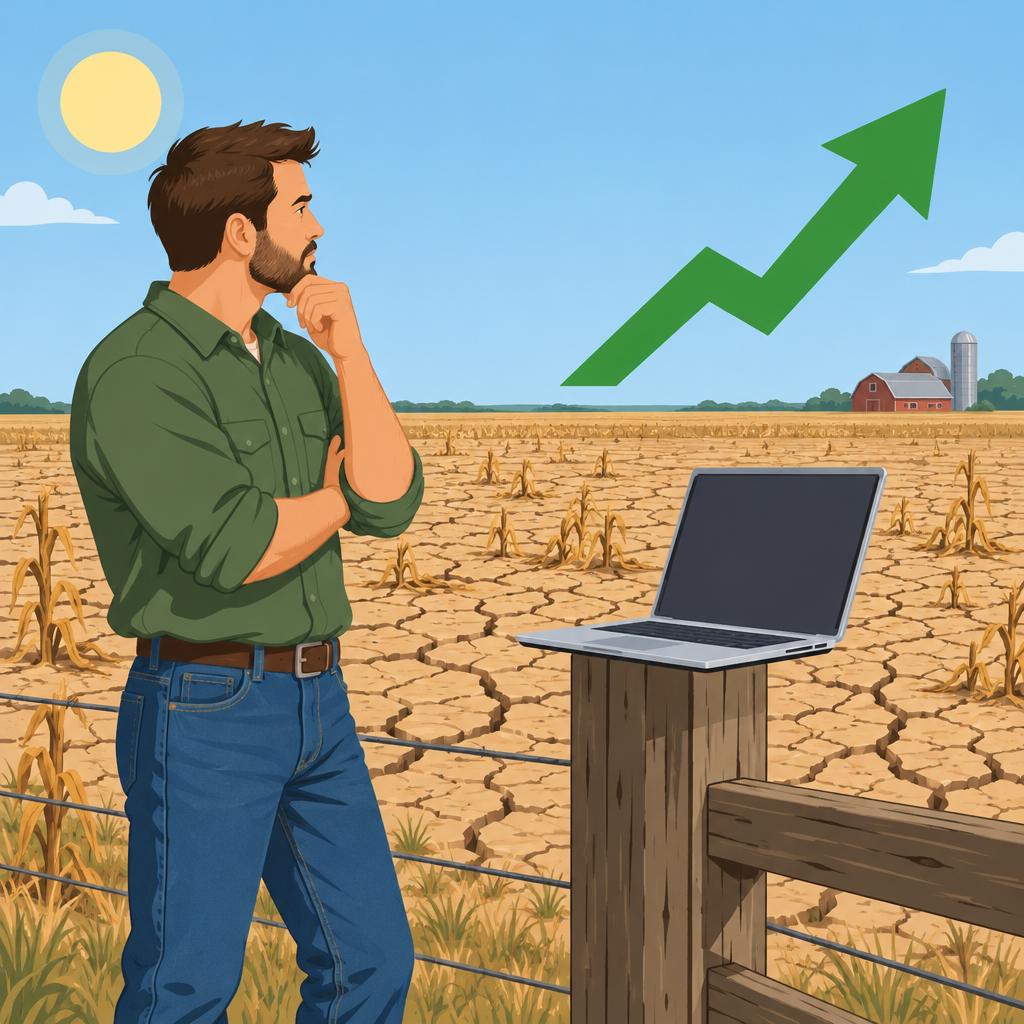
Weather related damage costs can reduce farmland market prices.
Potential buyers remain cautious about high risk locations.
Properties with resilient infrastructure, however, retain stronger market demand.
Emily Crawford of Dakota Farms emphasizes facility upgrades that help sustain land value.
Ultimately, infrastructure condition strongly influences farmland valuation.
You Might Also Like: The Role of Sustainable Irrigation in Mitigating Climate Change
Government Support Programs
Federal and state governments actively develop programs supporting farmers during extreme weather.
For instance, the USDA offers disaster assistance to help farmers recover from losses.
Moreover, crop insurance programs protect farmers against unpredictable weather impacts.
These programs encourage resilience and provide financial stability during crises.
Additionally, initiatives like the Environmental Quality Incentives Program promote sustainable land management.
Investment in Climate-Resilient Infrastructure
Investment in resilient infrastructure helps reduce farmland vulnerability to extreme events.
Farmers work with engineers to improve irrigation systems and drainage solutions.
For example, drought-resistant water systems help maintain crop health during dry spells.
Storm-resistant storage facilities also safeguard harvested goods and equipment.
Consequently, these improvements enhance farm productivity despite climate threats.
Adoption of Innovative Farming Practices
Farmers increasingly adopt innovative techniques to mitigate weather-related risks.
Regenerative agriculture, for example, improves soil health and water retention.
Cover cropping helps prevent soil erosion during heavy rains.
Meanwhile, precision farming technologies guide efficient resource use under variable conditions.
Thus, these approaches contribute to long-term farmland sustainability.
Community and Cooperative Efforts
Cooperatives provide farmers with shared resources and knowledge for addressing extreme weather.
Local alliances also facilitate bulk purchasing of resilient seeds and equipment.
Furthermore, community-led training programs raise awareness of adaptation strategies.
Collaborative networks help farmers exchange real-time weather data and insights.
This collective approach strengthens regional farming resilience against climatic shocks.
Market-Based Incentives and Risk Management
Private insurers like GreenField Risk Services offer tailored policies for farmland protection.
Showcase Your Farming Business
Publish your professional farming services profile on our blog for a one-time fee of $200 and reach a dedicated audience of farmers and agribusiness owners.
Publish Your ProfileMarket incentives encourage crop diversification, spreading risk across multiple products.
Moreover, futures contracts allow farmers to hedge against weather-related price volatility.
Some agribusinesses reward sustainable practices through premium pricing or certifications.
These tools motivate farmers to implement proactive risk management measures.
Projected Climate Impacts on Agricultural Viability
Climate change will significantly alter regional agricultural conditions.
Additionally, more frequent droughts may reduce crop yields across many states.
Meanwhile, some northern regions could experience longer growing seasons.
However, extreme heat events will likely stress farmland productivity.
Therefore, farmers and investors must carefully evaluate these varying impacts.
Climate Risk Effects on Farmland Demand and Valuation
Rising climate risks may reduce demand for farmland in vulnerable areas.
Conversely, more favorable regions might attract stronger buyer interest.
For example, institutional buyers like Greenfield Capital may shift investments toward resilient land.
Moreover, adaptive technologies can help farmland owners command premium prices.
Consequently, climate resilience increasingly influences land valuation.
Policy Measures and Technological Innovation
Government policies will significantly shape future farmland markets.
For instance, sustainable practice incentives may strengthen land values over time.
Furthermore, drought-resistant crops could help farmers mitigate production losses.
AgriTech firms such as TerraGrow are developing solutions for these challenges.
As a result, technology adoption could stabilize or increase farmland prices.
Market Trends and Investor Behavior
Investors like Horizon Ag Investments monitor climate models for improved forecasts.
They also use scenario analysis to guide long-term farmland acquisitions.
Meanwhile, risk-averse buyers may favor diversified portfolios across different climates.
In contrast, speculative investors might pursue riskier regions with higher potential rewards.
Thus, changing investor behavior will influence farmland price patterns.
Considerations for Future Farmland Investment
Prospective buyers should evaluate local climate projections before purchasing farmland.
They should also prioritize properties with reliable water supplies and healthy soils.
Additionally, experts like agronomist Lisa Callahan can provide valuable insight.
Climate risk assessments can further improve investment decision-making.
Ultimately, informed investments can support sustainable farmland value growth.


