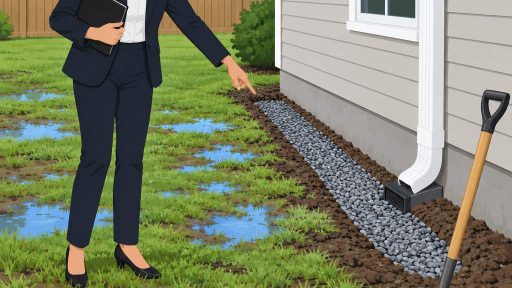




Introduction to Soil Compaction and Real Estate Development
Soil compaction affects soil structure, water movement, and air movement on development sites.
These changes influence vegetation, drainage, and construction planning.
Therefore, developers must understand soil conditions before beginning real estate projects.
What Is Soil Compaction?
Soil compaction occurs when pressure pushes soil particles tightly together.
This process reduces the spaces between particles and limits air and water movement.
Consequently, compaction makes it harder for roots to grow and absorb nutrients.
Construction activities commonly cause soil compaction, especially across development sites.
Heavy machinery compresses the soil and significantly changes its natural structure.
Importance of Soil Conditions for Real Estate Development
Soil quality plays an important role in land use planning and building stability.
For example, developers like Horizon Land Holdings assess soil before starting projects.
Proper soil conditions help foundations remain strong and safe over time.
Conversely, poor soil can increase construction costs and cause structural problems.
Therefore, understanding soil compaction helps developers avoid expensive issues later.
Impact of Soil Compaction on Land Use
Compacted soil reduces its capacity to support vegetation and manage water drainage.
As a result, green spaces may suffer and lose aesthetic and environmental value.
Transform Your Agribusiness
Unlock your farm's potential with expert advice tailored to your needs. Get actionable steps that drive real results.
Get StartedMoreover, increased runoff can raise flooding risks in urban areas.
For instance, Greenfield Development Group reported delays from compacted soils affecting landscaping.
Thus, developers must manage soil compaction to support sustainable land use planning.
Causes of Soil Compaction in Urban Areas
Heavy machinery commonly compacts soil in urban environments.
Construction vehicles and equipment repeatedly cross work areas.
As a result, pressure compresses soil and reduces porosity and permeability.
Additionally, foot traffic compacts surface soil in parks and along pathways.
Urban development often disturbs soil layers and increases compaction risks.
Furthermore, poor landscaping practices can intensify soil compaction.
Parking lots and paved surfaces limit natural aeration and harden underlying soil.
Utility installations and trenching operations also compact soil across urban sites.
Causes of Soil Compaction in Rural Areas
Heavy agricultural machinery creates substantial compaction across rural land.
Tractors, harvesters, and plows place considerable pressure on fields and pastures.
Repeated tilling and field traffic progressively compact topsoil and subsoil.
Meanwhile, livestock grazing compacts soil, especially within confined areas.
Animal hooves compress pore spaces and reduce water infiltration.
Rural construction, including farm building projects, can also damage soil structure.
Moreover, machinery operating on wet soil can increase compaction severity.
Poor land management practices further amplify compaction risks across rural areas.
Factors That Influence Soil Compaction
Soil type strongly influences compaction susceptibility in urban and rural areas.
For example, clay soils usually compact more easily than sandy soils.
Soil moisture during disturbance also affects compaction outcomes.
Wet soil becomes more vulnerable under heavy loads and repeated traffic.
In addition, repeated human pressure remains a primary compaction driver.
Showcase Your Farming Business
Publish your professional farming services profile on our blog for a one-time fee of $200 and reach a dedicated audience of farmers and agribusiness owners.
Publish Your ProfileUnderstanding these factors supports better land use and development planning.
Impact of Soil Compaction on Land Use Planning and Zoning Regulations
Soil compaction influences land suitability, zoning rules, development permits, agricultural use, and open space decisions.
Planning agencies assess these effects before approving projects or revising land designations.
Environmental coordination supports regulatory responses suited to local soil conditions.
Influence on Land Suitability Assessments
Soil compaction directly affects land suitability assessments for development.
Therefore, urban planners evaluate soil conditions before approving construction projects.
Compacted soils reduce water infiltration and increase surface runoff, which raises flood risks.
Consequently, areas with severe compaction often require special mitigation measures.
For this reason, many zoning applications require soil testing.
Adjustments in Zoning Regulations Due to Compaction
Municipalities revise zoning rules to address challenges from compacted soils.
For example, zoning codes may restrict building density to limit excessive soil stress.
Additionally, regulations often require green spaces that improve soil aeration and drainage.
The City of Ravensbrook mandates soil remediation plans for new residential zones.
This approach protects underground ecosystems and maintains land stability.
Impact on Land Development Permits and Requirements
Developers face stricter permit conditions when soils show signs of compaction.
Local authorities require detailed geotechnical reports that outline soil conditions.
Furthermore, some regions require engineered solutions, such as soil aeration or layering.
Boulderfield Engineering includes compaction assessments in its development proposals.
These requirements support long-term safety and infrastructure durability on developed land.
Effects on Agricultural Land Use and Open Space Designation
Soil compaction encourages planners to limit intensive agricultural use in affected areas.
Compacted soils reduce crop yields and soil biodiversity.
Thus, zoning may designate affected lands as conservation or recreational open spaces.
Greenfield County’s zoning board recently rezoned compacted farmlands as park areas.
This decision preserves ecosystem services and prevents further soil degradation.
Coordination Between Environmental and Planning Agencies
Successful land use planning requires cooperation between multiple agencies.
Environmental departments share soil compaction data with planning authorities.
This collaboration promotes development suited to local soil conditions.
Moreover, firms like TerraGuard Consultants enhance soil management strategies.
Integrated efforts reduce compaction risks and improve regulatory compliance.
Learn More: How to Improve Soil Health for Sustainable Landscaping in Real Estate
Impact on Drainage Systems
Soil compaction reduces pore space and limits water movement.
Consequently, compacted soil layers drain water more slowly.
This slower drainage increases surface runoff and may cause erosion.
Moreover, waterlogged conditions can damage foundations.
Therefore, proper management helps maintain effective site drainage.
Influence on Water Retention
Compacted soils retain less water within root zones.
As a result, vegetation struggles to access enough moisture for growth.
This reduced retention stresses landscaping and natural ecosystems onsite.
Additionally, compaction can increase evaporation from the soil surface.
Thus, developers face challenges when maintaining healthy soil environments.
Showcase Your Farming Business
Publish your professional farming services profile on our blog for a one-time fee of $200 and reach a dedicated audience of farmers and agribusiness owners.
Publish Your ProfileConsequences for Site Stability
Initially, soil compaction can increase bearing capacity by densifying soil.
However, compacted soil may create uneven settlement risks beneath structural loads.
Rigid compacted layers can prevent uniform soil compression.
Consequently, uneven settling threatens buildings and pavement.
Furthermore, compacted soil becomes more susceptible to stress-related cracking.
Therefore, engineers must carefully assess compaction effects.
Strategies to Mitigate Compaction Effects
Before construction, site engineers often recommend aeration or soil mixing.
They may also use geotextiles to improve drainage and soil stability.
In some cases, organic amendments enhance soil structure and porosity.
Controlled traffic zones reduce unnecessary compaction during development.
Finally, continuous monitoring helps maintain long-term site performance.
See Related Content: Impact of Poor Soil Drainage on Real Estate and How to Fix It
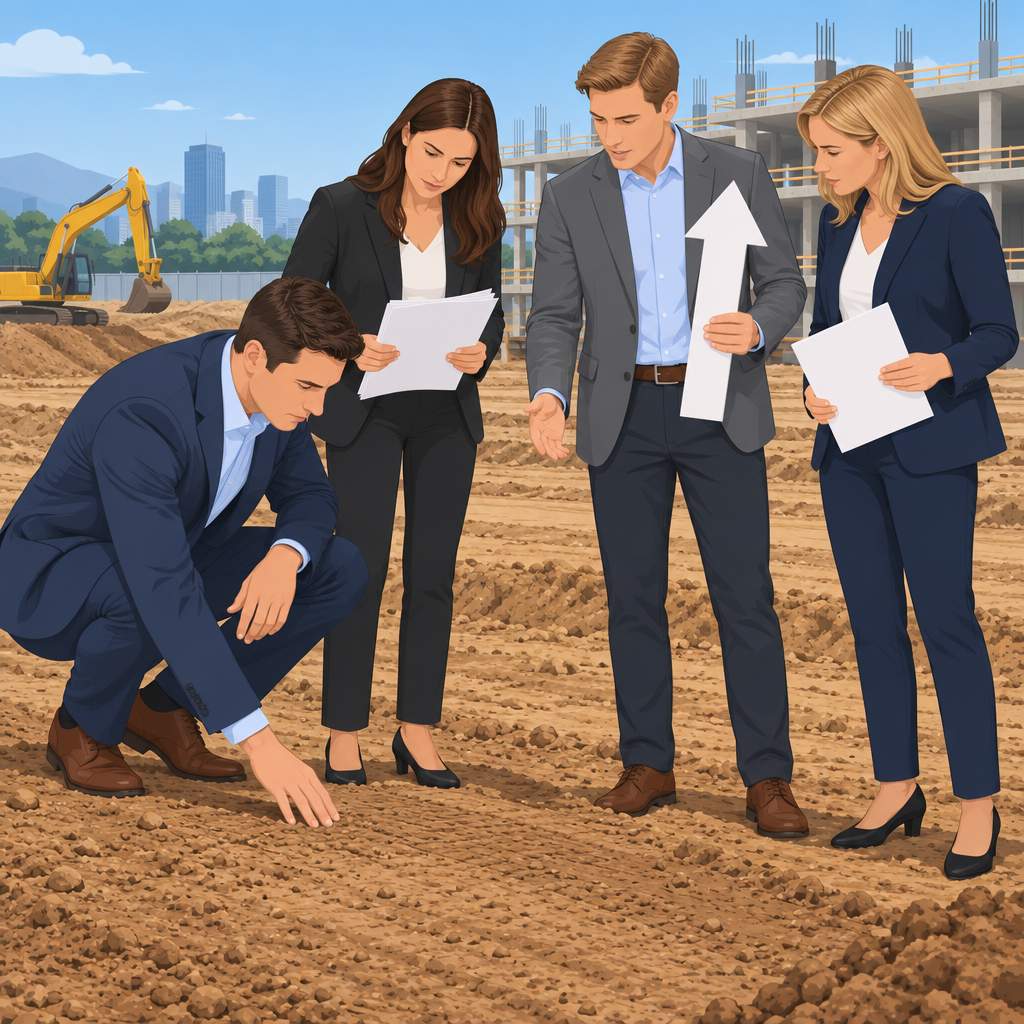
The Relationship between Soil Compaction and Construction Costs
Soil compaction can increase construction costs across several project stages.
These expenses often arise during site preparation, foundation work, drainage installation, and long-term maintenance.
Developers can reduce financial pressure by testing soil early and selecting suitable construction strategies.
Impact of Soil Compaction on Site Preparation
Compaction increases soil density and makes site preparation more demanding.
Consequently, contractors may need additional machinery to break up compacted areas.
This extra work can extend project timelines and increase preparation expenses.
Effect on Foundation Design and Material Usage
Compacted soil changes the land’s load-bearing capacity.
Therefore, engineers may modify foundation designs to maintain structural stability.
They might specify deeper foundations or additional reinforcement.
These changes increase concrete, steel, and skilled labor requirements.
Influence on Drainage and Water Management Systems
Compacted soil can create water management demands during construction.
Developers may install pipes, pumps, or retention basins to control runoff.
Although these systems require additional investment, they help prevent structural damage.
Long-Term Maintenance and Operational Costs
Compaction can contribute to uneven building settlement over time.
As a result, property owners may schedule more inspections and structural repairs.
Maintenance crews may address cracks and foundation concerns repeatedly.
Investors consider these potential expenses when evaluating development budgets and property values.
Examples from Industry Experts
Green Ridge Builders reports higher costs on projects involving compacted sites.
Project manager Michael Bennett says compaction can extend construction schedules.
Similarly, Falcon Engineering identifies increased expenses during soil remediation.
Civil engineer Jessica Lang emphasizes adaptive foundation designs for affected sites.
Strategies to Mitigate Soil Compaction Costs
Early soil testing helps developers identify compaction levels before construction begins.
Developers can then adjust site plans to address potential complications.
Lightweight construction materials can reduce pressure on the soil.
Additionally, early drainage work can limit later expenses.
Geotechnical consultants can help teams choose efficient foundation designs.
These proactive measures help control costs associated with soil compaction.
See Related Content: How Soil Quality Influences Building Foundations and Property Longevity
Showcase Your Farming Business
Publish your professional farming services profile on our blog for a one-time fee of $200 and reach a dedicated audience of farmers and agribusiness owners.
Publish Your ProfilePreventive Measures During Planning
Careful site analysis identifies areas prone to soil compaction before construction begins.
For example, developers like Greenfield Properties emphasize soil testing before construction.
Adjusting project designs reduces heavy machinery movement across vulnerable soil.
Additionally, protective ground covers preserve soil structure during development.
Use of Advanced Machinery and Techniques
Modern equipment with low ground pressure minimizes soil compression.
Civil engineer Amelia Thornton recommends tracked vehicles instead of wheeled ones.
Meanwhile, controlled traffic lanes concentrate heavy loads along specific soil paths.
This approach limits the total soil area affected by compaction.
Soil Conditioning and Remediation
Adding organic matter improves soil porosity and resilience.
Landscaper Mateo Ruiz advises incorporating compost or biochar after construction.
Furthermore, aeration techniques such as deep ripping break compacted soil layers.
These actions restore water infiltration and support root growth.
Vegetative Strategies to Support Soil Health
Planting deep-rooted species like prairie grasses naturally strengthens soil structure.
Environmental consultant Linh Tran highlights cover crops between construction phases.
Vegetation also protects the soil surface from erosion and rainfall compaction.
Careful landscaping encourages sustainable soil use in urban projects.
Ongoing Monitoring and Maintenance
Regular soil compaction assessments prevent long-term development issues.
For instance, project managers like Daniel Kwan integrate monitoring into construction schedules.
Adjusting foot traffic and vehicle routes reduces soil stress during projects.
Continuous maintenance supports sustainable land use and building stability.
Collaboration with Soil Science Experts
Engaging specialists provides tailored mitigation plans for complex sites.
GeoTech Solutions, led by Dr. Priya Nair, offers soil compaction consultation for developments.
Expert guidance optimizes project outcomes and supports environmental compliance.
Finally, stakeholder cooperation promotes responsible and effective soil management.
See Related Content: The Role of Vegetation in Preventing Soil Erosion on Real Estate Land
Case Studies of Successful Soil Compaction Mitigation
These projects show how developers matched soil treatments to site conditions.
Each team combined assessment, construction controls, and targeted restoration.
Consequently, the projects improved performance while supporting broader site goals.
Greenfield Residential Project in Oregon
The Willow Creek Development addressed severe soil compaction early during construction.
First, the team used deep ripping techniques to break compacted soil layers efficiently.
Moreover, workers added organic amendments to improve soil structure.
Additionally, controlled machinery traffic reduced further compaction during building.
These efforts improved drainage and supported healthy vegetation growth.
As a result, improved landscaping and infrastructure increased local real estate values.
Commercial Park Redevelopment in Texas
Prairie Vista Business Park faced compaction that threatened foundation stability.
The developers partnered with GeoTerra Solutions for geotechnical assessments before development.
Consequently, engineers designed soil aeration and vertical soil mixing systems.
This method restored soil porosity and increased load-bearing capacity.
Furthermore, the park added green buffer zones to manage surface runoff naturally.
These measures accelerated project completion and reduced maintenance costs.
Showcase Your Farming Business
Publish your professional farming services profile on our blog for a one-time fee of $200 and reach a dedicated audience of farmers and agribusiness owners.
Publish Your ProfileUrban Infill Project in Chicago
Lakeside Commons confronted compaction created by decades of prior use.
Ground-penetrating radar identified the most affected soil layers precisely.
Therefore, the team used lightweight foam concrete as structural fill.
This material minimized additional compaction during construction.
Meanwhile, landscapers planted deep-rooted native species to loosen the soil.
These measures improved stormwater infiltration and reduced urban heat island effects.
The project earned recognition for sustainable urban design and community health benefits.
Suburban Shopping Center Development in Florida
Sunset Ridge Mall faced compacted subsoils that threatened pavement integrity.
The developers engaged SoilTech Engineering to improve the site.
Engineers combined dynamic compaction with geogrid layers.
This approach improved soil density uniformly while preserving flexibility under traffic loads.
Simultaneously, permeable pavements supported drainage and reduced runoff.
The combined strategy extended pavement life and lowered long-term repair costs.
It also attracted environmentally conscious tenants and shoppers.
Practical Lessons from Soil Compaction Mitigation
These examples emphasize early soil assessment and carefully tailored solutions.
They also show how mechanical and biological techniques can work together.
Moreover, developers benefited from collaboration with engineers and environmental specialists.
Effective mitigation preserved soil health and added value to development projects.
Thus, proactive management supported sustainable land use and community well-being.
Future Trends in Managing Soil Compaction for Sustainable Land Use
Emerging tools are changing how professionals manage soil compaction during land development.
These approaches combine monitoring, planning, restoration, and cooperation.
Together, they support sustainable land use while limiting unnecessary soil disturbance.
Innovative Technologies in Soil Compaction Management
Advanced soil sensors help professionals monitor compaction levels precisely.
These sensors provide real-time data to land developers and environmental engineers.
Consequently, project teams can respond quickly when compaction requires attention.
Moreover, drones map terrain and identify areas with potential compaction.
Project managers can then adjust construction plans to limit soil disturbance.
Sustainable Land Use Practices
Experts increasingly recommend limiting heavy machinery on vulnerable soils.
Additionally, aeration techniques help restore soil structure after construction.
For instance, cover crops improve porosity and reduce future compaction risks.
Furthermore, green spaces give soil opportunities for natural recovery.
Urban planner Marina Fletcher supports combining nature-based solutions with engineering methods.
Regulatory and Policy Developments
Governments continue to strengthen regulations addressing soil compaction impacts.
For example, municipal authorities may require environmental assessments before major land projects.
These policies encourage developers to use environmentally responsible construction methods.
Consequently, regulatory bodies can support sustainable land management through incentives.
Environmental lawyer David Chen emphasizes compliance as a growing real estate priority.
Collaborative Efforts and Education
Industry partners share best practices for controlling soil compaction.
Landscape architect Olivia Sanchez organizes workshops focused on soil preservation.
These initiatives raise awareness among developers, contractors, and landowners.
Showcase Your Farming Business
Publish your professional farming services profile on our blog for a one-time fee of $200 and reach a dedicated audience of farmers and agribusiness owners.
Publish Your ProfileFurthermore, universities include soil health studies in sustainability curricula.
This education prepares future professionals to address compaction challenges effectively.
Emerging Materials and Construction Methods
Innovators are developing lightweight equipment that reduces ground pressure.
Meanwhile, eco-friendly building materials support healthier soil ecosystems.
For example, permeable pavement improves water infiltration and reduces compaction.
Evergreen Construction has pioneered projects using these sustainable materials.
Consequently, the industry is moving toward holistic land stewardship.
Data-Driven Land Use Planning
Geospatial analysis helps planners design developments with minimal soil impact.
Data insights guide site selection and machinery movement.
Moreover, predictive models forecast compaction under different land-use scenarios.
Land developer Samuel Harding uses these models to improve project sustainability.
These methods support resilient landscapes and balanced urban growth.