




Introduction to Soil Erosion and Its Impact on Real Estate Land
Soil erosion affects land fertility, stability, drainage, and surrounding environmental conditions.
Furthermore, erosion can increase ownership costs and reduce a property’s practical value.
Therefore, landowners should understand erosion causes and address related risks promptly.
Understanding Soil Erosion
Soil erosion occurs when wind or water removes the topsoil layer.
This process gradually reduces the land’s fertility and stability.
Moreover, erosion can carry sediment into nearby waterways.
Consequently, sediment buildup can harm surrounding ecosystems and water quality.
Landowners often face increased costs because erosion damages usable soil.
Effects of Soil Erosion on Real Estate Land
Soil erosion can reduce land value by damaging the property’s usability.
It can create uneven surfaces that complicate construction and landscaping.
Additionally, exposed soil increases risks involving floods and landslides.
As a result, owners may face higher maintenance and repair expenses.
Real estate developers and homeowners should address erosion before damage worsens.
Factors Contributing to Soil Erosion on Real Estate
Construction activities significantly disturb natural vegetation cover.
Heavy rainfall and poor drainage can accelerate soil displacement.
Transform Your Agribusiness
Unlock your farm's potential with expert advice tailored to your needs. Get actionable steps that drive real results.
Get StartedMeanwhile, overgrazing and deforestation weaken soil structure and protection.
Urban expansion adds impervious surfaces and changes runoff patterns.
Therefore, land managers must control these factors to preserve real estate land.
Understanding the Types of Soil Erosion
Soil erosion occurs through several physical processes that remove or displace surface particles.
These processes include mechanical forces, moving water, and strong winds.
Each type creates conditions that allow forces to move exposed soil more easily.
Mechanical Erosion
Mechanical erosion detaches soil particles from the surface.
It mainly results from physical forces, including trampling and construction activities.
Additionally, heavy machinery can accelerate this process on land.
Consequently, soil loses structure and becomes more vulnerable to displacement.
Water Erosion
Water erosion removes soil particles through rainfall or flowing water.
It often develops on slopes or where vegetation cover remains poor.
Furthermore, this process can form rills or gullies that damage land.
Urban runoff also increases water erosion risks on real estate land.
Wind Erosion
Wind erosion carries loose soil away during strong winds.
It commonly affects dry, barren, or sandy soils.
Moreover, transported dust can reduce air quality.
Therefore, surface cover remains critical for reducing this process.
The Role of Vegetation in Stabilizing Soil Structure and Reducing Erosion
Vegetation binds soil particles and anchors them against wind and water.
Plant cover also slows rainfall, runoff, and particle movement across exposed ground.
Together, roots and plant surfaces improve soil stability and support effective land protection.
Vegetation’s Impact on Soil Stability
Vegetation actively binds soil particles together through its root systems.
These roots anchor soil firmly and prevent displacement caused by wind or water.
Moreover, plants improve soil structure by creating channels for air and water movement.
Showcase Your Farming Business
Publish your professional farming services profile on our blog for a one-time fee of $200 and reach a dedicated audience of farmers and agribusiness owners.
Publish Your ProfileThese channels enhance soil porosity and encourage healthy microbial activity.
Consequently, the soil resists erosion and degradation more effectively.
How Vegetation Reduces Surface Runoff
Plant canopies intercept rainfall and decrease its impact on the soil surface.
This interception slows rainwater and reduces soil particle detachment.
Besides, vegetation increases surface roughness and limits runoff velocity.
Slower runoff reduces the likelihood that water will wash away soil.
Additionally, plants promote ground infiltration instead of surface flow.
Types of Vegetation That Enhance Soil Protection
Perennial grasses develop dense root mats that hold soil in place year-round.
Meanwhile, shrubs and trees provide deeper roots that stabilize subsoil layers.
Ground covers like clover or ivy provide continuous coverage and reduce erosion.
Farmers and landowners often combine vegetation types for stronger protection.
This diversity supports soil health and improves erosion control over time.
Benefits for Real Estate Landowners
Vegetation protects valuable land from erosion damage during storms.
Stable soil preserves land aesthetics and supports landscaping efforts.
Furthermore, vegetation can increase property value by maintaining a healthy environment.
Proper vegetation management reduces costly soil repairs and drainage problems.
Therefore, vegetation investment supports sustainable real estate development.
Learn More: Understanding Soil Erosion and Drainage Issues in Property Development
Root Structures and Their Impact on Soil Stability
Plant roots grow deep and wide, anchoring soil particles firmly.
Fibrous roots create dense surface networks that help prevent erosion.
Taproots penetrate deeper layers, reinforcing the ground below.
Therefore, different root types work together to improve soil cohesion.
Over time, greater root biomass strengthens the soil matrix.
Mechanical Binding of Soil by Roots
Roots physically bind soil particles and hold them in place.
This mechanical action reduces soil displacement caused by wind and water.
Consequently, roots create natural barriers against soil loss on slopes.
Root tips enter compacted soil and create channels for water movement.
As a result, improved permeability can reduce runoff speed and erosion risk.
Biological Effects of Roots on Soil Strength
Roots release organic compounds that chemically bind soil particles.
These compounds stimulate microbes that produce sticky substances.
In turn, microbial exudates support soil aggregation and lasting cohesion.
Root decay also adds organic matter and improves soil texture.
Therefore, biologically active soils resist erosion forces more effectively.
Vegetation That Supports Soil Cohesion
- Native grasses develop fibrous roots that stabilize topsoil effectively.
- Mountain laurel shrubs develop deep roots that improve soil anchorage.
- Oak and pine trees develop strong taproots that reinforce subsoil.
- Clover and vetch provide quick ground cover and root protection.
Planting diverse species creates layered reinforcement throughout the soil.
Land Management Practices That Promote Root Growth
Timothy Walker Landscaping recommends native plants with strong root systems.
Meanwhile, minimal tillage preserves root networks and soil structure.
Adequate soil moisture supports continued root expansion.
Regular mulching protects roots from temperature changes and moisture loss.
Together, these practices encourage vigorous root development and healthier soil.
Explore Further: The Role of Crop Adaptation in Sustainable Farmland Ownership
Showcase Your Farming Business
Publish your professional farming services profile on our blog for a one-time fee of $200 and reach a dedicated audience of farmers and agribusiness owners.
Publish Your ProfileVegetation as Protective Ground Cover
Vegetation shields soil from direct rainfall exposure.
Moreover, plant roots bind soil particles and strengthen ground stability.
Consequently, plant cover softens raindrop impacts that might loosen soil.
Additionally, leaves and stems slow water moving across the land surface.
Therefore, slower water flow reduces surface runoff volume and speed.
Ground Cover and Surface Runoff Reduction
Ground cover absorbs substantial rainfall and allows water to enter the soil.
As a result, less surface water carries soil particles away.
Furthermore, dense vegetation encourages soil pores that improve water absorption.
Consequently, improved absorption lowers flooding and erosion risks.
Meanwhile, plant-derived organic matter improves soil structure and water retention.
Benefits of Healthy Vegetation on Real Estate Land
Healthy vegetation helps prevent costly property damage from soil erosion.
Furthermore, plant cover preserves soil fertility for future landscaping or farming.
Property owners such as Benjamin Carver and Verdant Grounds Landscaping often recommend native species.
For example, grasses, shrubs, and ground covers reduce erosion with minimal maintenance.
In addition, healthy vegetation improves aesthetics and may increase property value.
Strategies for Establishing Effective Ground Cover
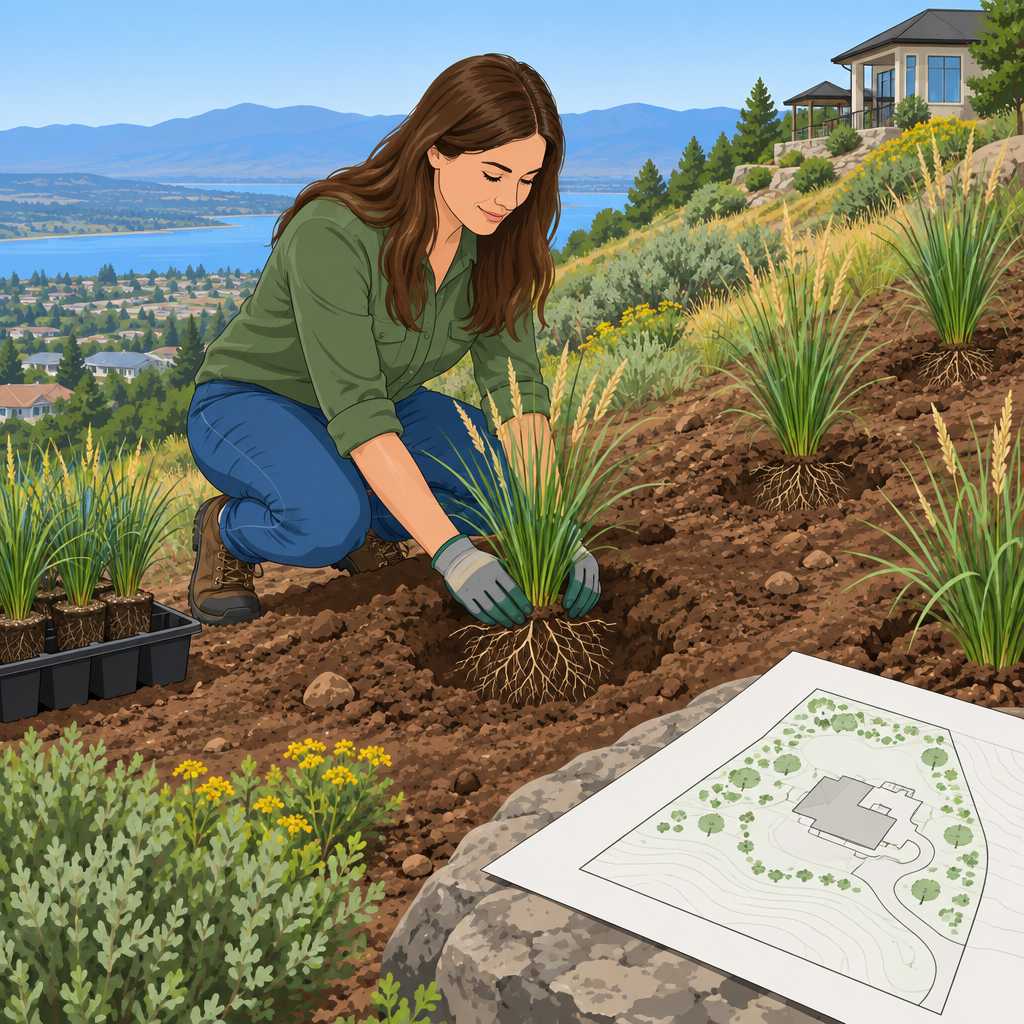
First, select plant species suited to local climate and soil conditions.
Next, remove debris and loosen compacted areas before planting.
Then, distribute seeds or seedlings evenly to create thorough coverage.
Regular watering and mulching help young plants establish and thrive.
Finally, avoid overgrazing and heavy foot traffic that can damage vegetation.
Delve into the Subject: Erosion Risks and Land Stability Considerations for Real Estate Buyers
Case Studies of Properties Using Vegetation to Combat Soil Erosion
Several properties have used vegetation to reduce erosion and protect valuable land.
These examples show how plants can support practical soil conservation strategies.
Each property combined vegetation with methods suited to its specific erosion challenges.
Greenville Estate Restores Hillside Stability
Greenville Estate faced severe hillside erosion during heavy seasonal rains.
Landscape architect Melissa Carver introduced native grasses and deep-rooted shrubs.
These plants anchored the soil and significantly reduced runoff velocity.
Additionally, the estate combined terracing with vegetation to stabilize the slopes.
Within two years, visible erosion decreased and the land retained its integrity.
Moreover, the greenery improved property aesthetics and encouraged local wildlife to return.
Ravenwood Farms Combines Trees and Groundcover
Ravenwood Farms experienced erosion in pastures near nearby water bodies.
Farm owner Lucas Harding collaborated with agronomist Dr. Serena White on a plan.
They planted rows of willow and alder trees beside grass groundcovers.
Together, these plants created natural barriers that reduced soil loss during floods.
Furthermore, the farm installed creekside buffer zones to filter sediments.
As a result, the property retained topsoil and improved downstream water quality.
Oakridge Integrates Vegetated Swales
Oakridge Residential Community struggled with erosion across gently sloping common areas.
Engineering firm GreenPath Solutions introduced vegetated swales to capture stormwater.
Workers planted the swales with deep-rooted sedges and wildflowers.
These plants slowed water flow and promoted infiltration, preventing soil displacement.
Showcase Your Farming Business
Publish your professional farming services profile on our blog for a one-time fee of $200 and reach a dedicated audience of farmers and agribusiness owners.
Publish Your ProfileConsequently, residents noticed less mud and sediment on sidewalks and driveways.
The community also reduced maintenance costs and increased green space value.
Silverbrook Protects Soil with Cover Crops
Silverbrook Commercial Property faced soil degradation during periods between construction activities.
Project manager Elena Martinez prioritized cover crops to protect exposed land.
Workers sowed winter rye and clover throughout the dormant months.
These crops held soil in place and reduced erosion from wind and rain.
Moreover, the cover crops improved soil structure and supported future landscaping phases.
This strategy helped the property maintain compliance with local environmental regulations.
Summerville Vineyards Creates Natural Barriers
Summerville Vineyards encountered erosion on vineyard hillsides after heavy storms.
Viticulturist Daniel Kim implemented contour planting with grasses and leguminous plants.
The vegetation reduced runoff and held hillside soil in place.
Additionally, inter-row planting minimized bare soil exposure during rainy seasons.
Furthermore, the vineyard enhanced biodiversity and improved water retention.
This approach supported sustainable grape production and soil conservation simultaneously.
Find Out More: How Soil Health Impacts Property Value in Rural and Urban Areas
Best Practices for Planting and Maintaining Vegetation for Soil Protection
Landowners can protect soil by selecting suitable vegetation and preparing planting areas carefully.
Proper planting techniques help vegetation cover exposed ground and manage water movement.
Regular maintenance keeps plant coverage dense and supports lasting soil protection.
Selecting Appropriate Vegetation
Choose native plants that thrive in the local climate and soil conditions.
Additionally, use grasses, shrubs, and ground covers to strengthen soil stability.
Deep-rooted species can bind soil effectively.
Local horticulturists like GreenField Gardens can recommend suitable species.
Preparing the Soil Properly
Clear debris and loosen compacted soil before planting.
Next, add organic compost to improve soil fertility and structure.
Proper grading directs water flow away from vulnerable areas.
Meadowland Soil Labs can test soil pH to help optimize plant growth.
Planting Techniques for Maximum Coverage
Plant densely to minimize exposed soil and reduce erosion risk.
On slopes, use contour planting to slow water runoff.
Also, apply mulch around plants to retain moisture and protect roots.
Local landscaping experts, such as Evergreen Planting Solutions, can support effective planting.
Maintenance Practices to Sustain Vegetation Effectiveness
Water plants consistently, especially during dry spells, to encourage strong growth.
Regularly remove invasive species to prevent competition and soil disturbance.
Prune and manage vegetation to promote healthy, dense coverage.
Willow Creek Horticulture can recommend eco-friendly fertilizers for maintaining soil nutrients.
Monitoring and Adjusting Soil Protection Measures
Inspect vegetation periodically for signs of erosion or plant stress.
Replant bare spots immediately to maintain continuous soil cover.
Adapt planting strategies according to seasonal changes and weather patterns.
TerraSafe Consulting can evaluate land conditions and support soil conservation decisions.
The Economic Benefits of Preventing Soil Erosion through Vegetation on Real Estate
Vegetation can create economic benefits for real estate by protecting land from erosion.
Protected land can retain value, reduce expenses, and support future use.
Showcase Your Farming Business
Publish your professional farming services profile on our blog for a one-time fee of $200 and reach a dedicated audience of farmers and agribusiness owners.
Publish Your ProfileAdditionally, healthy vegetation can improve market appeal and access to environmental incentives.
Enhancing Property Value
Vegetation stabilizes soil and helps preserve the quality of real estate land.
Therefore, properties with healthy vegetation typically achieve higher market values.
For instance, Greenwood Estates gained a 15 percent value increase after reforesting eroded areas.
Moreover, environmentally conscious buyers often prefer properties with healthy vegetation.
This preference can strengthen a property’s competitiveness in local real estate markets.
Reducing Maintenance and Repair Costs
Vegetation naturally controls erosion and reduces the need for costly land repairs.
As a result, landowners may spend less on retaining walls and soil replacement.
Johnson Realty Advisors report that proper landscaping helps clients save thousands annually.
In addition, vegetation can reduce sedimentation problems near surrounding infrastructure.
Consequently, municipalities may spend less on stormwater management.
Improving Agricultural and Development Potential
Healthy soil supported by vegetation can increase agricultural productivity.
This advantage supports landowners pursuing farming or leasing opportunities.
Furthermore, stable land can reduce risks during construction and development projects.
Developers such as Horizon Land Group prioritize vegetated sites for safer investments.
Thus, vegetation can strengthen both immediate and long-term land use prospects.
Promoting Environmental Incentives and Grants
Governments often offer financial incentives for controlling erosion with vegetation.
These incentives can lower implementation costs for real estate owners.
For example, Evergreen Capital secured significant grants after planting native species.
Additionally, environmental compliance can increase eligibility for tax benefits.
Therefore, vegetation can provide a cost-effective path toward available funding resources.
Supporting Community Reputation and Attractiveness
Lush, vegetated land can improve neighborhood aesthetics and community appeal.
This appeal may encourage community investment and increase property demand.
Land development firms such as Clearview Partners highlight green zoning as a selling point.
Moreover, healthy landscapes can support sustainable urban growth and resilience.
Ultimately, vegetation can strengthen a community’s economic and social reputation.
Future Trends in Landscape Architecture Focusing on Vegetation for Erosion Control
Landscape architecture will increasingly pair vegetation planning with technology, climate awareness, and broader community goals.
These emerging approaches can strengthen erosion control while supporting attractive and adaptable real estate landscapes.
Designers will coordinate plant selection, monitoring, maintenance, and education to improve long-term soil protection.
Innovative Plant Selection for Enhanced Soil Stability
Native plants increasingly help landscape architects improve soil retention.
Additionally, deep-rooted species offer strong resistance to erosion.
Elena Martinez of GreenRoot Designs advocates drought-tolerant varieties.
This approach supports sustainable water management while limiting soil loss.
Meanwhile, diverse plant communities can strengthen ecosystem resilience.
Integration of Technology in Vegetative Erosion Control
Smart sensors monitor soil moisture and root health in real time.
Therefore, TerraTech Solutions develops apps for predictive erosion management.
These tools help teams adjust irrigation and vegetation care proactively.
Furthermore, drones survey large properties for erosion hotspots.
Such technology enables precise and efficient landscape maintenance.
Emphasis on Multifunctional Landscapes
Designers increasingly combine erosion control with aesthetic appeal.
Showcase Your Farming Business
Publish your professional farming services profile on our blog for a one-time fee of $200 and reach a dedicated audience of farmers and agribusiness owners.
Publish Your ProfileThey pair flowering groundcovers with stabilizing grasses.
As a result, Evergreen Innovations manages properties for beauty and durability.
Community parks especially benefit from this multifunctional approach.
This design supports public use while preserving soil integrity.
Sustainable Practices and Climate Adaptation
Future designs emphasize plants adapted to changing climate conditions.
Landscape architect Nathan Cole promotes species that withstand extreme weather.
Consequently, this strategy addresses erosion risks from intense rainfall or drought.
Moreover, bioengineering combines vegetation with structural supports.
EcoSlope Works engineers implement these hybrid solutions effectively.
Collaborative Approaches and Education
Industry leaders foster collaboration between ecologists and landscape architects.
Workshops from UrbanRoots Collaborative educate landowners about erosion prevention.
This education encourages clients to support long-term landscape sustainability.
Consequently, Aria Land Management adopts vegetation-centered practices.
That cultural shift supports environmental stewardship across real estate.