




Introduction to Irrigation Planning
Irrigation planning plays a vital role in rural land development projects.
Effective irrigation reduces dependency on unpredictable rainfall patterns.
Systematic planning enhances agricultural productivity and resilience against drought.
Importance of Irrigation Planning in Rural Development
It ensures reliable water supply for agriculture and enhances crop yields.
Moreover, it supports sustainable land use and improves farmers’ livelihoods.
Additionally, it helps in managing water resources efficiently across rural areas.
Proper planning also minimizes soil erosion and land degradation risks.
Therefore, communities can achieve food security and economic growth through irrigation.
Objectives of Irrigation Planning
The primary aim is to design irrigation systems tailored to local environmental conditions.
Furthermore, irrigation planning seeks to balance agricultural demands with ecological preservation.
Another objective includes empowering rural farmers with knowledge and technical support.
Planning focuses on maximizing water use efficiency and reducing wastage.
Planners aim to integrate modern techniques with traditional farming practices.
Lastly, it promotes equitable water distribution among different user groups.
Key Factors Considered in Planning
Planners evaluate land topography to determine suitable irrigation methods.
Transform Your Agribusiness
Unlock your farm's potential with expert advice tailored to your needs. Get actionable steps that drive real results.
Get StartedThey assess soil characteristics to optimize water retention and application schedules.
Water availability from local sources forms a crucial part of the planning process.
Community involvement ensures that irrigation solutions meet farmers’ needs effectively.
Technical feasibility and cost considerations also influence design choices.
Planners carefully analyze environmental impacts to maintain ecosystem balance.
Benefits of Systematic Irrigation Planning
It encourages adoption of innovative irrigation technologies like drip or sprinkler systems.
Moreover, it supports job creation in rural sectors through infrastructure development.
Planning strengthens water conservation efforts, safeguarding future resource availability.
Assessing Water Resources: Identifying Sources and Availability
This section outlines methods to identify water sources and assess their availability.
It highlights surface water, groundwater, and rainwater harvesting as primary options.
The guidance relies only on details provided in the source content.
Surface Water Sources
Surface water supplies a significant portion of irrigation water in rural areas.
Rivers, lakes, and reservoirs often serve as primary water sources for farms.
For example, Willow Creek and Highland River provide reliable surface water options.
Groundwater Resources
Groundwater serves as a vital irrigation source when surface water is insufficient.
Wells that tap aquifers can provide steady supply throughout the year.
The Oakridge Aquifer has supported farming in neighboring communities.
However, over-extraction may deplete the water table and cause land subsidence.
Consequently, conducting hydrogeological surveys is essential for assessing sustainability.
Local experts such as Dr. Maria Lange can assist with groundwater evaluations.
Rainwater Harvesting Potential
Rainwater harvesting offers an alternative water source for rural developments.
By capturing precipitation, it reduces dependence on traditional supplies.
Techniques include rooftop collection systems and small catchment basins.
The GreenHaven Project successfully implemented rainwater harvesting in nearby villages.
Showcase Your Farming Business
Publish your professional farming services profile on our blog for a one-time fee of $200 and reach a dedicated audience of farmers and agribusiness owners.
Publish Your ProfileInstalling storage tanks and filtration systems helps ensure water quality and usability.
Evaluating Water Availability and Reliability
Assessing the quantity and timing of water availability guides irrigation scheduling.
Historical climate data offers insights into drought frequency and rainfall patterns.
The regional meteorological office provides valuable precipitation records.
Consulting local farmers such as the Emerson family helps reveal seasonal water challenges.
Combining scientific data with community knowledge yields comprehensive availability assessments.
Estimating future water demands based on crop types improves planning accuracy.
Legal and Regulatory Considerations
Water rights and permits regulate access to surface and groundwater resources.
The State Water Authority requires irrigation projects to obtain proper authorization.
Non-compliance with regulations may result in fines or usage restrictions.
Consulting legal experts such as attorney Samuel Ortiz can clarify water use policies.
Engaging with local water management boards fosters cooperative resource sharing.
Understanding these regulations helps avoid conflicts and ensures project sustainability.
Soil Analysis
Soil analysis plays a crucial role in rural land development projects.
It reveals the physical and chemical properties of the land.
Farmers and planners often classify soil by texture, structure, and composition.
Understanding Soil Types
Common soil types include sandy, clayey, silty, loamy, and peaty soils.
Each soil type shows distinct characteristics affecting water retention and drainage.
Sandy soils drain quickly but retain little moisture.
In contrast, clayey soils hold water well but drain slowly.
Loamy soils are ideal due to balanced water retention and aeration.
Water Needs Based on Soil Types
Different soil types demand tailored irrigation plans to prevent water stress or wastage.
Sandy soils usually require frequent watering in smaller quantities.
This approach compensates for their rapid drainage and low moisture retention.
Meanwhile, clayey soils benefit from less frequent but deeper irrigation.
It allows water to penetrate thoroughly without causing surface runoff.
Silty soils hold moderate moisture and respond well to regular irrigation routines.
Loamy soils require balanced watering schedules adapting to crop types.
Moreover, peat soils need careful management due to their high organic content.
Excessive watering on peat soils may lead to waterlogging and root damage.
Conducting Effective Soil Testing
Accurate soil testing informs irrigation planners about water holding capacity.
Experts recommend sampling soil from various field locations for representative data.
Field technicians analyze soil texture, pH levels, nutrient content, and salinity.
These factors influence irrigation frequency and quantity significantly.
For example, saline soils may require flushing with larger water volumes.
Testing also helps detect soil compaction that limits water infiltration.
Consequently, soil analysis enables customized irrigation suited to local conditions.
Working with skilled agronomists like Rachel Martinez from TerraGrow Consultants helps interpret test results.
Interpreting Soil Data for Planning
Once data is collected, teams develop maps outlining varying irrigation zones.
Such zoning supports targeted water application, saving resources and enhancing yield.
Showcase Your Farming Business
Publish your professional farming services profile on our blog for a one-time fee of $200 and reach a dedicated audience of farmers and agribusiness owners.
Publish Your ProfileFarmers use soil moisture sensors to monitor real-time water availability.
Additionally, integrating soil data with climate information refines irrigation schedules.
Technology like GIS mapping aids in visualizing soil variability across the farm.
Furthermore, understanding root depth helps determine irrigation depth requirements.
This ensures water reaches the active root zone, promoting healthy plant growth.
Comprehensive soil analysis guides sustainable irrigation practices effectively.
See Related Content: How Sustainable Farming Practices Impact Property Value Over Time
Overview of Irrigation System Types
Common irrigation methods include surface, sprinkler, and drip systems.
Each method suits different soil types, crop needs, and budgets.
Understanding these options helps developers make informed decisions.
Surface Irrigation Systems
Surface irrigation directs water over the soil by gravity flow.
This approach requires minimal technology, making it affordable.
Farmers like Carlos Mendoza often use furrow or basin techniques.
However, surface methods may waste water through runoff and evaporation.
Sprinkler Irrigation Systems
Sprinkler systems simulate natural rainfall with pressurized water spray.
Developers such as Greenfield Agro Solutions prefer them for uniform coverage.
They suit uneven terrains and various crop types efficiently.
However, wind and evaporation can affect distribution consistency.
Drip Irrigation Systems
Drip irrigation delivers water slowly near plant roots through emitters.
Farm managers like Amina Patel appreciate this system’s water-saving benefits.
This method minimizes evaporation and reduces weed growth around plants.
It suits high-value crops such as vegetables and orchards perfectly.
Despite high initial costs, drip systems offer excellent long-term returns.
Factors to Consider When Selecting an Irrigation System
Consider the types of crops to determine system suitability.
Also evaluate the budget and maintenance capacity of the farm operation.
Finally consult with irrigation experts like Sarah Dunham for tailored advice.
Best Practices for Efficient Irrigation
Implement scheduling based on crop growth stages and weather conditions.
Use soil moisture sensors to avoid over or under-watering crops.
Maintain irrigation equipment regularly to prevent leaks and blockages.
Train operators to monitor system performance and adjust as needed.
Moreover, explore government programs for irrigation technology support.
Integrating Technology for Improved Results
Modern systems incorporate automation for precise water application.
Remote monitoring helps farm managers like Luis Herrera optimize irrigation.
Drones and satellite imaging assist with land assessment and water mapping.
Smart irrigation apps provide real-time alerts and data analytics.
Consequently these tools increase crop yields and conserve water resources.
Delve into the Subject: Greenhouse Farming for Residential Property Owners
Designing an Irrigation Plan: Key Components and Steps
This guide outlines key components for irrigation planning.
It organizes tasks for implementation and system design.
The focus is on practical steps and community capacity building.
Showcase Your Farming Business
Publish your professional farming services profile on our blog for a one-time fee of $200 and reach a dedicated audience of farmers and agribusiness owners.
Publish Your ProfileAssessment of Water Resources
Begin by identifying available water sources for the project.
Consider options such as rivers, wells, or rainfall harvesting.
Evaluate the quality and quantity of each water source carefully.
Additionally, understand seasonal variations in water availability.
This assessment helps ensure a reliable water supply for irrigation.
Soil Analysis and Land Topography
Analyze soil types to determine their water retention capacity.
Conduct tests to assess soil texture, permeability, and fertility.
Moreover, map the land’s slope and elevation using available tools.
Understanding topography influences irrigation design and water distribution.
Identify any areas prone to waterlogging or erosion for targeted solutions.
Crop Selection and Water Requirements
Choose crops suitable for the local climate and soil conditions.
Calculate specific water needs based on crop type and growth stages.
Consider drought-resistant varieties to optimize water use.
Match irrigation schedules with the crops’ critical growth periods.
This step maximizes crop yield and conserves water resources.
Irrigation Method Evaluation
Compare different irrigation techniques for efficiency and cost-effectiveness.
Options include drip, sprinkler, surface, and furrow irrigation methods.
Drip irrigation conserves water by targeting plant roots directly.
Sprinkler systems offer flexibility for various crop layouts.
Choose a method that suits the terrain, crop types, and budget.
Designing the Irrigation Layout
Develop a detailed irrigation map showing water source and distribution lines.
Ensure equal water distribution by considering pipe diameters and pressure levels.
Plan placement of pumps, valves, and control systems strategically.
Include access routes for maintenance and future expansions.
Collaborate with engineers like Samuel Ortiz at GreenFields Engineering for precision design.
Scheduling and Automation
Create irrigation schedules based on crop water demand and weather patterns.
Incorporate flexibility to adjust watering during rain events or droughts.
Consider automated systems for better control and labor savings.
Use sensors to monitor soil moisture and optimize irrigation timing.
Technology integration boosts efficiency and conserves valuable water.
Cost Estimation and Budgeting
Calculate initial installation costs including materials and labor.
Account for ongoing maintenance and operational expenses.
Seek funding opportunities from local agricultural agencies or NGOs.
Work with financial advisor Maria Delgado to develop a realistic budget.
Sound budgeting ensures project sustainability and success.
Community Training and Capacity Building
Train local farmers and technicians on irrigation system operation.
Organize workshops about maintenance practices and water conservation.
Empower the community to manage the system independently long term.
Partner with rural development groups like Harvest Tomorrow Initiative.
Strong local knowledge sustains irrigation benefits for years to come.
Showcase Your Farming Business
Publish your professional farming services profile on our blog for a one-time fee of $200 and reach a dedicated audience of farmers and agribusiness owners.
Publish Your ProfileYou Might Also Like: Crop Disease Management for High-Yield Farmland Properties
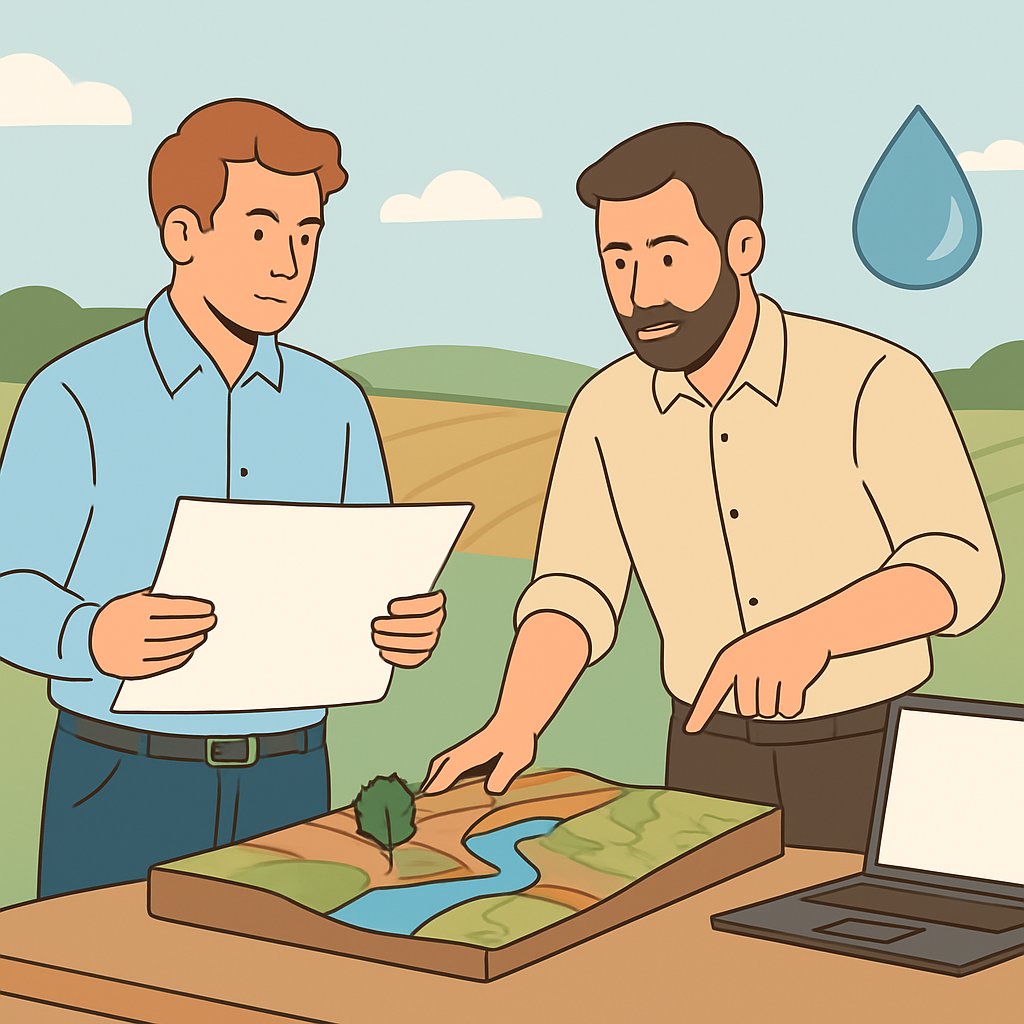
Cost-Benefit Analysis: Evaluating Economic Viability of Irrigation Projects
Estimating all relevant costs is essential for accurate analysis.
Calculate increased crop yields resulting from improved irrigation methods.
Use net present value methods to compare project costs and benefits over time.
Identifying Project Costs
Initial capital expenses include purchasing equipment and infrastructure setup.
Additionally, operational costs cover labor, maintenance, and energy expenses.
Environmental and social costs must also be considered to capture full impacts.
Assessing Project Benefits
Improved water efficiency can significantly reduce overall irrigation expenses.
Enhanced crop quality may lead to better market prices and higher income.
Secondary benefits include job creation and local economic stimulation.
Tools and Techniques for Cost-Benefit Analysis
Internal rate of return helps determine the profitability threshold for the project.
Benefit-cost ratio provides an easy metric to evaluate economic viability.
Scenario analysis allows testing various assumptions and risk factors.
Involving Stakeholders in Economic Evaluation
Consult local farmers and community leaders for comprehensive benefit identification.
Work closely with irrigation engineers to estimate realistic cost projections.
Government officials can provide data on subsidies and regulatory requirements.
Making Informed Decisions Based on Analysis
Prioritize projects with positive net present values and acceptable risk levels.
Consider alternative irrigation methods to optimize cost efficiency and benefits.
Regularly update cost-benefit analysis as new data and technologies emerge.
Uncover the Details: Precision Agriculture for Water Conservation in Farming
Implementation Strategies: Scheduling and Resource Management
Effective scheduling optimizes water use and crop growth.
Farmers like Rajesh Kumar employ climate data to plan irrigation timing.
Adaptive scheduling improves resource conservation and crop yield.
Scheduling for Efficient Irrigation
Analyze seasonal rainfall and soil moisture levels carefully.
Coordinate irrigation with crop water requirements at growth stages.
Integrating weather forecasts prevents water wastage during rainy periods.
Managing Human Resources
Successful irrigation projects rely on skilled labor management.
Project manager Anjali Verma assigns clear tasks to field workers daily.
She organizes regular training sessions on efficient irrigation techniques.
Equipment and Material Allocation
Proper equipment management reduces downtime and enhances project success.
Supplier Meera Technologies provides timely delivery of pipes and pumps.
Field engineer Sunil Desai schedules maintenance to prevent system failures.
Coordinating Multiple Stakeholders
Collaboration among farmers, suppliers, and engineers is essential.
Coordinator Priya Malhotra facilitates regular meetings to align project goals.
She shares progress reports and resolves scheduling conflicts effectively.
Utilizing Technology for Monitoring and Control
Advanced tools like soil moisture sensors guide irrigation scheduling precisely.
Technician Arvind Reddy monitors real-time data to adjust water delivery.
Mobile apps enable remote control of irrigation pumps efficiently.
Contingency Planning for Resource Management
Preparing for water shortages or equipment failures ensures project resilience.
Project planner Kavita Saxena develops backup plans with alternative water sources.
Showcase Your Farming Business
Publish your professional farming services profile on our blog for a one-time fee of $200 and reach a dedicated audience of farmers and agribusiness owners.
Publish Your ProfileShe schedules emergency repairs in advance to avoid disruptions.
Best Practices for Scheduling and Resource Management
- Analyze climate and soil data for precise irrigation timing.
- Train and motivate labor to maintain efficient operations.
- Maintain equipment proactively to prevent downtime.
- Coordinate stakeholders through consistent communication.
- Use technology for monitoring and adaptive control.
- Develop contingency plans to handle unforeseen challenges.
Monitoring and Maintenance
This section addresses monitoring and maintenance for irrigation systems.
It covers regular inspection, scheduled upkeep, technology use, community roles, and documentation.
Careful management preserves system performance and reduces downtime.
Importance of Regular Monitoring
Regular monitoring ensures irrigation systems operate efficiently over time.
It helps identify leaks, blockages, or equipment wear promptly.
Moreover, monitoring conserves water by preventing unnecessary losses.
Farmers, such as Priya Kumar, actively inspect systems to maintain performance.
This proactive approach reduces repair costs and downtime effectively.
Scheduled Maintenance Practices
Maintenance plans should follow a clear schedule for all system parts.
For instance, cleaning filters and checking pumps are critical tasks.
Additionally, inspecting valves and pipes prevents unexpected failures.
Experienced technicians like Miguel Santos train local workers on upkeep methods.
Consistent maintenance extends system lifespan and ensures steady water delivery.
Utilizing Technology for Efficient Management
Integrating sensors provides real-time data on soil moisture and system status.
These tools enable timely adjustments to irrigation schedules based on actual needs.
Furthermore, mobile apps help supervisors like Amara Bhandari track system performance remotely.
Technology enhances decision-making for precise water use and resource optimization.
Consequently, farms achieve higher crop yields with minimal water waste.
Community Involvement and Capacity Building
Involving local communities fosters ownership and accountability for irrigation systems.
Workshops led by specialists such as Thomas Mbatha build maintenance skills locally.
Equipping farmers with knowledge encourages regular system checks and repairs.
Support networks enable quick response to issues, minimizing system downtime.
Therefore, strong community engagement sustains irrigation effectiveness in the long term.
Documentation and Reporting
Maintaining detailed records tracks system condition and maintenance history accurately.
This documentation aids engineers like Elina Markov in planning improvements systematically.
Timely reports highlight recurring problems and optimize resource allocation.
Additionally, transparent data supports funding requests from development agencies.
Thus, meticulous record-keeping enhances overall system management and accountability.