




Introduction to Precision Agriculture and its Importance for Water Conservation
This section explains precision agriculture and its relevance to conserving water.
Farmers can use precise methods to reduce unnecessary water use.
Consequently, water resources sustain agriculture and surrounding ecosystems.
Defining Precision Agriculture
Precision agriculture uses technology to optimize farming practices.
Advanced tools include sensors and GPS to guide decisions.
These tools let farmers monitor crop needs with high accuracy.
Challenges of Water Use in Traditional Farming
Traditional farming often applies water uniformly across fields.
As a result, farmers waste significant water through evaporation and runoff.
Such inefficiency threatens water availability for farming and local communities.
Role of Precision Agriculture in Water Conservation
Precision techniques target irrigation only where crops need water.
Soil moisture sensors provide real-time data for timely watering decisions.
Variable rate irrigation tailors water application to field variability.
Thus, farmers avoid over-irrigation and reduce water waste.
Benefits for Farmers and the Environment
Farmers save costs by reducing unnecessary water and energy use.
Improved irrigation often increases crop yield and quality.
Transform Your Agribusiness
Unlock your farm's potential with expert advice tailored to your needs. Get actionable steps that drive real results.
Get StartedEnvironmental effects like soil erosion and salinization decrease significantly.
Moreover, conserving water helps sustain ecosystems near farmland.
Growing Adoption of Precision Agriculture Technologies
Many agricultural companies like GreenField Innovations provide precision tools.
Farmers like Emily Nguyen successfully integrate these technologies on their farms.
Government programs increasingly support water-efficient farming practices.
Consequently, precision agriculture becomes vital for sustainable farming worldwide.
Overview of Water Scarcity Issues in Agriculture
This section outlines water scarcity issues affecting agriculture.
It summarizes causes, impacts, and management considerations.
Consequently, readers gain context for regional and environmental challenges.
Growing Demand for Freshwater
Agriculture consumes more freshwater than any other sector globally.
It accounts for nearly 70% of global freshwater withdrawals.
As the population grows, the demand for food increases significantly.
Consequently, water consumption in farming continues to rise each year.
Moreover, economic development pushes for intensified agricultural production.
Challenges Caused by Water Scarcity
Water scarcity threatens crop yields and food security worldwide.
Farmers face difficulties in irrigating fields during dry seasons.
Low water availability can result in reduced soil moisture.
This leads to weaker crops and lower agricultural productivity.
Additionally, water scarcity increases production costs for farmers.
It often forces them to depend on less reliable water sources.
Environmental Consequences
Over-extraction of water harms aquatic ecosystems and biodiversity.
It causes decreased river flows and shrinking wetlands.
This environmental degradation worsens drought conditions over time.
Furthermore, inefficient irrigation contributes to soil salinization and erosion.
Showcase Your Farming Business
Publish your professional farming services profile on our blog for a one-time fee of $200 and reach a dedicated audience of farmers and agribusiness owners.
Publish Your ProfileThese effects reduce the long term viability of farming land.
Regional Variations in Water Scarcity
Some regions experience chronic water shortages due to climate conditions.
For example, arid and semi-arid areas face persistent dry spells.
Other regions encounter seasonal variability affecting water supply.
Moreover, increased competition between agricultural and urban users intensifies stress.
Areas like California’s Central Valley showcase these competing demands clearly.
Need for Sustainable Water Management
Sustainable water practices in agriculture are urgent and necessary.
Technologies that optimize water use can mitigate scarcity problems.
Efficient irrigation methods conserve water while maintaining yields.
Consequently, farmers can adapt better to changing environmental conditions.
Collaboration among policymakers, scientists, and farmers ensures success.
Technological Innovations in Precision Agriculture
Technological innovations focus on tools that improve irrigation precision and water management.
This section highlights sensors, imaging, variable rate systems, analytics, and automated controllers.
Each technology supports farmers in making data driven irrigation decisions.
Advanced Sensors and IoT Devices
Sensors play a crucial role in monitoring soil and crop conditions precisely.
They collect real time data on moisture, temperature, and nutrient levels.
Furthermore, IoT devices enable seamless communication across the farm.
Farms can use soil moisture sensors to optimize irrigation schedules effectively.
AquaFarm Solutions leads innovation in smart irrigation sensors.
Consequently, farmers conserve water while ensuring optimal crop growth.
Satellite and Drone Imaging
Satellite imagery provides large scale monitoring of crop health and water usage.
Drones offer more detailed aerial images and flexible data collection.
They detect water stress and identify irrigation inefficiencies quickly.
AgroVision Technologies specializes in drone systems designed for precision water management.
These tools help farmers adjust watering patterns based on actual field needs.
Consequently, farmers reduce water waste and increase yield quality.
Variable Rate Irrigation Systems
Variable rate irrigation systems supply water differently across field zones.
They adjust water delivery based on soil and crop requirements in each area.
This technology avoids overwatering and eliminates dry patches simultaneously.
Harrison Irrigation Systems developed advanced VRI controllers integrated with GPS mapping.
Moreover, VRI saves significant volumes of water compared to uniform irrigation.
Farmers experience improved crop health and lower utility costs.
Data Analytics and Decision Support Software
Data analytics platforms interpret vast amounts of agricultural data effectively.
These systems provide actionable insights to optimize water use in farming.
CropSense Analytics offers user friendly dashboards tailored to irrigation management.
They incorporate weather forecasts and soil data for precise water timing.
Accordingly, farmers make informed decisions that reduce water consumption.
This approach enhances sustainability and operational efficiency.
Automated Irrigation Controllers
Automated controllers regulate irrigation systems based on sensor feedback.
They activate or pause watering depending on current soil moisture and weather.
Showcase Your Farming Business
Publish your professional farming services profile on our blog for a one-time fee of $200 and reach a dedicated audience of farmers and agribusiness owners.
Publish Your ProfileGreenFields AgroTech has pioneered smart controllers with remote monitoring capabilities.
Farmers benefit from reduced manual intervention and improved water conservation.
Additionally, these controllers help comply with environmental water regulations.
These controllers signify a shift toward smarter, more sustainable irrigation practices.
Discover More: Precision Agriculture for Sustainable Farm Energy Usage
The Role of Soil Moisture Sensors in Enhancing Water Use Efficiency
Soil moisture sensors measure the amount of water in soil accurately.
Farmers use these sensors to determine when irrigation is necessary.
Consequently, this practice helps avoid overwatering and conserves water resources.
Introduction to Soil Moisture Sensors
Many companies like AgriSense Technologies develop reliable soil moisture sensors.
Innovators such as Emily Harper lead efforts to improve sensor accuracy and affordability.
These developments aim to make sensor technology more accessible to farming operations.
How Soil Moisture Sensors Optimize Irrigation
Sensors provide real-time data about soil conditions to farmers.
For example, a sensor network installed by GreenField Farms helped save 30% water last season.
Next, farmers adjust irrigation schedules based on precise soil moisture levels.
This targeted watering prevents water runoff and deep percolation losses.
Furthermore, automated irrigation systems integrate sensor data for optimal watering.
Benefits of Using Soil Moisture Sensors
Improved water use efficiency directly reduces irrigation costs for farms.
Moreover, sensors help maintain healthy crop growth by preventing water stress.
Adopting sensor technology also supports sustainable farming practices.
Importantly, reduced water wastage benefits the environment and conserves groundwater.
Public institutions like the Midwest Agricultural Research Center promote sensor adoption widely.
Implementing Soil Moisture Sensors on Farms
Farmers start by choosing sensors suitable for their soil type and crop needs.
Local experts like Lucas Miller provide installation and calibration services.
Training sessions ensure farm workers understand sensor data interpretation.
Over time, continuous monitoring leads to better decision-making on irrigation.
John Fairbanks, owner of Sunny Acres Farm, reports increased yields after sensor installation.
Future Innovations and Trends
Emerging sensors include wireless connectivity for seamless data transmission.
Additionally, AI algorithms analyze sensor data to predict irrigation needs more precisely.
Companies like TerraLogic Systems collaborate with farmers to refine sensor technology.
As a result, precision agriculture will become more accessible and effective globally.
Ultimately, adopting soil moisture sensors drives water conservation and productive farming.
Learn More: Best Weed Control Methods for Preserving Soil Quality
Data Analytics and Decision Support Systems for Irrigation Management
This section examines data analytics and decision support systems for irrigation management.
It highlights how analytics convert raw irrigation data into actionable insights.
Readers learn how these tools support efficient water use on farms.
Role of Data Analytics in Efficient Water Use
Data analytics transforms raw irrigation information into actionable insights.
Farmers analyze soil moisture, weather forecasts, and crop conditions to optimize water use.
Machine learning models predict irrigation needs using historical and real-time data.
These predictions reduce unnecessary water application and prevent crop stress.
Companies like AquaLogic Solutions develop analytics platforms tailored to farm irrigation.
Showcase Your Farming Business
Publish your professional farming services profile on our blog for a one-time fee of $200 and reach a dedicated audience of farmers and agribusiness owners.
Publish Your ProfileFeatures of Decision Support Systems
Decision support systems integrate various data sources to guide irrigation management.
They provide farmers with real-time recommendations on when and how much to irrigate.
These systems also account for water availability, soil type, and crop growth stages.
Comprehensive evaluations improve scheduling accuracy and conserve resources.
GreenField Technologies offers intuitive dashboards and mobile alerts to farmers.
Benefits of Using Analytics-Driven Solutions
Farmers using data-driven irrigation methods often achieve significant water savings.
Environmental benefits include reduced runoff and lower energy consumption in pumping water.
Precision irrigation improves crop yields by maintaining optimal soil moisture.
Decision support tools help farm managers make informed choices amid variable weather.
These technologies support sustainable agriculture and advance water conservation goals.
Integration with IoT Sensors and Remote Monitoring
IoT devices play a vital role in collecting irrigation-related data from fields.
Soil moisture sensors, weather stations, and flow meters feed continuous information to analytics platforms.
Remote monitoring enables farmers like Carlos Ramirez at SunPeak Farms to oversee irrigation.
Instant access lets farmers adjust irrigation promptly based on sensor alerts.
This integration enhances decision support system effectiveness in practical farming situations.
Explore Further: Precision Pest Management Techniques Improving Farmland Asset Valuations
Case Studies of Successful Implementation of Precision Agriculture for Water Conservation
This section presents case studies of precision agriculture for water conservation.
They showcase practical implementations across different farm types and regions.
These examples illustrate measurable reductions in irrigation water use and impacts.
Smart Irrigation in the Central Valley, California
A vineyard owned by Garcia Vineyards adopted precision irrigation technology in 2022.
They used soil moisture sensors coupled with real-time weather data to optimize water use.
As a result, the vineyard reduced water consumption by 30% within the first growing season.
Moreover, grape quality improved due to more consistent hydration levels.
The implementation also lowered operational costs related to water and energy consumption.
This case highlights the effectiveness of integrating sensor data with automated irrigation systems.
Drone-Assisted Water Management in the Midwest
Prairie Farms in Iowa incorporated drones equipped with multispectral cameras for crop monitoring.
These drones identified areas of water stress swiftly across large cornfields.
Then, farm managers adjusted irrigation schedules based on precise spatial data.
Consequently, water wastage decreased by 25%, while crop yield increased moderately.
Additionally, the technology enabled early detection of irrigation system malfunctions.
This approach demonstrated how aerial data boosts targeted water conservation measures.
IoT-Based Solutions in Olive Groves of Tuscany
Olive estate Villa Verde implemented an IoT platform connecting multiple soil and weather sensors.
The system transmitted data continuously to a central dashboard accessible by farm workers.
Farmers could then make informed decisions on irrigation timing and quantities.
After adopting this system, Villa Verde reduced irrigation water use by 35% without affecting crop health.
Furthermore, local water sources were preserved because of more efficient usage.
This example showcases the benefits of leveraging IoT for scalable water conservation.
Variable Rate Irrigation on Cotton Farms in Texas
Harrison Cotton Farms introduced variable rate irrigation controlled by GPS technology.
They mapped soil moisture variability precisely across their 500-acre property.
The system adjusted water delivery rates for each field segment based on real-time needs.
Showcase Your Farming Business
Publish your professional farming services profile on our blog for a one-time fee of $200 and reach a dedicated audience of farmers and agribusiness owners.
Publish Your ProfileThis strategy cut water use by nearly 40% compared to their traditional irrigation methods.
Cotton quality remained consistent, and energy savings resulted from lower pump operation hours.
The farm achieved sustainability goals while maintaining profitability using precision irrigation.
Community-Level Water Management in Andhra Pradesh, India
A cooperative of rice farmers in Andhra Pradesh adopted remote sensing and mobile apps for irrigation planning.
The technology enabled shared water resource planning among multiple farms.
Integrated data minimized excess irrigation and promoted fair water distribution.
Consequently, water use efficiency improved by 28%, benefiting the entire community.
Crop yields rose steadily due to optimized water supply aligned with crop stages.
This collective approach reveals how precision agriculture empowers smallholder farmers.
You Might Also Like: How Crop Rotation Improves Land Value in Agricultural Real Estate
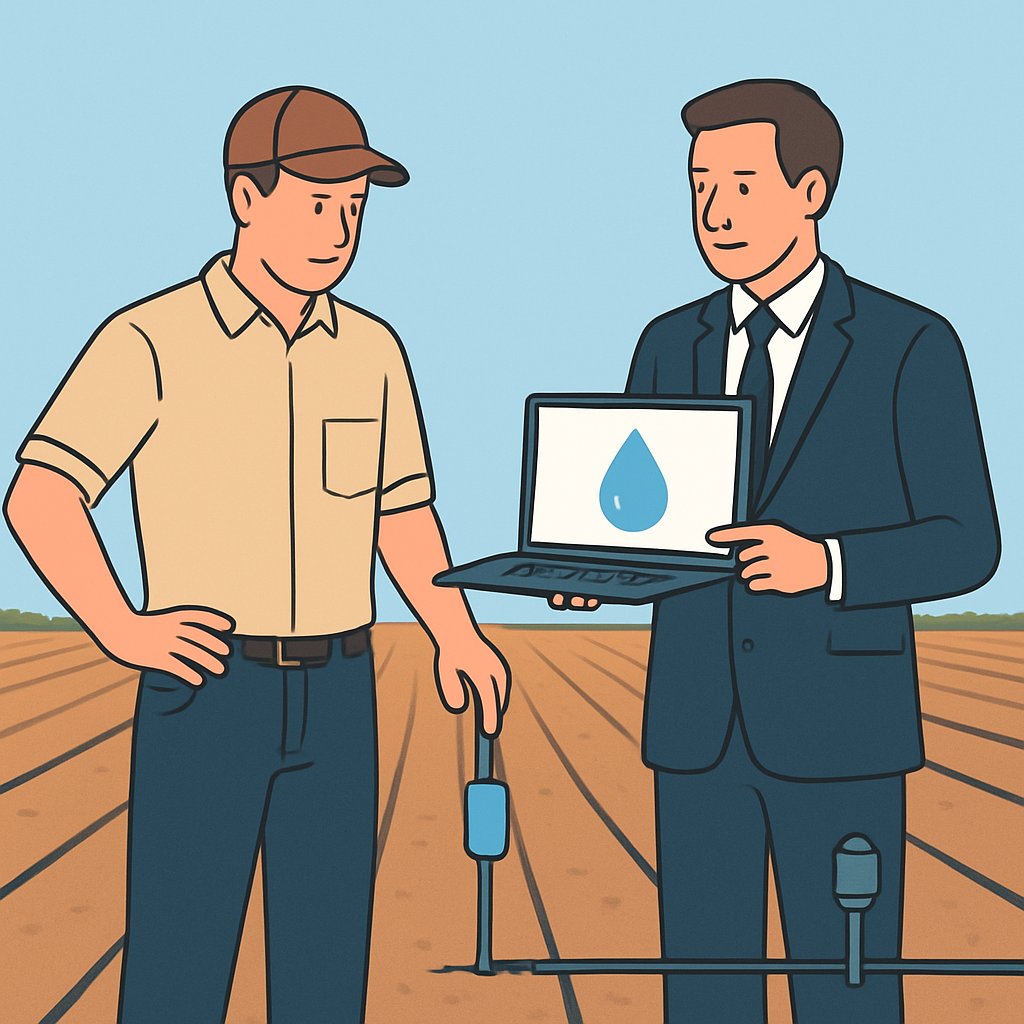
Challenges and Barriers to Adopting Precision Agriculture in Traditional Farming Practices
Traditional farmers face multiple obstacles when considering precision agriculture adoption.
These barriers include financial, technical, infrastructural, cultural, and practical limitations.
Each section below outlines key challenges based solely on the provided content.
Financial Constraints
Many farmers face high upfront costs when investing in precision agriculture technology.
Equipment such as sensors and drones often requires significant capital expenditure.
Small-scale farmers struggle to justify investments without clear short-term returns.
Additionally, limited access to affordable financing restricts widespread adoption.
Technical Knowledge and Training
Traditional farmers often lack sufficient training to operate precision agriculture tools effectively.
Complex software and analytics require specialized knowledge that many do not possess.
Limited local support and extension services hinder effective technology transfer.
Many farmers hesitate to adopt new tools because they fear misuse or failure.
Therefore, comprehensive education programs can bridge this knowledge gap.
Infrastructure and Connectivity Issues
Rural areas often suffer from poor internet connectivity that limits real-time data access.
Many precision tools depend on reliable wireless networks for optimal functionality.
Inadequate power supply also challenges consistent equipment operation.
Therefore, investment in rural digital infrastructure is critical for implementation.
Cultural Resistance and Mindset
Long-standing farming traditions create resistance to adopting unfamiliar technologies.
Farmers like Miguel Hernandez often prefer tried-and-true methods over modern systems.
Skepticism about technology benefits slows acceptance within farming communities.
Peer influence and cultural values shape adoption decisions.
Thus, building trust and showing clear advantages helps change perspectives.
Data Privacy and Security Concerns
Farmers worry about who owns and controls data collected from their lands.
They also fear potential misuse or unauthorized access to sensitive information.
Precision agriculture companies must address these fears with transparent data policies.
Protecting farmers’ data rights encourages wider participation in digital farming.
Therefore, clear legal frameworks and secure platforms are necessary for confidence.
Compatibility with Existing Practices
Traditional farming operations often rely on manual processes incompatible with automation.
Integrating precision tools requires adjustments that may disrupt established workflows.
Farmers like Sarah McLellan may find hybrid approaches challenging to manage.
Technical interoperability between new devices and older machinery remains limited.
Showcase Your Farming Business
Publish your professional farming services profile on our blog for a one-time fee of $200 and reach a dedicated audience of farmers and agribusiness owners.
Publish Your ProfileTherefore, seamless integration solutions are essential to minimize disruptions.
Environmental and Practical Limitations
Variability in soil types and weather can reduce precision model accuracy.
Some regions experience unpredictable factors that technology struggles to accommodate fully.
Equipment maintenance and calibration under harsh field conditions pose difficulties.
Farmers must balance technological benefits against practical realities on the ground.
Therefore, local adaptation remains crucial for consistent results.
Future Prospects: The Role of Artificial Intelligence and Remote Sensing in Water Conservation
Artificial intelligence enables precise irrigation scheduling based on data-driven insights.
Remote sensing delivers detailed, real-time information on crop water usage from satellite data.
Combined systems improve decision making and help conserve water resources.
Artificial Intelligence Transforming Water Management
Companies like AgriSense Solutions develop AI platforms for farms.
These platforms are tailored to serve both small and large operations.
Additionally, AI supports pest and disease detection to conserve water indirectly.
Remote Sensing Technologies Enhancing Water Efficiency
Remote sensing provides real-time satellite data on crop water use.
Farmers receive aerial views of fields to detect water stress quickly.
Innovators such as TerraVista offer sensor networks that integrate remote sensing data.
Moreover, drones equipped with multispectral cameras monitor plant health and soil conditions.
Integration of AI and Remote Sensing for Smart Farming
Combining AI and remote sensing creates comprehensive solutions for water management challenges.
Platforms like Aquatech Farming incorporate both technologies for real-time decision support.
Farmers use predictive analytics to anticipate water needs from environmental and crop data.
Consequently, synergy increases irrigation efficiency while maintaining crop yield and quality.
Opportunities for Expanding Adoption
Government initiatives promote integrating AI and remote sensing into precision agriculture.
Training programs empower farmers to adopt new water-saving technologies confidently.
Agritech startups such as GreenField Analytics collaborate with local cooperatives for access.
Furthermore, partnerships between researchers and agribusinesses accelerate innovation implementation globally.
Policy Implications and Support for Farmers Adopting Water-Conserving Technologies
Government policies directly influence the adoption of precision agriculture technologies.
Many governments provide grants and low-interest loans for technology adoption.
Education campaigns raise awareness about water conservation benefits and methods.
Role of Government Policies in Promoting Water Conservation
Moreover, policies can incentivize sustainable farming practices with financial benefits.
For instance, subsidy programs help reduce costs for farmers investing in water-saving solutions.
Regulations also establish water use standards that encourage efficient resource management.
Consequently, clear and supportive policies improve farmers’ access to modern technologies.
Financial Incentives and Assistance Programs
These incentives lower the initial investment barrier for small and medium-sized farms.
Additionally, tax credits reward farmers who implement sustainable water management systems.
Farms receiving financial support can upgrade irrigation infrastructure to reduce water waste.
Programs like these accelerate the scaling of precision agriculture across diverse regions.
Extension Services and Farmer Education
Extension agents offer hands-on training tailored to specific farm conditions.
Technical assistance helps farmers integrate sensors, drones, and automated irrigation effectively.
Also, farmer networks facilitate knowledge sharing and foster peer learning.
Through continuous support, farmers build confidence in adopting new water-saving technologies.
Collaboration with Agri-Tech Companies
Public-private partnerships drive innovation and affordability in water conservation tools.
Showcase Your Farming Business
Publish your professional farming services profile on our blog for a one-time fee of $200 and reach a dedicated audience of farmers and agribusiness owners.
Publish Your ProfileCompanies like GreenField Solutions and AquaWise collaborate with governments to expand outreach.
These collaborations improve technology customization based on local water challenges.
Furthermore, shared data platforms enhance precision agriculture’s effectiveness and transparency.
Such joint efforts create a favorable environment for sustainable farming advances.
Addressing Barriers to Technology Adoption
Policy frameworks must consider challenges faced by rural and resource-limited farmers.
Limited internet access and infrastructure reduce the feasibility of some digital solutions.
Therefore, investments in rural connectivity serve as critical enablers for technology use.
Moreover, simplifying funding procedures encourages more farmers to participate in programs.
Inclusive policies ensure equitable access to water-saving innovations across regions.


