




Introduction to Precision Pest Management
Defining Precision Pest Management
Precision pest management uses advanced technology to target pests accurately.
It reduces chemical usage by focusing treatments only where needed.
This approach improves crop protection while minimizing environmental impact.
Relevance to Modern Farming
Farmers face increasing pressure to produce more with fewer resources.
Consequently, precision pest management helps optimize pest control efforts efficiently.
Moreover, it supports sustainable farming practices by preserving beneficial organisms.
Technological Innovations Driving Precision Pest Management
Tools such as drones and satellite imagery provide detailed field data.
Furthermore, sensors monitor pest populations and crop health in real time.
Data analytics then guide precise intervention decisions for maximum effectiveness.
Impact on Farmland Asset Valuations
Effective pest management maintains crop quality and reduces losses.
Therefore, land with proven pest control methods often commands higher market value.
Additionally, investors view such farmland as a lower-risk asset with stable returns.
Key Benefits for Farmers and Stakeholders
Farmers improve yields and reduce input costs by managing pests precisely.
Additionally, environmental compliance becomes easier with targeted pesticide use.
Consequently, farmland owners can enhance their asset’s reputation and profitability.
Transform Your Agribusiness
Unlock your farm's potential with expert advice tailored to your needs. Get actionable steps that drive real results.
Get StartedChallenges and Opportunities in Adopting Precision Pest Management
Some farmers hesitate due to initial investment costs or technology complexity.
However, training programs help ease the transition to precision pest management.
Ultimately, broader adoption could transform pest control and farmland valuation over time.
The Importance of Land Valuation in Agriculture
Significance of Accurate Land Valuation
Accurate land valuation plays a crucial role in agricultural decision-making.
It influences investment strategies and financial planning for farmers.
Moreover, land value impacts loan approvals and credit access in farming communities.
Therefore, precise valuations help farmers and investors assess farmland potential effectively.
In addition, understanding land value guides resource allocation for crop production.
Factors Affecting Farmland Valuation
Several elements shape the valuation of agricultural land.
First, soil quality and fertility determine crop yield expectations.
Next, water availability is critical for sustainable farming operations.
Furthermore, location and proximity to markets affect land demand.
Also, legal rights and land use regulations influence value assessments.
Effects of Land Valuation on Agricultural Economics
Land valuation directly affects farmers’ profitability and operational scope.
Higher valuations can increase collateral value for agricultural loans.
Consequently, it encourages investments in advanced farming technologies.
This, in turn, boosts productivity and long-term sustainability of farmland assets.
Farmers like Martin Hawthorne have leveraged accurate valuations to expand their operations.
Role of Land Valuation in Managing Risks
Land valuation assists farmers in identifying financial risks related to farmland.
It helps in planning for fluctuations in land value from market or environmental changes.
Insurance companies also rely on accurate valuations to design crop and property policies.
As a result, proper valuation safeguards agricultural investments against unforeseen losses.
Technological Advances Enhancing Land Valuation
Modern technologies have improved land valuation methods tremendously.
Precision agriculture tools collect data to support detailed land assessments.
Showcase Your Farming Business
Publish your professional farming services profile on our blog for a one-time fee of $200 and reach a dedicated audience of farmers and agribusiness owners.
Publish Your ProfileGIS mapping and remote sensing provide insights into soil and water conditions.
Farm management firms like TerraWise Solutions specialize in these advanced services.
Therefore, technology enables more reliable and dynamic farmland valuation practices.
Overview of Traditional Pest Management Techniques
Fundamental Approaches to Pest Control
Farmers have relied on traditional pest management methods for decades.
These methods primarily include chemical, cultural, mechanical, and biological controls.
Chemical control uses pesticides to reduce or eliminate pest populations.
Cultural control involves altering farming practices to discourage pests.
Mechanical control relies on physical means such as traps or barriers.
Biological control uses natural predators or parasites to manage pest populations.
Chemical Pest Management
Chemical pesticides offer quick and effective pest suppression.
Farmers apply insecticides, herbicides, and fungicides to protect crops.
Overuse can lead to pest resistance and environmental harm.
Therefore, many professionals recommend careful application and rotation of chemicals.
Due to toxicity concerns, trained specialists often handle pesticide application.
Cultural Practices Supporting Pest Reduction
Cultural techniques involve crop rotation and intercropping to disrupt pest life cycles.
Adjusting planting times can also reduce pest pressures at critical growth stages.
Maintaining field sanitation by removing crop residues helps limit pest habitats.
These practices integrate pest management without directly applying chemicals.
Over time, such methods contribute to healthier and more resilient farmland.
Mechanical and Physical Controls
Mechanical tactics include hand-picking pests and using traps or barriers.
Farmers also deploy tillage to destroy pest eggs or larvae in the soil.
These approaches physically reduce pest numbers without chemical intervention.
Despite their labor intensity, mechanical controls remain valuable in organic farming.
They also help reduce pesticide dependence and environmental risks.
Biological Control Methods
Biological control harnesses natural enemies like predators, parasitoids, and pathogens.
For example, releasing ladybugs helps manage aphid populations more sustainably.
Farmers benefit from lower chemical use and increased ecosystem balance.
However, success depends on correct identification and conservation of beneficial species.
Biological control often complements other pest management strategies effectively.
Challenges and Innovations in Traditional Pest Management
Traditional methods have proven useful but face several challenges.
Excessive pesticide use risks environmental contamination and health hazards.
Inconsistent effectiveness can result in crop losses and financial impacts.
Many of these techniques lack precision and require extensive labor input.
Consequently, farmers and companies like Oakridge Agriculture seek advanced alternatives.
Innovative technologies aim to improve efficiency and farmland asset valuations.
Explore Further: How Crop Rotation Improves Land Value in Agricultural Real Estate
Benefits of Precision Pest Management
Reducing Costs through Targeted Interventions
Precision pest management enables farmers to apply treatments only where necessary.
This approach lowers chemical usage and reduces overall input expenses.
Consequently, the landowner saves money on pesticides and labor.
Moreover, it decreases the environmental footprint of farming operations significantly.
Showcase Your Farming Business
Publish your professional farming services profile on our blog for a one-time fee of $200 and reach a dedicated audience of farmers and agribusiness owners.
Publish Your ProfileAdvanced monitoring tools identify pest hotspots before infestations spread.
Therefore, farmers respond faster and prevent costly damage to crops.
Increasing Yields with Enhanced Crop Protection
Effective pest control directly improves crop health and productivity.
Farms using precision methods typically report higher yields than traditional techniques.
Targeted pest suppression minimizes crop stress and supports stronger plant growth.
Additionally, precision data helps optimize planting schedules and resource allocation.
As a result, farmers like Lucas Chapman of Sunrise Valley achieve consistent harvest improvements.
Improving Farmland Asset Valuations
Reducing pest-related crop losses makes farmland more attractive to investors.
Higher yields increase the revenue potential of agricultural properties substantially.
Furthermore, sustainable pest management enhances the long-term productivity of soil assets.
Investors appreciate farms demonstrating advanced precision practices and technology adoption.
For example, consultant Maria Lopez highlights that these techniques boost market confidence.
Supporting Sustainable Farming Practices
Precision pest management employs data-driven decisions to minimize chemical overuse.
This practice promotes environmental stewardship while maintaining profitability.
Furthermore, it encourages integrated pest management strategies and biodiversity conservation.
Farmers like Thomas Bennett leverage these methods to comply with evolving agricultural regulations.
Consequently, sustainable pest control aligns farmland valuation with future ecological standards.
Discover More: Precision Agriculture for Profitable Organic Crop Farming
Technological Innovations in Precision Pest Management
Use of Drones for Targeted Pest Control
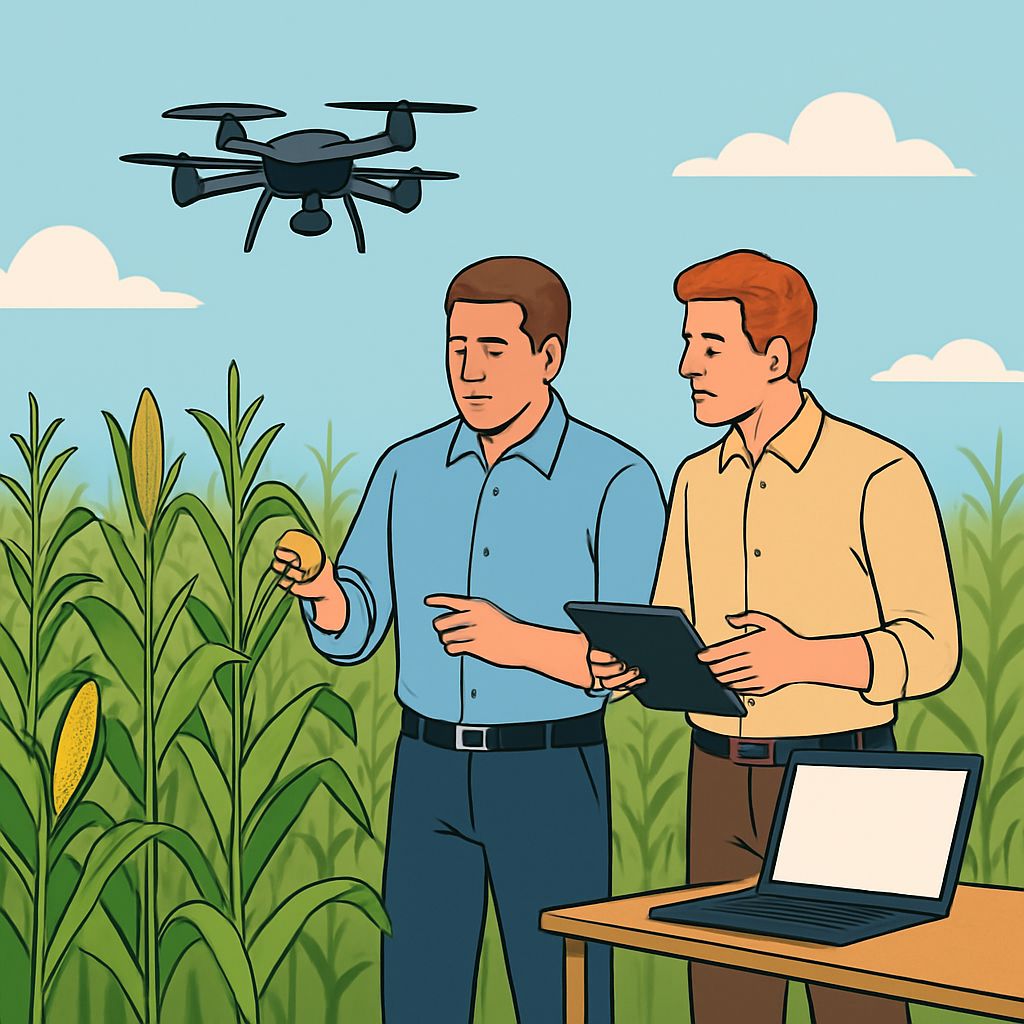
Drones enable farmers to monitor large fields efficiently.
They help identify pest hotspots quickly across vast areas.
Drones deliver precise pesticide applications only where needed.
This targeted approach reduces chemical waste significantly.
Additionally, drones capture high-resolution images to assess crop health regularly.
Farmers use these images to monitor crop conditions continuously.
Companies like SkyAg Solutions developed drone systems tailored for pest scouting.
Consequently, farmers achieve better pest control with lower costs.
These innovations also reduce environmental impact effectively.
Advanced Sensor Technologies in Pest Detection
Soil and air sensors detect early signs of pest infestations.
They also monitor plant stress indicators to prevent crop damage.
Innovators like EcoSense Technologies produce devices measuring humidity, temperature, and pest activity.
Farmers receive real-time data that allow prompt reactions.
This helps stop infestations before they spread extensively.
Sensors integrated with AI analyze patterns to predict pest outbreaks proactively.
This technology ensures targeted interventions and reduces unnecessary pesticide use.
Integration of Data Analytics and Artificial Intelligence
Data analytics enhances decision-making by processing drone and sensor information.
GreenFields Analytics offers platforms combining field data with weather forecasts and historical trends.
Artificial intelligence identifies pest behavior and suggests optimal control strategies.
Farm managers utilize insights to optimize timing and methods of pest treatment.
Hence, integrating these technologies leads to smarter pest management.
This results in improved crop yields and sustainability.
Showcase Your Farming Business
Publish your professional farming services profile on our blog for a one-time fee of $200 and reach a dedicated audience of farmers and agribusiness owners.
Publish Your ProfileBenefits of Precision Pest Management Technologies
These innovations reduce chemical exposure and promote safer environments.
The safety benefits extend to workers and local wildlife.
Precision pest management improves overall crop quality effectively.
Farmers experience increased farmland market value significantly.
Furthermore, precise pest control lowers operational costs considerably.
Adopting these technologies gives farmers competitive advantages in sustainable agriculture.
Ultimately, precision pest management fosters resilient and high-performing farmland assets.
Find Out More: Understanding Precision Irrigation Strategies For Higher Land Appraisals
Case Studies of Successful Precision Pest Management Implementation
Greenfield Farms Enhancing Crop Health and Valuation
Greenfield Farms integrated precision pest management techniques across its 1,200-acre cornfields.
They used drone-based imaging to detect pest hotspots early in the growth cycle.
Targeted pesticide application reduced chemical use by 40%.
This method improved crop health substantially and lowered environmental impact.
Greenfield Farms increased its farmland asset valuation by 15% within one season.
Sunrise Orchards Reducing Costs with Smart Monitoring
Sunrise Orchards adopted sensor technology to monitor aphid infestations on apple trees.
Real-time alerts enabled workers to address pest problems immediately.
They avoided widespread damage and minimized pesticide expenses.
The orchard enhanced crop yield quality, attracting premium market prices.
The precision approach raised the overall estate value by enhancing sustainable production.
Harrison Family Vineyard Sustainable Practices Driving Market Advantage
The Harrison Family Vineyard implemented a soil and pest mapping system.
This system identified regions requiring minimal intervention, preserving beneficial insects.
Pest outbreaks declined, reducing pesticide application frequency.
The vineyard marketed its produce as environmentally conscious and chemical-smart.
This strategy gained consumer trust and increased property valuation significantly.
Bright Horizons Agricultural Cooperative Collaborative Pest Management Success
Bright Horizons Cooperative combined data from multiple farms to track regional pests.
Sharing insights helped optimize pesticide use and predict infestation trends early.
The cooperative coordinated targeted treatments and avoided unnecessary blanket spraying.
Members experienced higher crop uniformity and resilience.
This collective effort improved land values by signaling advanced integrated pest control practices.
Key Factors Driving Positive Outcomes in Precision Pest Management
- Early detection of pest issues through advanced technology
- Targeted pesticide application reducing chemical costs and environmental harm
- Data-driven decisions improving crop health and yield quality
- Enhanced market appeal due to sustainable and precise farming practices
- Collaborative approaches amplifying benefits across multiple farmland assets
Learn More: Understanding Integrated Pest Management for Real Estate Owners
Impact of Precision Pest Management on Soil Health and Biodiversity
Enhancing Soil Health Through Targeted Pest Control
Precision pest management minimizes the use of broad-spectrum pesticides on farmland.
This approach effectively reduces chemical residues in the soil environment.
Farmers such as Lucas Reynolds have reported improved soil structure after adopting these techniques.
Additionally, precise interventions help maintain beneficial microbial populations in the soil.
Healthy microbes contribute significantly to nutrient cycling and overall soil fertility.
Thus, crops receive balanced nutrition, which boosts their resilience to stress.
As a result, precision pest management directly supports sustainable soil ecosystems.
Supporting Biodiversity with Site-Specific Pest Treatments
Targeting pests specifically avoids harming non-target species in the environment.
For example, native pollinators around Meadowbrook Farms thrive due to localized spraying.
Beneficial insects like ladybugs and predatory beetles remain abundant on treated fields.
This ecological balance helps regulate pest populations naturally over time.
Showcase Your Farming Business
Publish your professional farming services profile on our blog for a one-time fee of $200 and reach a dedicated audience of farmers and agribusiness owners.
Publish Your ProfileMoreover, reduced chemical exposure protects soil invertebrates important for aeration and organic matter breakdown.
Consequently, these biodiversity benefits enhance farmland resilience against future pest outbreaks.
Technological Innovations Driving Positive Ecological Outcomes
Advanced tools such as drone surveillance and AI pest identification enable precise interventions.
Consultants from Evergreen AgroTech use these technologies for real-time crop monitoring.
These innovations allow farmers to apply treatments only when and where necessary.
As a result, environmental contamination lowers and natural habitats remain preserved.
Furthermore, data-driven decisions promote adaptive management aligned with ecological cycles.
Ultimately, combining technology with ecological knowledge advances soil health and biodiversity conservation simultaneously.
Practices Encouraging Long-Term Agroecosystem Sustainability
Farmers like Elena Martinez emphasize combining pest management with crop rotation and cover cropping.
These practices complement precision pest techniques by fostering diverse soil biota.
Her approach demonstrates improved soil organic matter and enhanced pest suppression.
Additionally, maintaining ground cover prevents erosion and supports beneficial fauna.
Collectively, integrated practices create resilient farmland ecosystems.
Therefore, precision pest management forms a core component of holistic, sustainable farming.
Regulatory Considerations and Consumer Perception of Precision Farming
Regulatory Framework Guiding Precision Pest Management
Government agencies actively regulate precision pest management technologies.
These regulations ensure environmental safety and data privacy for farmers.
Compliance also reduces risks associated with chemical use and technology deployment.
The Environmental Protection Agency enforces limits on pesticide application.
State authorities, such as California’s Department of Pesticide Regulation, monitor local practices.
Farmers must stay current with evolving policies affecting precision agriculture.
Data generated from monitoring systems increasingly falls under privacy laws.
Companies like AgriTech Solutions assist farmers with regulatory adherence.
Consumer Awareness and Trust in Precision Farming
Consumers seek greater transparency about food production methods.
Farmers use precision techniques to demonstrate sustainable practices.
These methods highlight reduced pesticide usage and environmental stewardship.
Research shows consumer confidence rises when farms adopt advanced tools.
Brands like PureHarvest promote produce grown with precision technology.
They emphasize traceability and reduced chemical residues in marketing.
Community outreach programs educate buyers about precision farming benefits.
Such initiatives enhance public perception and support farmland valuation growth.
Balancing Innovation with Ethical and Legal Responsibilities
Farmers and agribusinesses must balance technological innovation with ethical concerns.
Ethical use includes responsible data management and minimizing ecosystem disruption.
Legal responsibility involves adhering to pesticide registration and application rules.
Expert consultants, such as Dr. Rachel Thompson, help farms maintain compliance.
They provide guidance on integrating precision tools within agricultural regulations.
This cautious approach fosters long-term trust among consumers and regulators.
Future Trends in Precision Pest Management and Their Potential Effects on Asset Valuation
Integration of Advanced Technologies
Precision pest management increasingly incorporates artificial intelligence (AI) for better decision-making.
Drones equipped with multispectral sensors provide detailed crop health data.
These technologies enable early pest detection, reducing crop losses significantly.
Farmland with such capabilities attracts higher valuations from investors.
Showcase Your Farming Business
Publish your professional farming services profile on our blog for a one-time fee of $200 and reach a dedicated audience of farmers and agribusiness owners.
Publish Your ProfileCompanies like Insectica Tech lead innovation in AI-driven pest scouting tools.
Development of Smart Pest Control Systems
Smart traps and automated pesticide dispensers offer targeted pest control.
Farmers use Internet of Things (IoT) devices to monitor pest activity in real-time.
Such systems minimize chemical use, improving environmental sustainability.
Land managed with smart systems gains value due to reduced ecological risks.
Innovators such as VerdantAgro Solutions pioneer smart pest control deployments.
Data-Driven Pest Management Practices
Big data analytics help identify pest patterns and optimal intervention windows.
Farmers tailor pest treatments based on predictive models and past data.
This approach lowers costs while maintaining or improving crop yields.
Lenders and buyers perceive better-managed farms as more valuable assets.
AgroAnalytics Corp. specializes in integrating data analytics for precision pest control.
Effects of Regulatory Changes and Sustainability Standards
New regulations emphasize reduced pesticide usage and eco-friendly practices.
Precision pest management helps farmers comply with evolving standards.
This compliance enhances farm reputations and opens access to premium markets.
Regulatory alignment drives higher valuations for farmland assets.
Firms like EcoFarm Advisors advise farms on sustainable pest practices integration.
Collaborative Ecosystems and Knowledge Sharing
Farmers join digital platforms to share pest management experiences and insights.
Community-driven data improves system accuracy and effectiveness over time.
These collaborative ecosystems foster innovation and faster adaptation to pest challenges.
Farmland benefiting from such networks often commands premium prices.
HarvestNet Solutions operates farmer-centric platforms promoting collective pest management.
Influence of Precision Pest Management on Farmland Asset Valuation
Advanced pest management technologies increase crop resilience and yield stability.
Investors recognize these benefits, leading to greater farmland demand.
Improved environmental outcomes enhance land desirability and longevity.
Farms adopting future precision pest management methods experience marked asset appreciation.
Integrating advanced pest control is a critical factor in modern farmland valuation.
Additional Resources
IoT in Agriculture: 10 Use Cases for Smart Farming Technologies