




Introduction to Precision Agriculture and Its Importance in Organic Crop Farming
Defining Precision Agriculture
Precision agriculture utilizes technology to enhance farming practices.
This approach focuses on monitoring and managing field variability.
Farmers collect data on different aspects of the farm.
For example, soil health, moisture levels, and crop performance.
They then apply targeted solutions based on this data.
As a result, they can optimize resource use and increase yields.
Benefits of Precision Agriculture in Organic Farming
Precision agriculture is crucial for organic crop farming.
It helps in minimizing waste and maximizing output.
Farmers can accurately assess nutrient needs for crops.
They can also optimize irrigation schedules to conserve water.
This method supports sustainable farming practices.
Enhancing Soil Health
Healthy soil is the foundation of successful organic farming.
Precision agriculture tools enable better soil assessments.
Farmers can identify nutrient deficiencies and amend appropriately.
Consequently, this improves soil fertility and crop health.
Transform Your Agribusiness
Unlock your farm's potential with expert advice tailored to your needs. Get actionable steps that drive real results.
Get StartedData-Driven Decision Making
Data collection and analysis are key components of precision agriculture.
Farmers can monitor pest populations accurately.
This allows for timely interventions and reduces chemical use.
Moreover, it enhances the effectiveness of organic pest control methods.
Improving Organic Farming Profitability through Efficiency
By implementing precision agriculture, organic farmers can increase profitability.
Efficient resource management reduces operational costs.
Higher crop yields can lead to more substantial revenue.
Ultimately, this approach fosters a more resilient farming business.
Significance of Precision Agriculture for Sustainable Organic Farming
Precision agriculture plays a vital role in organic crop farming.
It enhances efficiency, sustainability, and profitability.
Farmers who adopt these practices can ensure their success in a competitive market.
Key Technologies in Precision Agriculture
GPS Technology
GPS technology revolutionizes crop farming by providing accurate location data.
Farmers utilize GPS to track their equipment and fields effectively.
This technology enhances field mapping and ensures efficient resource allocation.
Moreover, it allows farmers to apply inputs precisely at the right locations.
Consequently, farmers minimize waste and enhance yields.
Drones in Agriculture
Drones have become essential tools in modern agriculture.
They provide aerial imagery, helping farmers monitor crops from above.
This technology identifies issues such as pest infestations and irrigation problems.
Additionally, drones assist in mapping fields and assessing crop health.
Farmers can use this data to make informed decisions quickly.
Soil Sensors
Soil sensors offer vital information about soil conditions.
These sensors monitor moisture levels, temperature, and nutrient content.
Farmers can adjust their irrigation and fertilization based on accurate data.
Showcase Your Farming Business
Publish your professional farming services profile on our blog for a one-time fee of $200 and reach a dedicated audience of farmers and agribusiness owners.
Publish Your ProfileThis practice leads to more sustainable crop management techniques.
As a result, it improves overall crop quality and productivity.
Benefits of Data-Driven Decision Making in Organic Farming Practices
Improved Crop Management
Data-driven decision making enhances crop management practices.
Farmers can analyze crop performance based on historical data.
This analysis aids in identifying optimal planting times.
Moreover, it helps manage pests and diseases more effectively.
Resource Optimization
Utilizing data allows for better resource allocation.
Farmers can track water usage and adjust accordingly.
This results in significant savings on water resources.
Additionally, monitoring fertilizer application minimizes waste.
Increased Yield Potential
Data analytics can significantly boost yield potential.
Farmers gain insights on soil quality and fertility levels.
This knowledge enables them to make informed planting decisions.
Consequently, they can maximize output and profitability.
Enhanced Sustainability Practices
Implementing data-driven strategies promotes sustainable farming.
Farmers can monitor their environmental impact closely.
Furthermore, they can optimize inputs to reduce carbon footprint.
Sustainable practices enhance soil health for future crops.
Real-Time Monitoring and Alerts
Data technology facilitates real-time monitoring of crops.
Farmers receive alerts about potential issues immediately.
This allows for timely intervention and problem-solving.
Consequently, it increases overall farm resilience.
Strengthened Market Position
Data helps farmers adjust to market demands swiftly.
They can analyze market trends and consumer preferences.
This information enhances their ability to strategize sales.
Ultimately, this strengthens their position in the organic market.
Gain More Insights: Understanding Precision Irrigation Strategies For Higher Land Appraisals
Soil Health Management: Using Precision Agriculture to Enhance Organic Inputs
Importance of Soil Health
Soil health is critical for successful organic farming.
Healthy soil supports robust plant growth and resilience.
Additionally, it enhances nutrient cycling and water retention.
Precision Agriculture Techniques
Precision agriculture utilizes advanced technology to monitor soil conditions.
These techniques include soil sensors and satellite imaging.
They enable farmers to make data-driven decisions for soil management.
Soil Sensors
Soil sensors provide real-time data on moisture and nutrient levels.
Farmers can optimize irrigation and fertilization accordingly.
This approach reduces waste and improves crop yields.
Satellite Imaging
Satellite imaging helps identify variable soil conditions across fields.
Farmers can adjust their practices based on specific needs.
This targeted management enhances overall soil health.
Organic Inputs and Their Integration
Organic inputs enhance soil fertility and biodiversity.
Showcase Your Farming Business
Publish your professional farming services profile on our blog for a one-time fee of $200 and reach a dedicated audience of farmers and agribusiness owners.
Publish Your ProfileCommon organic amendments include compost and cover crops.
These inputs improve soil structure and microbial activity.
Compost Utilization
Compost returns valuable nutrients back to the soil.
It also builds soil organic matter, promoting better structure.
Regular application of compost supports sustainable farming practices.
Cover Crops Benefits
Cover crops minimize erosion and suppress weeds effectively.
They also improve soil health by fixing nitrogen and enhancing biodiversity.
Incorporating cover crops can lead to higher yields over time.
Monitoring and Adjusting Practices
Monitoring soil health and crop performance is essential.
Farmers should regularly test soil and analyze results.
This information guides timely adjustments to farming practices.
Data Analysis Tools
Data analysis tools assist in interpreting soil test results.
Farmers can identify areas needing improvement.
These insights lead to optimized organic input application.
Continuous Improvement
Continuous improvement is vital for long-term success.
Farmers should implement feedback loops based on performance data.
This adjustment process enhances both soil health and profitability.
Discover More: Understanding Integrated Pest Management for Real Estate Owners
Water Management Techniques
Precision Irrigation Systems
Precision irrigation systems enhance water management for organic crops.
These systems adapt to the specific needs of plants.
They aim to minimize water wastage while maximizing crop efficiency.
Various technologies contribute to precision irrigation.
Drip irrigation is one of the most effective methods available.
This method delivers water directly to the roots.
As a result, plants receive moisture right where they need it.
Sprinkler systems also play a key role in this approach.
They allow for more even distribution of water across fields.
Both systems can be automated for better control.
Monitoring Soil Moisture
Monitoring soil moisture is critical in precision agriculture.
Soil sensors provide real-time data about moisture levels.
This information helps farmers make informed irrigation decisions.
Farmers can adjust their practices based on current data.
This strategy not only saves water but also improves crop yield.
Furthermore, it reduces the risk of over-irrigation.
Too much water can harm crops and waste resources.
Harvest Timing and Crop Health
Proper irrigation practices influence harvest timing.
Healthy plants are more resilient against pests and diseases.
Thus, understanding irrigation impacts overall crop health.
Harvesting at the right time ensures maximum quality and yield.
Right irrigation techniques contribute to better nutrient uptake.
Showcase Your Farming Business
Publish your professional farming services profile on our blog for a one-time fee of $200 and reach a dedicated audience of farmers and agribusiness owners.
Publish Your ProfileConsequently, crops can reach their full potential.
Benefits of Precision Irrigation
Precision irrigation offers numerous benefits to organic farmers.
It reduces water usage significantly, promoting sustainability.
This practice can improve crop yields and profitability.
Farmers can manage resources more effectively.
In addition, it enhances soil health over time.
Healthy soil supports future harvests and overall farm longevity.
Gain More Insights: Conservation Tillage Methods for Reducing Soil Erosion
Pest and Disease Management: Utilizing Technology for Sustainable Solutions
Introduction to Integrated Pest Management
Pest and disease management is essential for successful organic farming.
Integrated Pest Management (IPM) offers sustainable strategies for crop protection.
This approach combines various management techniques for optimal results.
Role of Technology in Pest Monitoring
Technology significantly enhances pest monitoring capabilities.
Drones provide detailed aerial views of crop health.
These tools help identify pest infestations before they spread.
Additionally, sensors can detect environmental conditions favoring pest outbreaks.
Data-Driven Decision Making
Data collection forms the backbone of effective pest management.
Farmers can gather data through various digital platforms.
Moreover, software applications analyze pest trends and predict outbreaks.
This information allows farmers to make proactive management decisions.
Biological Controls as a Sustainable Option
Biological controls offer an eco-friendly alternative to chemical pesticides.
Beneficial insects can naturally control pest populations.
Additionally, microbial pesticides target specific pests without harming crops.
Implementing these methods promotes a healthier ecosystem on the farm.
Precision Agriculture Techniques
Precision agriculture enhances pest management through targeted applications.
Farmers can use GPS technology for precise pesticide application.
This reduces waste and minimizes environmental impact.
Furthermore, it optimizes inputs, saving time and money.
Continuous Education and Training
Keeping updated with the latest pest management techniques is crucial.
Farmers should participate in workshops and online courses regularly.
Networking with peers can also provide valuable insights and strategies.
Continuous learning fosters innovation and effectiveness in pest management.
Discover More: Crop Disease Management for Long-Term Farm Sustainability
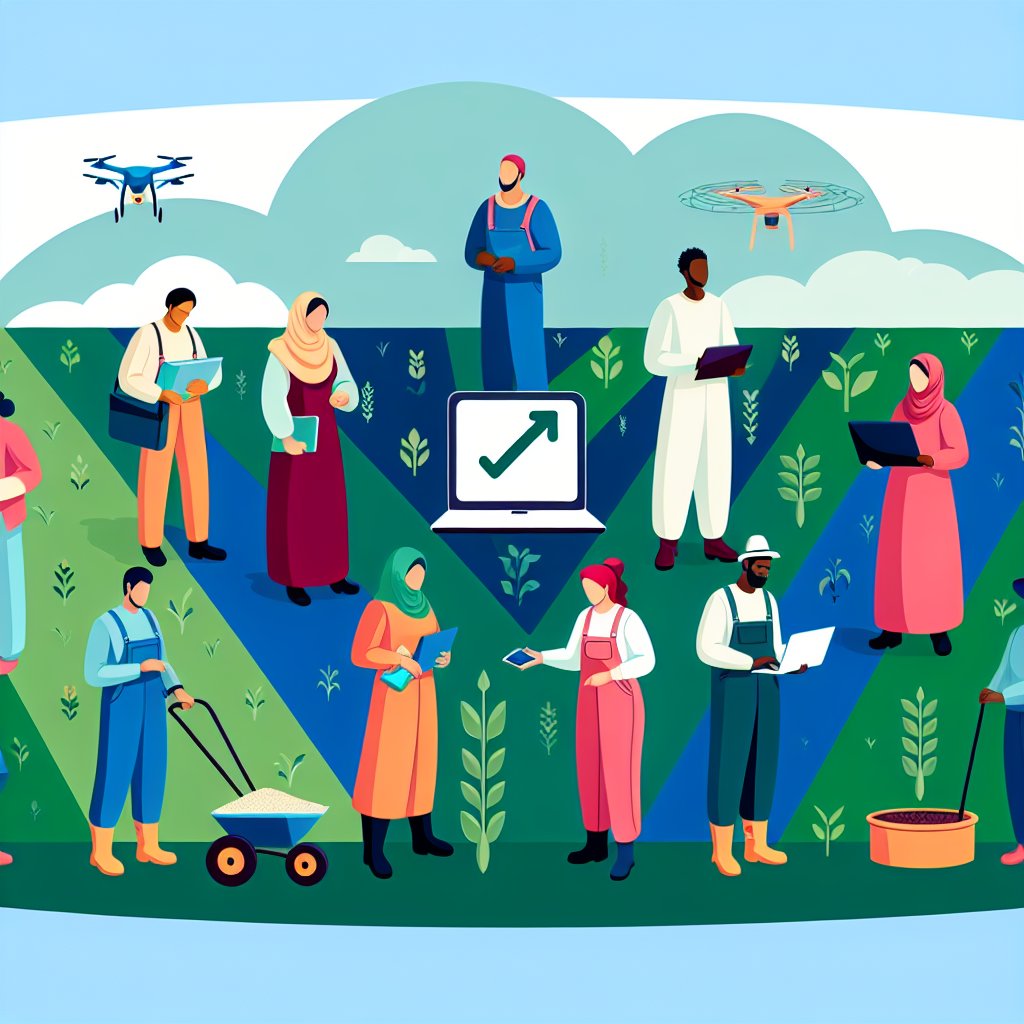
Economic Impact: Maximizing Profits Through Precision Agriculture Strategies
Understanding Precision Agriculture
Precision agriculture uses technology to optimize farming practices.
This approach includes data-driven decision-making.
Farmers can increase their efficiency and productivity.
Moreover, it helps in reducing input costs.
Enhancing Crop Yields
Adopting precision agriculture methods leads to improved crop yields.
Farmers utilize data to determine optimal planting times.
This approach maximizes the potential of each crop.
Furthermore, tailored nutrient applications enhance growth.
Showcase Your Farming Business
Publish your professional farming services profile on our blog for a one-time fee of $200 and reach a dedicated audience of farmers and agribusiness owners.
Publish Your ProfileConsequently, farmers see a notable increase in harvest quantities.
Cost Reduction Strategies
One essential benefit of precision agriculture is cost reduction.
Farmers can monitor resource usage more effectively.
For example, irrigation systems can be optimized based on data.
- Water use decreases significantly.
- Fertilizer applications can be minimized.
- Labor efficiency is improved with automated systems.
As a result, overall production costs decline.
Eco-Friendly Practices
Precision agriculture promotes environmentally sustainable practices.
Farmers reduce chemical runoff with targeted applications.
Additionally, improved soil management protects natural resources.
This eco-friendly approach attracts consumers focused on sustainability.
Thus, it enhances marketability and product value.
Fostering Data-Driven Decision Making
Farmers increasingly rely on data for decision-making.
This shift enables precise planning and forecasting.
Access to advanced analytics tools boosts profitability.
With these insights, farmers can anticipate market trends.
Timely decisions lead to efficient resource allocation.
Building Resilience Against Market Fluctuations
Economic stability in agriculture often hinges on market variability.
Precision agriculture equips farmers to respond swiftly to changes.
By analyzing data, farmers can adapt their strategies.
This adaptability can safeguard against financial losses.
Consequently, it promotes long-term business sustainability.
Case Studies: Successful Implementation of Precision Agriculture in Organic Farms
Innovative Farm Techniques
Maria’s Organic Farm adopted precision agriculture methods last year.
She utilized soil sensors to optimize irrigation schedules.
This increased water efficiency by over 30 percent.
Additionally, her crop yields improved significantly.
Maria reports higher profits as a result.
Technology Integration in Crop Management
Green Valley Farms introduced drones for field assessments.
The drones provided real-time data on crop health.
Farmers successfully identified areas needing intervention.
This proactive approach enhanced crop quality and quantity.
Success Stories from Diverse Regions
Sunrise Acres, located in California, exemplifies success.
They used GPS technology to plant crops with precision.
This minimized overlap and reduced resource waste.
Sunrise Farms has seen a remarkable cost reduction in inputs.
Benefits of Data-Driven Decisions
Clover Field Farm implemented a data analytics platform.
This allowed for tailored fertilization schedules based on soil analysis.
The results have been astonishing, with a 25 percent yield increase.
Farmers now make informed decisions based on reliable data.
Community and Knowledge Sharing
The Organic Farmers Network encourages knowledge sharing.
Farmers exchange best practices for precision agriculture.
This collaborative spirit fosters innovation across regions.
Showcase Your Farming Business
Publish your professional farming services profile on our blog for a one-time fee of $200 and reach a dedicated audience of farmers and agribusiness owners.
Publish Your ProfileAs a result, the entire community benefits from shared successes.
Addressing Challenges with Collaborative Solutions
While implementing these technologies, farmers faced challenges.
High initial costs of technology deterred many.
However, grants and subsidies are now available to assist.
Farmers have started collaborating with tech companies for solutions.
This partnership model has proven effective in overcoming hurdles.
Future Trends: Innovations in Precision Agriculture for Sustainable Organic Farming
Emerging Technologies
The agriculture sector is embracing new technologies for enhanced efficiency.
Drones offer aerial imagery and crop monitoring capabilities.
Moreover, advanced sensors provide real-time data on soil moisture levels.
This data enables farmers to make informed decisions quickly.
Additionally, satellite imagery aids in assessing crop health over large areas.
Data-Driven Farming
Data analytics is transforming traditional farming practices.
Farmers now use analytics to optimize crop yields and resource usage.
Machine learning algorithms predict pest outbreaks and disease.
As a result, farmers can implement preventative measures timely.
Furthermore, precision irrigation systems conserve water by targeting specific areas.
Integration of AI and IoT
Artificial Intelligence is streamlining various farming processes.
IoT devices collect important data from the field.
These devices help in automating irrigation and fertilization schedules.
Consequently, this reduces waste and increases crop production efficiency.
Additionally, AI can analyze historical data to improve future planting decisions.
Collaboration and Knowledge Sharing
Farmers are increasingly collaborating with tech companies.
This partnership fosters innovation in the agricultural sector.
Knowledge sharing platforms allow farmers to stay informed on best practices.
Workshops and training programs enhance skills in using new technologies.
As a result, farmers can adapt quickly to changing market requirements.
Sustainable Practices through Precision Techniques
Precision agriculture promotes sustainable practices across the board.
By monitoring environmental conditions, farmers minimize chemical usage.
It encourages organic farming methods that protect soil health.
Also, sustainable crop rotations become more manageable with precise data.
Such techniques lead to better resource conservation and biodiversity.
Additional Resources
Editorial Board – Agrosystems, Geosciences & Environment – ACSESS
How sensor-based nitrogen management boosts corn and wheat …