




Introduction to Indoor Gardening and Its Importance for Urban Sustainability
Indoor gardening involves growing plants inside buildings or homes.
It allows individuals to cultivate herbs, vegetables, and flowers year-round.
Consequently, indoor gardening adapts well to limited urban spaces.
Overview of Indoor Gardening
Moreover, it uses controlled environments to optimize plant growth.
This practice reduces dependence on traditional outdoor farming.
Additionally, it uses less water compared to conventional agriculture methods.
Benefits for Urban Sustainability
Indoor gardening helps urban communities produce fresh food locally.
It greatly reduces transportation emissions linked to food delivery.
This approach supports better air quality and improved urban microclimates.
Role in Combating Urban Challenges
Urban areas face challenges like limited green space and food deserts.
Also, it promotes environmental awareness among city dwellers.
Community members engage more actively through shared indoor gardening projects.
Popular Indoor Plant Varieties for Eco-Friendly Urban Gardens
This guide highlights plant varieties suited to eco-friendly urban gardening.
Each group focuses on specific benefits like air purification and edible yields.
Readers can choose options that match space and care preferences.
Transform Your Agribusiness
Unlock your farm's potential with expert advice tailored to your needs. Get actionable steps that drive real results.
Get StartedEfficient Air-Purifying Plants
Spider plants thrive in low-light environments and require minimal care.
They effectively remove indoor pollutants, enhancing air quality.
Similarly, snake plants improve oxygen levels during the night.
These plants contribute to a healthier indoor environment sustainably.
Edible Plants for Urban Farmers
Herbs like basil, mint, and thyme grow well indoors.
They demand limited space and provide fresh ingredients year-round.
Leafy greens such as spinach and kale adapt easily to container gardening.
Indoor cultivation reduces the carbon footprint associated with food transport.
Low-Maintenance Succulents and Cacti
Succulents store water, requiring little watering and care.
They are ideal for busy urban dwellers seeking green spaces.
Cacti add aesthetic appeal while thriving in dry indoor conditions.
These plants promote sustainable living by conserving water resources.
Compact Fruit-Bearing Plants
Dwarf citrus trees such as calamondin adapt well to indoor pots.
They provide fresh fruits and fragrant blossoms throughout the year.
Tomato and pepper varieties also suit indoor environments with adequate light.
Growing your own produce indoors supports self-sufficiency and reduces waste.
Decorative Ferns and Mosses
Boston ferns increase indoor humidity and purify air naturally.
Moss gardens require minimal space and create lush green accents.
Both thrive in shaded areas, making them perfect for urban apartments.
These plants contribute to a relaxing, eco-conscious living space.
Vertical Gardening Techniques for Space-Saving Solutions in Urban Settings
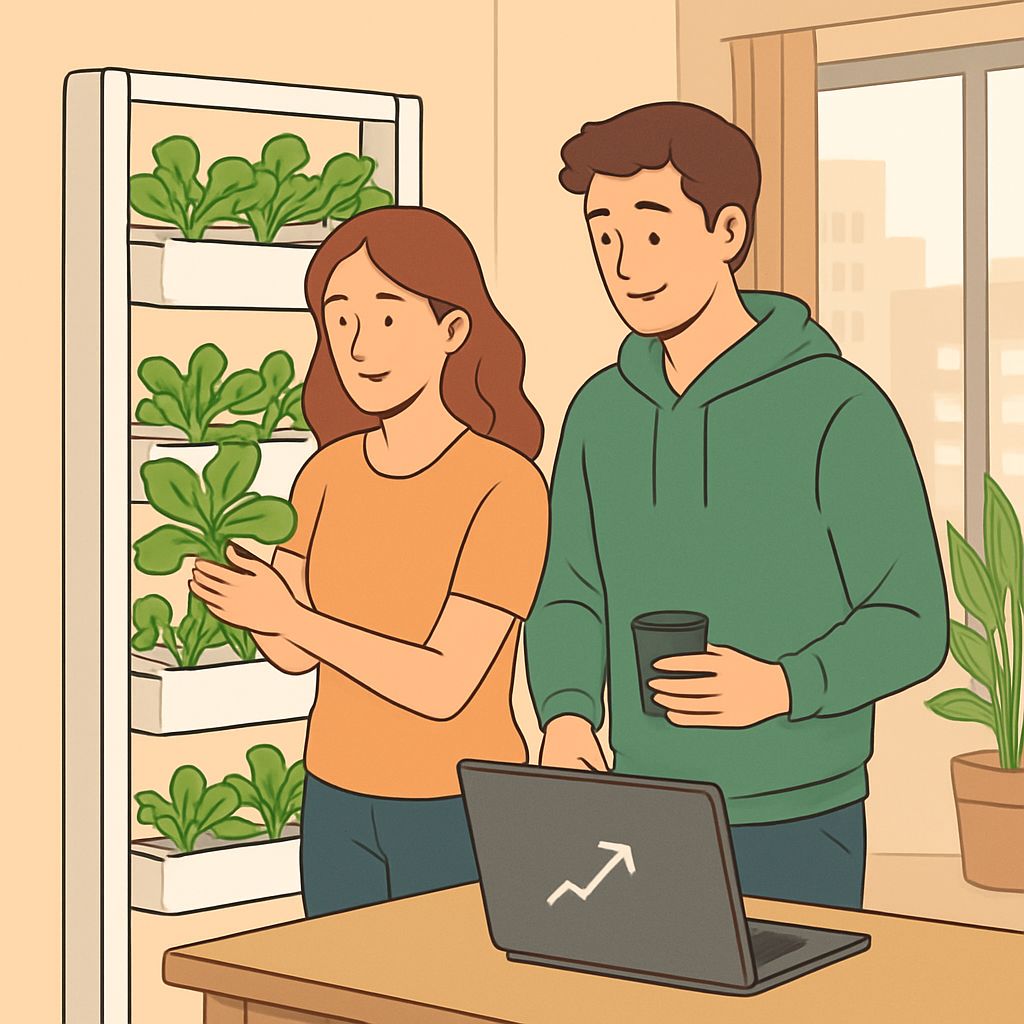
Vertical gardening maximizes limited space in urban environments.
It allows plants to grow upwards instead of spreading outwards.
This approach increases the amount of greenery without requiring large land areas.
Benefits of Vertical Gardening
Vertical gardens improve air quality in densely populated areas.
Showcase Your Farming Business
Publish your professional farming services profile on our blog for a one-time fee of $200 and reach a dedicated audience of farmers and agribusiness owners.
Publish Your ProfileThey provide natural insulation, reducing energy use in buildings.
Such gardens create visually appealing and eco-friendly urban spaces with minimal footprint.
Types of Vertical Gardening Systems
Vertical gardens can be built as living walls, stacked planters, or suspended trellis systems.
Each system suits specific locations and plant types.
Choosing the right system helps optimize limited space.
Living Walls
Living walls use panels mounted vertically to support plant growth.
These systems often incorporate soil or hydroponic mediums for plants.
For instance, Evergreen Solutions installs beautiful living walls in downtown apartments.
Stacked Planters and Towers
Stacked planters allow multiple plant layers in a compact vertical arrangement.
Urban Eden Designs specializes in modular planter towers for small balconies.
These units are easy to assemble and ideal for growing herbs and vegetables.
Suspended and Trellis Systems
Suspended gardens use hanging baskets and vertical supports for climbing plants.
At GreenRoot Innovations, trellis systems enable vines to grow efficiently upwards.
This technique reduces soil usage and enhances plant exposure to sunlight.
Choosing the Right Plants for Vertical Gardens
Select plants with shallow root systems suited for vertical growth.
Herbs like basil, mint, and thyme thrive well in vertical planters.
Leafy greens such as lettuce and spinach adapt easily to these setups.
Flowering plants like petunias add color without heavy maintenance.
Care and Maintenance Tips
Ensure proper watering systems to maintain moisture in vertical gardens.
Drip irrigation delivers water directly to plant roots effectively.
Use lightweight soil to prevent excess weight on supporting structures.
Regularly trim plants to encourage healthy growth and avoid overcrowding.
Monitor sunlight exposure and rotate plants for more even growth.
Learn More: Sustainable Permaculture Techniques for Small Farmers
Hydroponics and Aquaponics: Innovative Systems for Indoor Plant Cultivation
This article compares hydroponics and aquaponics for indoor plant cultivation.
It highlights system components, benefits, and operational considerations for urban growers.
Readers will learn practical factors to assess before starting indoor systems.
Introduction to Hydroponics
Hydroponics allows plants to grow without soil, using nutrient-rich water instead.
This method offers precise control over growing conditions.
Growers can achieve faster growth and higher yields when conditions are optimized.
Hydroponics reduces water usage by up to 90% compared to traditional soil farming.
It eliminates the need for pesticides, which promotes healthier crops.
Key Components of Hydroponic Systems
Effective hydroponic setups require a nutrient solution, a growing medium, and light.
Popular growing mediums include coconut coir, perlite, and rockwool.
Grow lights simulate sunlight, enabling year-round indoor cultivation.
Automated nutrient delivery enhances efficiency and reduces labor.
Benefits of Hydroponics in Urban Farming
Hydroponics maximizes space, making it ideal for limited urban areas.
It lowers transportation emissions by enabling local food production.
Urban farmers like GreenLeaf Farms have successfully adopted hydroponics for leafy greens.
The system minimizes water pollution risks by recycling nutrient solutions.
Showcase Your Farming Business
Publish your professional farming services profile on our blog for a one-time fee of $200 and reach a dedicated audience of farmers and agribusiness owners.
Publish Your ProfileIntroduction to Aquaponics
Aquaponics combines hydroponics with aquaculture, using fish waste as fertilizer.
This symbiotic system creates a sustainable cycle of nutrients for plants and fish.
It conserves resources and reduces waste because of the system’s synergy.
Urban innovators such as RiverCity Growers apply aquaponics to grow herbs and tilapia.
How Aquaponics Systems Work
Fish produce ammonia, which beneficial bacteria convert into nitrates.
Plants absorb nitrates as nutrients, which cleans the water for fish.
Operators must balance fish stocking, plant growth, and water quality carefully.
Equipment includes fish tanks, grow beds, pumps, and aeration systems.
Advantages of Aquaponics for Indoor Cultivation
Aquaponics reduces reliance on synthetic fertilizers and chemicals.
It supports diverse crop and fish production simultaneously in urban spaces.
The closed-loop design conserves water and energy efficiently.
Businesses such as Urban Oasis Ventures have successfully marketed aquaponic produce locally.
Challenges and Considerations
Both systems require technical know-how for monitoring and maintaining optimal conditions.
Initial setup costs can be higher than traditional soil gardening.
Long-term savings and sustainable benefits often outweigh upfront investments.
Training programs by company EdenSphere Solutions help beginners master these technologies.
You Might Also Like: Seasonal Gardening for Warm Climate Farmers
Using Renewable Resources: LED Grow Lights and Their Benefits
This section examines LED grow lights and their benefits.
It emphasizes sustainable indoor gardening and urban farming practices.
The following sections explain efficiency, spectrum, lifespan, cost, and innovation.
Energy Efficiency and Sustainability
LED grow lights consume significantly less electricity than traditional lighting options.
This efficiency reduces energy costs and lowers carbon footprints.
Moreover, LED technology supports sustainable indoor gardening practices.
Because they produce less heat, LED lights minimize the need for additional cooling systems.
Consequently, this further decreases overall energy consumption in urban farms.
Optimized Light Spectrum for Plant Growth
LED grow lights emit specific light wavelengths tailored to plant needs.
Red and blue spectrums drive photosynthesis and improve crop yields effectively.
Additionally, customizable settings allow growers like Natalie Greenhouse to enhance growth stages.
These precise light adjustments promote healthier plants and faster production cycles.
Therefore, LED lights help maximize space and output in limited indoor environments.
Durability and Long Lifespan
LED grow lights feature robust designs suited for frequent indoor use.
They last far longer than conventional bulbs, reducing replacement frequency.
This durability benefits companies such as EcoGrow Farms, lowering maintenance costs.
Extended lifespan also means fewer electronic waste issues over time.
Ultimately, this reliability supports sustainable urban farming goals effectively.
Cost-Effectiveness Over Time
Though initial purchase prices can be higher, LED grow lights save money later.
Energy savings and reduced bulb replacement lead to lower operational expenses.
Urban farmers like Michael Chen report improved profitability using LED systems.
Additionally, some regions offer incentives and rebates for energy-efficient lighting installation.
Thus, investing in LED grow lights proves economically and environmentally sound.
Showcase Your Farming Business
Publish your professional farming services profile on our blog for a one-time fee of $200 and reach a dedicated audience of farmers and agribusiness owners.
Publish Your ProfileSupporting Innovative Urban Farming Practices
LED technology enables vertical farms to thrive in compact city spaces.
It encourages startups like GreenTech Solutions to develop scalable farming models.
Furthermore, LEDs integrate well with smart automation systems for real-time control.
These innovations increase resource efficiency and crop diversity in urban settings.
As a result, LED grow lights contribute to the future of eco-friendly agriculture.
Gain More Insights: DIY Garden Projects for Pollinator-Friendly Gardens
Soil Alternatives for Indoor Gardening
This section reviews peat-free growing media for indoor plants.
It focuses on sustainable options and practical benefits for growers.
Readers will learn how to select substrates for various container settings.
Importance of Peat-Free Growing Media
Choosing peat-free media protects sensitive peatland ecosystems.
Peat extraction releases stored carbon and damages habitats.
Therefore, peat-free choices support broader environmental conservation efforts.
Moreover, many gardeners prefer biodegradable and renewable materials.
Common Sustainable Soil Alternatives
Several growing media provide excellent support for indoor plants without peat.
These alternatives improve moisture retention, aeration, and nutrient availability.
They also reduce reliance on nonrenewable materials in potting mixes.
Coconut Coir
Coconut coir comes from coconut husks and serves as a sustainable substitute.
It retains moisture effectively while promoting healthy root development.
Moreover, coir is renewable and widely available in tropical regions.
Composted Bark
Composted bark provides structure and improved aeration for container plants.
It breaks down slowly and adds organic matter over time.
Gardeners value its natural origin and low environmental impact.
Rice Hulls
Rice hulls are an agricultural byproduct used to improve soil texture.
They enhance drainage and help prevent indoor soil compaction.
Using rice hulls recycles waste from rice production sustainably.
Sphagnum Moss Alternatives
Some growers use sustainably harvested sphagnum moss substitutes instead of peat.
These substitutes hold moisture while helping protect fragile peat bogs.
Certain companies supply certified sustainable sphagnum products for growers.
Benefits of Using Sustainable Soil Alternatives
Switching to peat-free options reduces carbon emissions linked to peat harvesting.
These mixes help conserve biodiversity and protect wetland habitats.
Consequently, gardeners contribute to climate change mitigation through mindful choices.
Additionally, many peat-free mixes support healthier indoor plant growth.
Choosing the Right Alternative for Your Plants
Consider each plant species and its specific substrate requirements.
Some plants prefer fast draining mixes while others need moisture retention.
Blending different sustainable components can create balanced potting media.
For tailored advice, consult specialists like Maria Lopez at Urban Roots Gardening.
Explore Further: Vertical Farming for Greenhouse Crop Optimization
Community Gardening Initiatives
Community gardening initiatives bring neighbors together to steward shared outdoor spaces.
Additionally, they teach sustainable practices and encourage local collaboration.
Furthermore, they support environmental responsibility and urban resilience.
Showcase Your Farming Business
Publish your professional farming services profile on our blog for a one-time fee of $200 and reach a dedicated audience of farmers and agribusiness owners.
Publish Your ProfileEncouraging Local Participation
Community gardens actively engage urban residents in sustainable practices.
They create opportunities for neighbors to connect and collaborate outdoors.
Additionally, community gardens foster shared responsibility for the environment.
Many programs led by groups like Green Roots Collective invite diverse participation.
Such involvement promotes awareness of eco-friendly gardening techniques among city dwellers.
Reducing Urban Carbon Footprints
Community gardens help lower food transportation distances significantly.
Therefore, they reduce carbon emissions associated with urban food supply.
Urban cultivators use organic compost from local waste streams.
This practice minimizes landfill impact.
For example, Bloomfield Neighborhood Garden partners with city compost services to recycle.
Promoting Sustainable Gardening Practices
These initiatives teach water-efficient irrigation methods to conserve resources.
They encourage planting native species that thrive with less chemical input.
Moreover, many community gardens implement rainwater harvesting systems to lessen municipal water use.
Workshops by groups such as Urban Harvest Alliance share eco-friendly pest management strategies.
This education empowers gardeners to avoid harmful pesticides and fertilizers.
Supporting Food Security and Healthy Living
Community gardens provide fresh, affordable produce in urban food deserts.
This availability improves residents’ access to nutritious meals regularly.
In particular, children and elderly populations benefit from increased fruit and vegetable intake.
Organizations like Eden Green Project highlight health outcomes through garden-to-table programs.
Consequently, these initiatives strengthen community well-being and resilience.
Building Economic Opportunities
Community gardens create avenues for local entrepreneurship and job training.
For instance, Greenfield Harvest Initiative offers workshops on small-scale farming businesses.
Participants gain skills in cultivation, marketing, and sales.
Furthermore, these gardens often supply produce to nearby farmers’ markets and restaurants.
This circulation keeps economic benefits within the urban neighborhood.
Enhancing Urban Biodiversity
Community gardens introduce a variety of plants that attract beneficial insects and birds.
They serve as green refuges amid concrete landscapes, improving ecological diversity.
Volunteers plant pollinator-friendly flowers to support declining bee populations.
John Harrison, coordinator at City Green Network, emphasizes biodiversity as a key garden goal.
Therefore, these spaces contribute positively to urban ecosystems.
The Role of Indoor Gardening in Improving Air Quality in Urban Environments
Indoor gardening improves air quality in urban environments.
City residents can gain health benefits by adding plants indoors.
This practice enhances indoor environments and supports urban sustainability.
How Indoor Plants Purify Indoor Air
Indoor plants absorb carbon dioxide and release oxygen through photosynthesis.
They also capture airborne pollutants such as formaldehyde and benzene.
Furthermore, plants increase humidity levels, reducing dust and allergens.
In addition, the leaves filter out volatile organic compounds found in indoor spaces.
Scientific Studies Supporting Air Quality Benefits
Research by Dr. Amelia Richardson at GreenTech Labs demonstrated plant-based air purification.
Her study showed a 30% reduction in airborne toxins in offices with indoor plants.
Similarly, Cambridge University researchers confirmed improved air quality with common houseplants.
Showcase Your Farming Business
Publish your professional farming services profile on our blog for a one-time fee of $200 and reach a dedicated audience of farmers and agribusiness owners.
Publish Your ProfileThese findings highlight the value of greenery in combating urban pollution inside homes.
Popular Indoor Plants Known for Air Cleansing
Snake plants efficiently remove toxins while requiring minimal care.
Spider plants are effective at reducing carbon monoxide and other pollutants.
Peace lilies absorb mold spores and harmful gases.
Moreover, pothos thrive under low light and cleanse formaldehyde.
Practical Benefits for Urban Dwellers
Urban residents spend most time indoors, where air pollution can be significant.
Indoor gardening provides a natural solution to improve breathing conditions at home.
Plus, plants help reduce symptoms like headaches and respiratory irritation.
Consequently, urban gardeners experience enhanced wellbeing and comfort daily.
Integrating Indoor Gardens into Urban Spaces
Compact vertical gardens maximize green space in small apartments.
Smart systems by companies like Evergreen Innovations automate plant care efficiently.
Community initiatives encourage indoor gardening to improve neighborhood air quality.
Therefore, indoor gardening supports sustainability alongside cleaner urban air.


