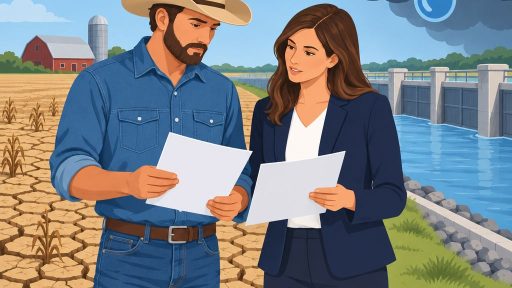




Introduction to Climate Change and Its Relevance to Rural Economies
Climate change describes long-term shifts in temperature and weather patterns.
Natural processes and human activities release greenhouse gases that drive these changes.
Consequently, climate change alters ecosystems and agricultural conditions worldwide.
Understanding these changes helps rural communities adapt and thrive.
Significance of Rural Economies in the Broader Context
Rural economies depend largely on agriculture, forestry, and natural resources.
They provide food, raw materials, and ecological services to urban areas.
Furthermore, rural investments often reflect land use and resource availability.
Therefore, climate changes create distinct challenges and opportunities for rural economies.
Connecting Climate Change to Rural Land Investments
Investors in rural land must consider climate-related risks and uncertainties.
For example, shifting rainfall patterns can affect crop productivity and land value.
Additionally, extreme weather events can damage infrastructure and reduce agricultural yields.
As a result, climate change increasingly influences financial decisions in rural markets.
Key Climate Factors Affecting Farmland and Investments
Several climate factors influence farmland performance and investment decisions.
Temperature fluctuations can affect growing seasons and crop viability.
Meanwhile, altered precipitation can change soil moisture and irrigation needs.
Transform Your Agribusiness
Unlock your farm's potential with expert advice tailored to your needs. Get actionable steps that drive real results.
Get Started- Temperature fluctuations impacting growing seasons and crop viability
- Altered precipitation affecting soil moisture and irrigation needs
- Increased droughts and floods posing risks to land stability
- Changes in pest and disease prevalence threatening crop health
Investors must weigh these factors when assessing long-term land value.
Importance of Proactive Adaptation Strategies in Rural Areas
Farmers and investors can adopt technologies that address climate-related impacts.
For instance, precision agriculture can improve resource efficiency.
Moreover, crop diversification can reduce vulnerability to environmental changes.
Ultimately, proactive adaptation supports sustainable growth in rural economies.
Overview of Rural Land Investments
Rural land attracts farmers, individual investors, companies, and institutional stakeholders.
These participants pursue agricultural production, resource management, financial returns, or portfolio diversification.
Therefore, rural land investment connects practical land use with broader financial planning.
Significance of Rural Land as an Asset
Rural land represents a valuable asset for investors and farmers alike.
It provides a foundation for agricultural production and resource management.
Additionally, investors can gain financial returns and tangible utility from land ownership.
Furthermore, rural land offers diversification beyond traditional stock investments.
Many investors also view farmland as a hedge against inflation and economic uncertainty.
Key Players in Rural Land Investments
Various stakeholders participate in rural land investment, including individual farmers and companies.
For example, Greenfield Agriculture Partners focuses on sustainable farmland acquisitions.
Meanwhile, local farmers such as Ethan Moreno pursue improvements that can increase productivity.
Institutional investors, like Landmark Rural Estates, acquire large tracts for portfolio growth.
Consequently, these participants influence market dynamics and land usage patterns.
Factors Influencing Investment Decisions
Investors evaluate several factors before purchasing rural land.
They often prioritize soil quality, water access, and regional climate conditions.
Moreover, transportation access and market proximity can affect land value.
Investors must also consider zoning laws and environmental regulations.
Ultimately, these conditions shape the long-term profitability of farmland investments.
The Importance of Farmland Prices
Farmland prices provide useful signals about rural economic conditions.
Showcase Your Farming Business
Publish your professional farming services profile on our blog for a one-time fee of $200 and reach a dedicated audience of farmers and agribusiness owners.
Publish Your ProfileThey also affect land access, farm management, and agricultural financing.
As a result, stakeholders monitor price movements when evaluating rural investment opportunities.
Indicators of Rural Economic Health
Farmland prices reflect the overall health of rural economies.
Rising prices often signal strong agricultural demand and investor confidence.
Conversely, declining prices may indicate economic challenges or environmental risks.
Therefore, price trends help stakeholders assess market conditions and plan accordingly.
Impact on Agricultural Production and Sustainability
Higher farmland prices can encourage landowners to improve farm management.
Increased land values may support investments in technology and sustainable practices.
However, soaring prices can limit access for new or small-scale farmers.
Consequently, rural communities must balance affordability with agricultural profitability.
This balance remains crucial for sustainable rural development.
Role in Financing and Credit Accessibility
Land value serves as collateral for agricultural loans and financing.
Strong farmland prices typically improve credit access for farmers and investors.
This financing can support operational expansion and new technology adoption.
Accordingly, farmland prices influence the broader agricultural credit ecosystem.
Impact of Extreme Weather Events on Crop Yields and Land Productivity
Extreme weather events affect crop yields and farmland productivity.
Drought, flooding, heatwaves, and storms disrupt agricultural operations.
Consequently, farmers and investors face greater uncertainty about land performance.
Increasing Frequency of Extreme Weather
Farmers now face extreme weather events more frequently than before.
These events include droughts, floods, heatwaves, and storms.
According to agricultural expert Maria Bennett, these changes disrupt traditional farming schedules.
Moreover, agribusiness leader Greenfield Farms reports that yield variability increases annually.
Effects of Drought on Crop Yields
Drought reduces the soil moisture that crops need for healthy growth.
As a result, many Midwest farmers experience significantly lower yields.
For example, prolonged dry spells sharply reduce corn and soybean production.
Furthermore, drought stress weakens plants and leaves them vulnerable to pests.
Impact of Flooding on Farmland Productivity
Heavy rainfall and floods saturate fields beyond their capacity.
Farmer Will Harper from Blue Ridge Valley explains that floodwaters often destroy young crops.
Additionally, standing water reduces soil oxygen and damages root systems.
Repeated flooding can also erode soil and remove fertile topsoil layers.
Heatwaves and Their Consequences for Agriculture
Extreme heat accelerates crop maturation but reduces quality and quantity.
Dr. Elaine Kim, an agronomist, states that heatwaves shorten grain-filling periods in cereals.
Consequently, crops produce lower yields because they have less development time.
Heat stress also impairs pollination and further limits productive output.
Cumulative Effects on Land Productivity
Repeated weather extremes degrade soil health and fertility over time.
Landowner Samuel Ortega notes declining productivity even after rebuilding efforts.
Additionally, changing weather patterns force adjustments in crop rotation and land use.
These factors create uncertainty around long-term farmland investment returns.
Strategies for Mitigating Weather-Related Losses
Farmers are adopting drought-resistant seed varieties and improved irrigation methods.
Some land managers install enhanced drainage systems to reduce flooding risks.
Showcase Your Farming Business
Publish your professional farming services profile on our blog for a one-time fee of $200 and reach a dedicated audience of farmers and agribusiness owners.
Publish Your ProfileMoreover, diversified cropping systems spread risk across different weather conditions.
Agrium Solutions promotes digital monitoring tools for early weather-impact detection.
Insurance and Financial Considerations
Crop insurance helps protect revenue against extreme weather damage.
Investor Grace Lin emphasizes that increasing climate risks raise insurance premiums.
Thus, potential buyers consider weather-related uncertainties when valuing farmland.
Continuous climate monitoring helps investors evaluate rural land assets more effectively.
Uncover the Details: Agricultural Policies Impacting Farmland Values in a Changing Climate
Climate Change and Agricultural Zone Shifts
Climate change reshapes growing seasons, crop choices, soil conditions, and water availability.
These changes gradually alter agricultural opportunities across regions.
Consequently, farmers and investors reassess land productivity and future use.
Changes in Growing Seasons and Crop Viability
Climate change extends growing seasons in some regions.
As a result, crops once unsuitable for certain areas become viable.
Conversely, some traditional crops may experience shortened growing periods.
These shifts alter the types of crops farmers choose to plant.
Moreover, changing weather patterns increase drought and flood risks.
Movement of Agricultural Zones
Agricultural zones gradually move northward in the Northern Hemisphere.
Farmers in southern areas face increased heat stress and reduced yields.
Meanwhile, northern and higher elevation lands gain potential for crop production.
This migration influences which rural lands hold agricultural value.
Impact on Soil Quality and Water Resources
Climate change affects soil moisture and nutrient availability.
In many regions, intensified rainfall causes soil erosion.
Changing precipitation patterns also strain water resources needed for irrigation.
Consequently, previously fertile land may decline in productivity.
Effects on Land Valuation and Investment
Climate trends influence farmland demand, regional prices, and investment decisions.
Investors compare agricultural potential across established and emerging zones.
Therefore, climate-related changes can reshape rural land values.
Shift in Farmland Demand
Investors increasingly seek land in emerging agricultural zones.
They anticipate better yields and profitable crop options there.
Meanwhile, demand may decline for land losing agricultural suitability.
Therefore, land prices reflect changing supply and demand patterns.
Regional Differences in Farmland Prices
Northern states like Minnesota and Wisconsin see rising farmland prices.
In contrast, southern states such as Georgia experience slower growth or declines.
This divergence creates opportunities and challenges for rural investors.
Agricultural companies like GreenFields Inc. adjust their portfolios accordingly.
Risks for Investors and Farmers
Investing in changing agricultural zones carries uncertainty.
Unexpected weather events can rapidly shift land suitability.
Additionally, climate adaptation regulations can influence land value.
Therefore, investors need thorough climate risk assessments.
Adapting Investment Strategies to Climate Trends
Investors can respond to climate trends through careful planning.
They can evaluate future productivity, spread regional exposure, and support resilient practices.
Showcase Your Farming Business
Publish your professional farming services profile on our blog for a one-time fee of $200 and reach a dedicated audience of farmers and agribusiness owners.
Publish Your ProfileThese strategies help investors address uncertainty across agricultural zones.
Considering Long-Term Climate Projections
Investors should analyze regional climate models before purchasing land.
Long-term projections help predict future crop viability and land productivity.
For example, ClearWater Capital uses advanced climate data tools for decision-making.
Diversification Across Climate-Smart Agricultural Zones
Diversifying investments across multiple regions reduces climate-related risks.
Investing in traditional and emerging agricultural zones balances portfolios.
This approach provides resilience against localized climate impacts.
Incorporating Sustainable Practices
Landowners who adopt sustainable practices improve resilience against climate effects.
These practices include cover cropping, efficient irrigation, and soil conservation.
Companies like TerraVista Farms promote sustainable methods to maintain land value.
Uncover the Details: Assessing Climate Risks Before Buying Agricultural Land in the USA
Government Regulations Targeting Emissions
Governments increasingly enact regulations to reduce greenhouse gas emissions.
These policies often target agricultural practices and land use.
Some states, for example, limit fertilizer use to reduce nitrous oxide emissions.
Consequently, farmers must adopt new methods and technologies to comply.
This shift affects profitability and changes the appeal of rural land investments.
Incentives for Climate-Resilient Farming
Many governments offer subsidies for sustainable farming techniques.
These programs support cover cropping, reduced tillage, and water conservation.
Participating farmers may increase land value through improved soil health.
Moreover, investors view climate-resilient farms as lower-risk holdings.
Therefore, incentives can increase demand for farmland using sustainable practices.
Carbon Credit Markets and Landowners
Carbon credit programs let landowners earn revenue by sequestering carbon.
Companies like VerdantTerra help farmers and investors participate in these markets.
As a result, farmland with strong sequestration potential attracts investment.
However, market participation requires monitoring and verification, which adds complexity.
Still, policy-driven carbon markets can raise farmland’s financial value sustainably.
Impact of Zoning and Land-Use Policies
Policy changes also influence zoning laws governing rural land development.
Local governments may restrict land conversion to protect natural resources.
These limits reduce speculative development while preserving farmland for agriculture.
Consequently, zoning rules create different challenges and opportunities for investors.
Therefore, investors must understand these regulations before making land decisions.
Risk Management Through Climate Policy
Climate policies aim to reduce risks from environmental damage and severe conditions.
Insurers adjust premiums according to regulatory environments and climate vulnerability.
Lower insurance costs can support more stable farmland values.
Furthermore, resilient infrastructure policies can reduce long-term investment risks.
Investors should evaluate how local policies shape climate risk management.
International Agreements Influencing Domestic Land Policies
Global climate agreements encourage countries to set ambitious environmental targets.
These commitments often produce stricter land use and emissions policies.
Investors in rural land must track how international goals influence local rules.
For instance, regions may expand renewable energy projects on farmland to meet climate goals.
Showcase Your Farming Business
Publish your professional farming services profile on our blog for a one-time fee of $200 and reach a dedicated audience of farmers and agribusiness owners.
Publish Your ProfileThis trend can improve or complicate returns, depending on project types.
Strategies for Investors Navigating Policy Changes
Investors should monitor evolving climate policies through expert consultations.
Additionally, agronomists and environmental advisors can help assess regulatory impacts.
Flexible investment models allow investors to adapt to policy-driven market shifts.
Moreover, lands with strong environmental compliance may offer greater long-term value.
Proactive engagement with policy trends can strengthen rural land investment outcomes.
Discover More: Why Farmland Owners Must Prepare for More Frequent Climate Disasters
Investment Risks Associated with Climate Change for Rural Land Stakeholders
Rural land stakeholders face several climate-related risks that can weaken investment performance.
These risks affect operating costs, asset values, financing, insurance, and future land management decisions.
Investors therefore need practical strategies that address changing conditions and protect long-term returns.
Increasing Weather Volatility
Unpredictable weather patterns make farm planning and resource allocation more difficult.
Storms, droughts, and floods can damage crops, soil, buildings, and other farmland infrastructure.
Consequently, property owners may face lower yields, higher repair costs, and reduced profitability.
Farm manager Grace Thompson of Greenfield Estates notes, “Weather unpredictability complicates planning and resource allocation.”
Changing Crop Viability
Changing growing conditions can reduce the reliability of established crop choices.
Farm operators may need to test alternative crops or revise existing land use plans.
Those adjustments often require new equipment, altered practices, and additional operating capital.
Midwest farmer Lucas Reynolds has transitioned to more drought-resistant crops.
However, adaptation investments can produce uncertain returns for landowners and agricultural tenants.
Soil Degradation and Water Scarcity
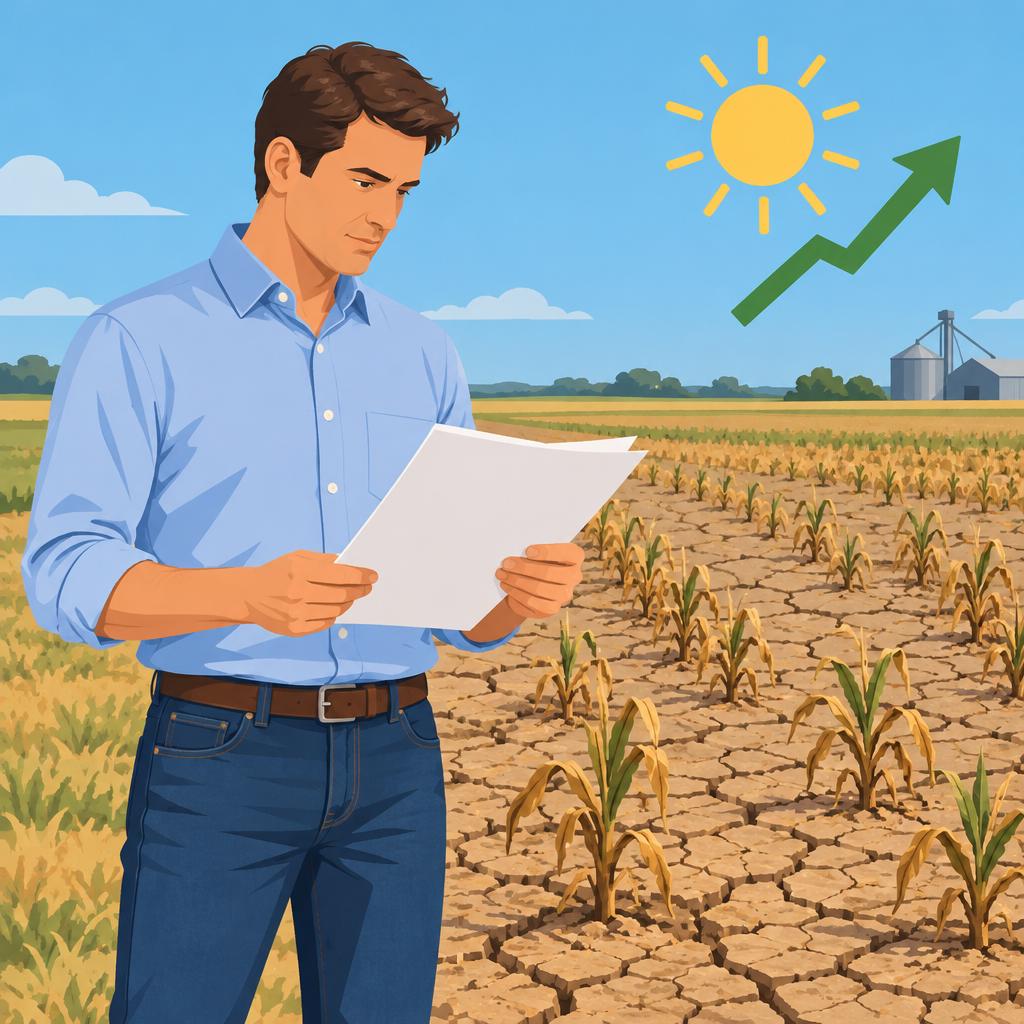
Higher temperatures and shifting rainfall patterns can accelerate erosion and reduce soil quality.
Water shortages can also restrict irrigation and limit production options.
Reduced productivity may lower lease income and weaken the property’s long-term market value.
Agricultural consultant Maria Ortega warns, “Without sustainable water management, land assets decline sharply.”
Regulatory and Policy Risks
New environmental policies can change permitted land uses and operating requirements.
Rules affecting water rights may restrict how owners develop or manage agricultural properties.
Compliance work can increase expenses and reduce expected investment returns.
Investor Daniel Marsh advises stakeholders to monitor evolving climate-related laws.
Market Demand and Price Fluctuations
Climate-related disruptions can influence food supplies and agricultural commodity markets.
Those market changes can create sharp price movements for crops and farm products.
As a result, rural landowners may receive less predictable lease income.
Farmland appraiser Chloe Nguyen explains, “Price swings complicate forecasting and investment decisions.”
Financial and Insurance Challenges
Climate exposure can increase insurance premiums for rural properties.
Insurers may also reduce coverage availability in areas facing significant climate risks.
Lenders can respond by tightening requirements or limiting financing for vulnerable properties.
Rural landowners may consequently encounter greater difficulty accessing capital.
Rural land finance officer Josh Carver states, “Financial institutions factor climate risks into lending criteria now.”
Strategies for Managing Climate Risks
Land investors can diversify crop selections to reduce dependence on one production approach.
They can also support soil health and conserve water through resilient farming practices.
Local experts can help stakeholders anticipate policy developments and changing market conditions.
Furthermore, tailored insurance products can strengthen protection against specific climate-related losses.
Showcase Your Farming Business
Publish your professional farming services profile on our blog for a one-time fee of $200 and reach a dedicated audience of farmers and agribusiness owners.
Publish Your ProfileFarm operator Karen Patel emphasizes, “Proactive management is essential to safeguard rural land assets.”
You Might Also Like: Real Estate Challenges of Farming in High-Risk Climate Zones
Long-Term Trends in Farmland Prices
Farmland prices have fluctuated significantly during recent decades.
Farmers and investors monitor these changes closely.
Although prices often rise over time, environmental factors increasingly shape market dynamics.
Climate Variability and Farmland Value
Temperature and rainfall variations affect soil productivity.
Consequently, regions with stable climates can attract higher farmland prices.
Meanwhile, recurring droughts can reduce land values in affected areas.
Therefore, investors consider climate risks when evaluating agricultural land.
Land Use Changes and Farmland Prices
Environmental shifts change crop suitability across rural landscapes.
Farmers may switch crops as climate conditions evolve.
This adaptation can strengthen or weaken farmland price growth.
Additionally, erosion and flooding can reduce the value of affected land.
Extreme Weather and Agricultural Land Markets
Frequent storms and floods threaten farmland infrastructure.
These events can cause soil erosion and extend land recovery periods.
As a result, investors may demand higher returns for accepting added risks.
Furthermore, weather-related insurance costs can influence farmland valuations.
Environmental Regulations and Market Responses
Governments increasingly support sustainable agricultural practices.
Landowners may face higher operating costs when they follow these requirements.
However, certified sustainable land can attract stronger buyer interest.
Thus, regulations can influence farmland prices indirectly.
Regional Examples of Environmental Price Effects
Regional conditions demonstrate how environmental changes can affect land economics differently.
- Midwestern Corn Belt: Rising temperatures have shifted growing seasons, affecting farmland prices.
- California Central Valley: Water scarcity and drought have tightened supply and increased farmland values.
- Southern Plains: More frequent floods have contributed to farmland price volatility.
Future Conditions for Rural Land Investments
Climate projections may continue shifting farmland value patterns.
Investors should include environmental assessments in their decision-making strategies.
Technology and adaptive farming methods could reduce some climate-related effects.
Nevertheless, proactive management remains essential for protecting farmland investments.
Innovative Water Management in California’s Central Valley
Farmers in California’s Central Valley face increasing drought risks from climate change.
Lucas Hernandez, a local land investor, implemented advanced irrigation technology.
Specifically, he adopted drip irrigation systems that reduce water usage effectively.
As a result, his farmland maintained productivity despite water scarcity.
Moreover, his success encouraged other investors to adopt similar practices.
This strategy enhanced property values and investment returns amid climate challenges.
Agroforestry Integration in Iowa’s Corn Belt
Emma Carlson invested in Iowa farmland threatened by soil erosion and climate volatility.
She introduced agroforestry by planting tree rows alongside crops.
This method improved soil stability and provided additional timber income.
Furthermore, agroforestry increased biodiversity and reduced crop failure risks.
Investors noticed rising farmland prices linked to these sustainable practices.
Consequently, Emma’s approach demonstrates resilience in rural land investments.
Renewable Energy Partnerships in Texas Ranchlands
Michael Trent, a Texas ranch owner, diversified his land use amid climate impacts.
He partnered with GreenFuture Energy to install solar panels on idle pastureland.
Showcase Your Farming Business
Publish your professional farming services profile on our blog for a one-time fee of $200 and reach a dedicated audience of farmers and agribusiness owners.
Publish Your ProfileThis collaboration generated steady income from renewable energy production.
Additionally, the project lowered environmental impacts and increased ranch profitability.
Land value appreciation followed this innovative adaptation.
As a result, other ranch investors explored similar renewable energy partnerships.
Community-Led Soil Conservation in Vermont
Rural communities in Vermont face increasing rainfall and flooding risks.
Sarah Whitman coordinated local farmers who adopted no-till farming techniques.
This collective effort improved soil retention and significantly reduced runoff.
Consequently, the area’s farmland attracted more investment interest.
Community-led adaptation helped stabilize prices despite climate uncertainties.
Moreover, shared knowledge accelerated sustainable land management practices.
Successful Adaptation Strategies for Rural Land Investments
Advanced water management technologies minimize drought impacts and preserve yields.
Agroforestry enhances soil health while providing diversified income streams.
Renewable energy projects create new revenue and increase land value.
- Advanced water management technologies minimize drought impacts and preserve yields.
- Agroforestry enhances soil health while providing diversified income streams.
- Renewable energy projects create new revenue and increase land value.
- Community collaboration strengthens resilience through shared sustainable practices.
Community collaboration strengthens resilience through shared sustainable practices.
These examples demonstrate how adaptive strategies attract investment and sustain farmland prices.
They also highlight opportunities for investors to mitigate climate risks in rural land markets.
Thorough Climate Risk Assessment
Investors must evaluate climate risks across potential properties.
They should analyze historical weather patterns and future climate models.
Additionally, climate scientists and agricultural experts can refine risk assessments.
GIS tools support detailed environmental evaluations.
Furthermore, investors must understand drought, flooding, and temperature variation.
Climate-Resilient Crops and Farming Practices
Investors should encourage drought-tolerant and heat-resistant crops.
They can support farmers who use conservation tillage and cover cropping.
Moreover, agroforestry and diversified planting can strengthen land resilience.
Investing in compatible lands reduces long-term operational risks.
These strategies improve soil health and water retention capabilities.
Policy Changes and Available Incentives
Investors should monitor government policies concerning climate and agriculture.
They can benefit from subsidies that promote sustainable land use and renewable energy.
Meanwhile, environmental regulations may affect land values and permitted uses.
Policy advisors can help investors navigate evolving legislation.
Proactive engagement enables timely responses to regulatory shifts.
Technology and Data Analytics for Land Management
Modern technologies provide insights into weather trends and land performance.
Remote sensing and drone surveillance enable precise farmland monitoring.
Additionally, data analytics guide decisions during current and predicted climate events.
Investors should collaborate with agritech firms such as GreenField Analytics and TerraSense Inc.
These partnerships strengthen predictive capabilities and investment security.
Flexible and Adaptive Investment Models
Rigid land use strategies increase vulnerability to climate uncertainty.
Instead, investors should design adaptable farming and leasing arrangements.
Flexible contracts can accommodate changing crops and management practices.
This agility helps investors optimize land value during environmental fluctuations.
Showcase Your Farming Business
Publish your professional farming services profile on our blog for a one-time fee of $200 and reach a dedicated audience of farmers and agribusiness owners.
Publish Your ProfileIt also encourages long-term partnerships with innovative agricultural entrepreneurs.
Networks with Climate-Savvy Stakeholders
Engaging local farmers, researchers, and policy leaders strengthens investor knowledge.
These networks facilitate information exchange about emerging climate challenges.
Investors may join associations such as the Rural Climate Resilience Consortium.
Such collaborations create opportunities for joint projects and resource sharing.
Strong relationships enable faster responses to market and ecological changes.
Geographic and Functional Portfolio Diversification
Geographic diversification reduces exposure to local climate impacts.
Combining agricultural, forestry, and conservation lands can balance income streams.
Renewable energy installations on rural properties can add value.
Portfolios with varied land uses remain more resilient during climate volatility.
This approach enhances overall financial stability for rural land investors.
Sustainability and Regenerative Land Practices
Long-term farmland value depends on healthy soil and ecosystems.
Investors should promote regenerative agriculture and organic farming methods.
These practices can increase productivity while reducing environmental degradation.
Supporting water conservation and biodiversity preserves essential natural resources.
Sustainability-focused investments attract eco-conscious tenants and partners.