




Introduction to Climate Change and Pest Infestation
Climate change alters temperature and precipitation patterns worldwide.
These shifts affect habitats and influence the behavior of numerous species.
Consequently, ecosystems experience changes in species distribution and interactions.
Climate Change and Its Effects on Ecosystems
In particular, pest populations respond strongly to environmental changes caused by climate shifts.
Therefore, many pests expand their ranges and reproduce more quickly.
These changes can alter relationships between pests, crops, and other species.
Link Between Climate Change and Pest Infestation Near Farmland Homes
Farmers and residents near farmland increasingly face challenges from pest infestations.
Rising temperatures create favorable conditions for pests to thrive throughout the year.
Moreover, milder winters help more pests survive during colder months.
As a result, pest outbreaks occur more frequently and with greater intensity.
This situation threatens crop yields and reduces comfort in homes near farmland.
Key Factors Driving Pest Population Growth
Warmer temperatures accelerate the life cycles of many insect pests.
Additionally, increased carbon dioxide levels boost plant growth and provide more food for pests.
Changes in rainfall patterns can either promote or limit pest breeding grounds.
Consequently, unpredictable weather complicates pest management strategies.
Transform Your Agribusiness
Unlock your farm's potential with expert advice tailored to your needs. Get actionable steps that drive real results.
Get StartedFarmers must adapt quickly to changing environmental conditions to protect their crops.
Understanding the Impact on Local Communities
Pest infestations near homes affect both health and economic stability.
Some pests carry diseases that threaten human and animal health.
Furthermore, pests can damage homes and stored food, creating security concerns.
Communities depend on effective pest control to maintain their quality of life.
Therefore, recognizing climate change’s role helps communities develop better prevention practices.
The Science Behind Climate Change: An Overview
Climate change describes long-term shifts in temperature and weather patterns.
Human activities, particularly fossil fuel use, have accelerated these environmental changes.
Greenhouse gases, including carbon dioxide and methane, trap heat within the atmosphere.
Consequently, global temperatures have risen steadily during the past century.
This warming now affects natural systems and ecosystems across the world.
Climate Change Fundamentals
Burning fossil fuels releases greenhouse gases that increase atmospheric heat retention.
Carbon dioxide and methane represent important gases involved in this warming process.
As concentrations rise, the atmosphere holds more heat than natural systems can balance.
Therefore, sustained warming changes environmental conditions across many regions.
Changes in Weather Patterns
Climate change disrupts traditional weather cycles and increases the likelihood of extreme events.
For example, heatwaves, storms, and droughts now occur more frequently in many areas.
Furthermore, shifting conditions alter precipitation patterns and seasonal timing.
These weather changes also influence plant and animal life across different regions.
Climate Interactions Near Farmland
Farming regions respond strongly to temperature shifts and changing moisture conditions.
These environmental changes affect crop growth and influence pest behavior.
Moreover, warmer winters allow some species to survive longer and reproduce more often.
As a result, pest populations may increase near homes located beside farmland.
Scientific Research and Consensus
Most climate researchers agree that human activities drive current climate change.
Showcase Your Farming Business
Publish your professional farming services profile on our blog for a one-time fee of $200 and reach a dedicated audience of farmers and agribusiness owners.
Publish Your ProfileInstitutions such as the National Climate Center track atmospheric and ocean data.
Researchers use sophisticated models to project future climate and environmental impacts.
Ongoing studies help policymakers develop adaptation and mitigation strategies.
Major Drivers of Climate Change
Several human activities contribute substantially to greenhouse gas emissions.
These activities affect atmospheric composition, energy use, and carbon absorption.
Understanding these drivers supports more informed climate adaptation and mitigation efforts.
- Industrial emissions from factories and vehicles contribute heavily to atmospheric pollution.
- Deforestation reduces Earth’s capacity to absorb carbon dioxide from the atmosphere.
- Agricultural practices release nitrous oxide and methane gases.
- Urban expansion increases energy demand and greenhouse gas emissions.
Temperature-Driven Pest Development
Rising temperatures accelerate development in many pest species.
This change shortens the time pests need to reach maturity.
Consequently, pests complete their life cycles faster than before.
Warmer conditions also increase the frequency of reproduction events.
As a result, more pest generations appear during each growing season.
These shifts significantly intensify pest pressure near farmland homes.
Longer Pest Breeding Seasons
Increased temperatures extend suitable breeding conditions for pests.
Therefore, pest breeding seasons begin earlier in spring and end later in fall.
This extension allows pest populations to expand beyond historical limits.
Consequently, infestations persist for longer periods each year.
Homeowners near farmland notice greater pest activity and damage.
Temperature Effects on Pest Behavior and Migration
Higher temperatures influence pest behavior, including feeding and movement.
Many pests expand their ranges into areas that once seemed inhospitable.
This migration exposes farmland homes to unfamiliar pest species.
Moreover, pests may seek shelter and food closer to human dwellings.
Such conditions increase infestation risks inside and around homes.
Examples of Temperature-Sensitive Pests
Several pest species respond quickly to warmer conditions.
- Spotted lanternflies thrive and reproduce more quickly in warmer climates.
- Aphids increase their populations rapidly after modest temperature rises.
- Ticks become active earlier and remain active longer during warmer years.
Consequently, farmers and residents face expanding challenges from these pests.
Adapting Pest Management Strategies
Understanding temperature effects helps advisors predict pest outbreak timing.
For example, farm advisor Michael Dunham recommends monitoring pest development closely.
Early detection enables timely interventions that reduce damage near homes.
Therefore, integrated pest management must adapt to changing pest life cycles.
Proactive measures protect both crops and nearby residential areas.
You Might Also Like: Pest and Disease Risks for Farms Near Residential Communities
Effects of Climate Change on Soil Health and Pest Resistance
Climate change alters temperature and precipitation patterns in farmlands.
These shifts change soil moisture levels and nutrient cycling.
Changing conditions stress soil microbes that decompose organic matter.
Impact on Soil Quality and Nutrient Availability
Microbial stress reduces decomposition activity and limits nutrients available to crops.
Moreover, intense rainfall increases soil erosion and worsens soil quality.
Farmers like Liam Donovan from Greenfield Farms observe faster soil degradation.
Therefore, climate change weakens soil health near farmland homes.
Influence on Pest Populations and Resistance
Warming temperatures support faster pest reproduction throughout the year.
For example, soybean aphid populations have expanded rapidly in warmer zones.
Additionally, environmental stress can help pests develop resistance to traditional pesticides.
Showcase Your Farming Business
Publish your professional farming services profile on our blog for a one-time fee of $200 and reach a dedicated audience of farmers and agribusiness owners.
Publish Your ProfileEntomologist Dr. Clara Jensen warns that resistant pests severely threaten crop yields.
Meanwhile, mild winters fail to reduce pest populations naturally.
As a result, pests survive longer and invade nearby residential areas.
Thus, climate change increases pest infestation risks near homes.
Strategies to Enhance Soil and Pest Resilience
Experts recommend sustainable soil management practices to strengthen farmland resilience.
These practices include crop rotation, cover cropping, and organic amendments.
Furthermore, integrated pest management helps farmers control pest populations efficiently.
Biological control, habitat management, and careful chemical use provide complementary approaches.
Farm advisor Maria Lopez encourages farmers to adopt these adaptive strategies.
Collaborative efforts reduce harmful pest impacts while improving soil quality.
Proactive management helps sustain farmland health amid climate challenges.
Delve into the Subject: How Soil Compaction Affects Real Estate Development and Land Use
Changes in Rainfall Patterns and Their Influence on Pest Populations
Rainfall patterns have become increasingly unpredictable in many agricultural regions.
This unpredictability significantly affects pest breeding cycles.
Rainfall changes influence pest survival and reproduction near farmland homes.
Shifting Rainfall and Pest Breeding Cycles
Early or extended rainy seasons create ideal breeding conditions for pests.
Consequently, pest populations can increase rapidly near farmland homes.
Moreover, prolonged dry spells can stress crops and increase their vulnerability to infestations.
Farmers like Maria Alvarez in California report earlier pest outbreaks after altered rain schedules.
Impact of Heavy Rainfall on Pest Dispersal
Heavy rainfall events can disperse pests into new areas near farmland.
Rainwater runoff often transports pest eggs and larvae across fields.
As a result, previously unaffected farmland homes may face new pest challenges.
Additionally, standing water after heavy rains supports mosquito breeding.
This increase in breeding sites expands mosquito populations near residential areas.
Entomologist James Whitaker emphasizes monitoring water accumulation near homes.
Drought Conditions and Pest Resistance
Drought conditions reduce natural pest predators that rely on moist environments.
Without these predators, pest populations can grow unchecked around farmland.
Furthermore, drought-stressed plants emit chemicals that attract certain pests.
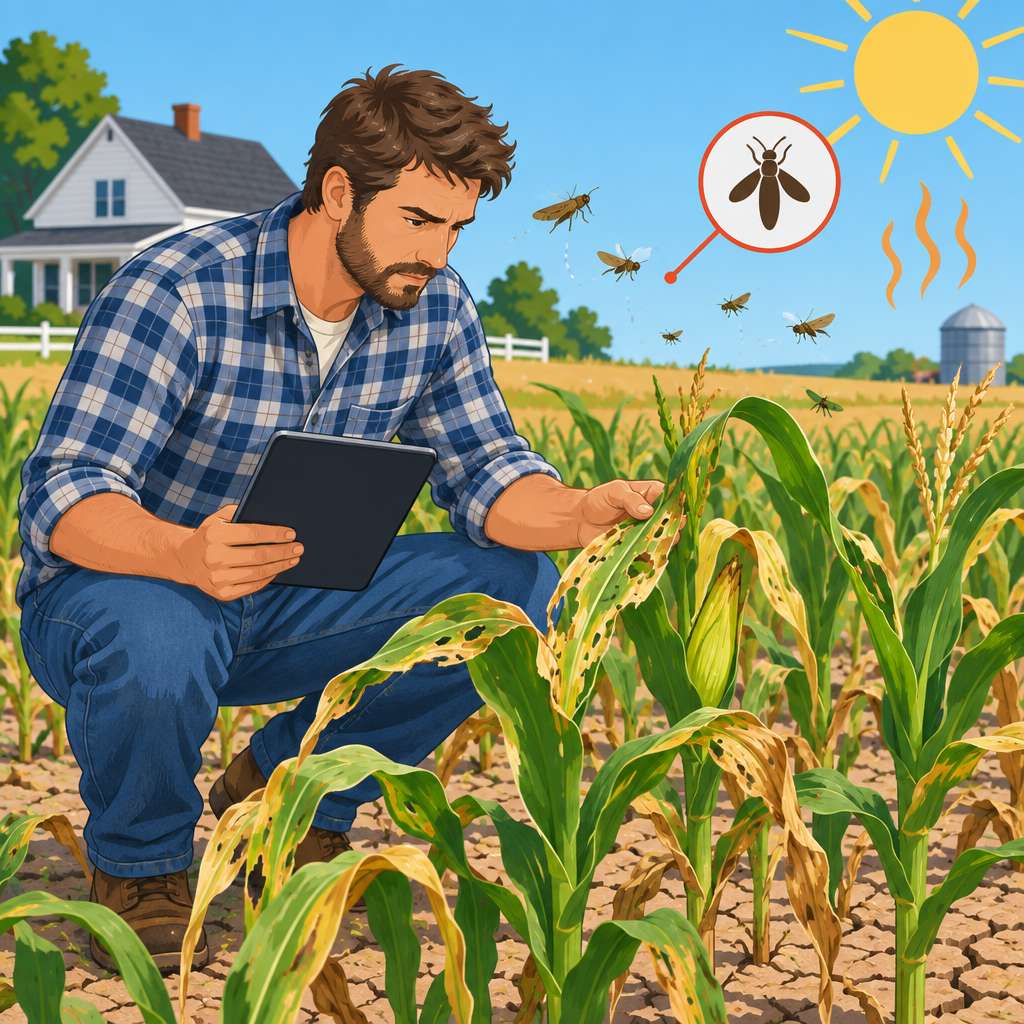
As a result, aphids and spider mites cluster near farmland homes during dry spells.
Local farmer Samuel Greene observes more frequent pest damage during drought years.
Adaptations in Pest Behavior Due to Rainfall Variability
Pests adapt quickly to new rainfall patterns to improve their survival.
Some species shift their feeding times to match moisture availability.
Others develop resistance to desiccation during dry periods.
These adaptations complicate pest management efforts near farmland homes.
Integrated pest management professionals recommend dynamic strategies.
Dr. Li Na from GreenFields Consulting supports these adaptive approaches.
Strategies to Manage Pest Risks from Rainfall Changes
Farmers should monitor local weather forecasts for rainfall predictions.
Implementing drainage systems reduces standing water around homes.
Adopting drought and pest-resistant crop varieties can improve resilience.
Maintaining natural predator habitats encourages biological pest control.
Showcase Your Farming Business
Publish your professional farming services profile on our blog for a one-time fee of $200 and reach a dedicated audience of farmers and agribusiness owners.
Publish Your ProfileRegular collaboration with pest control experts helps address changing pest behaviors.
- Track rainfall trends using tools like AgroMet Solutions.
- Conduct timely pest scouting after heavy rainfall or drought periods.
- Use targeted interventions to minimize pesticide overuse.
See Related Content: How to Improve Soil Health for Sustainable Landscaping in Real Estate
Geographical Shifts of Pests Due to Climate Fluctuations
Climate fluctuations relocate pest populations across landscapes.
These movements change where pests survive, reproduce, and encounter farms and homes.
Therefore, tracking geographic shifts helps communities prepare targeted responses.
Changing Habitats and Migration Patterns
Rising temperatures directly influence the habitats of many pest species.
Consequently, pests expand their ranges into previously cooler areas.
For example, bark beetles now infest forests at higher altitudes than before.
Moreover, warmer winters fail to eliminate pests, allowing more to survive.
This increased survival encourages population growth and wider distribution.
Additionally, altered rainfall patterns create favorable environments for pests.
Hence, pests migrate in search of more suitable living conditions.
These geographical shifts often bring pests closer to farmland homes.
Impact on Local Agriculture and Residential Areas
As pests invade new areas, they threaten crops that lacked previous exposure.
For instance, farmer Maria Gonzalez in Oregon reports higher infestations near her home.
Moreover, pesticide demand rises, increasing costs for local growers and residents.
Urban and suburban homes near farms experience more frequent pest intrusions.
For example, aphids and moth species now appear regularly in formerly unaffected regions.
These invasions disrupt both food production and daily life near farmland.
Therefore, communities need to understand these shifts when developing management strategies.
Monitoring and Responding to Pest Movements
Scientists at Greendale Agricultural Institute use satellite data to track pest migrations.
They combine climate models with pest biology to forecast future expansions.
Early detection allows farmers to apply targeted interventions promptly.
Furthermore, integrated pest management adapts to shifting pest presence.
Local cooperative groups also share information to coordinate responses effectively.
Collaborative efforts help minimize damage caused by invading pests.
Collectively, these strategies reduce economic losses and protect farmland homes.
Explore Further: Impact of Poor Soil Drainage on Real Estate and How to Fix It
Extreme Weather Pest Infestations in Farmers’ Homes
Extreme weather events can drive pests into farmers’ homes.
Floods, heatwaves, storms, and cold snaps create different infestation pressures.
These cases show why farmers need timely monitoring and targeted responses.
Flood-Induced Rodent Surges in the Midwest
Extreme flooding forced many Illinois residents to evacuate their farmland homes.
Consequently, displaced rodents sought indoor shelter and increased infestation risks.
The Henderson family reported seeing numerous rats inside their farmhouse.
Their experience shows how waterlogged fields drive rodents toward human habitats.
In response, Greenfield Exterminators strengthened its flood response protocols.
The company deployed rapid response teams after floods to target rodent populations.
This case connects flooding directly with indoor rodent invasions.
Heatwaves and Increased Termite Activity in Southern Texas
Severe heatwaves struck farmland near Corpus Christi last summer.
Elevated temperatures accelerated termite breeding cycles in wooden structures.
Showcase Your Farming Business
Publish your professional farming services profile on our blog for a one-time fee of $200 and reach a dedicated audience of farmers and agribusiness owners.
Publish Your ProfileThe Martinez family noticed termite swarms emerging inside their farmhouse walls.
Moreover, dry soil prompted termites to seek moisture inside homes.
Entomologists from Coastal Pest Solutions researched these heat-related infestation trends.
They advised farmers to inspect structures during and after extreme heat events.
This example shows how rising temperatures facilitate indoor pest encroachment.
Storm-Driven Cockroach Infestations in Louisiana
Hurricane Imelda damaged farmland properties near Crowley, Louisiana.
The storms flooded septic systems and disturbed outdoor cockroach habitats.
As a result, cockroaches migrated into nearby homes for safety and food.
The Smith family experienced persistent infestations despite initial pest control efforts.
Integrated pest management experts recommended comprehensive post-storm cleanup.
They emphasized removing moisture sources and sealing entry points.
This case demonstrates how heavy storms trigger sudden indoor pest invasions.
Cold Snaps and Increased Mice Infestations in the Northeast
Unusually harsh winters affected farms near Rutland, Vermont, in early 2023.
The cold drove mice and voles into farmers’ homes and barns.
Lisa Carver, a dairy farmer, found mice nesting throughout her supply rooms.
These conditions increased the need for effective winter pest monitoring.
Wildlife control experts urged farmers to rodent-proof structures before cold snaps.
Their guidance helped reduce indoor infestations during later weather extremes.
This case shows how cold temperatures heighten indoor pest problems.
Preparedness Lessons from Extreme Weather Pest Events
Across these cases, weather extremes consistently push pests indoors.
Therefore, farmers and pest professionals must anticipate seasonal shifts in pest behavior.
Proactive monitoring and swift intervention can limit infestation damage.
Furthermore, weather-specific integrated pest management can improve outcomes.
Finally, farmers, pest experts, and meteorologists can strengthen preparedness planning together.
Enhancing Pest Monitoring and Early Detection
Effective pest management begins with consistent monitoring around farms and homes.
Farmers and homeowners should use traps and sensors to detect pest activity early.
Additionally, remote sensing technology can improve detection accuracy.
Communities can share data through digital platforms to track outbreaks efficiently.
Early detection enables prompt intervention and reduces infestation severity.
Implementing Integrated Pest Management Practices
Integrated Pest Management (IPM) combines biological, cultural, and chemical controls thoughtfully.
Biological controls use natural predators, such as ladybugs, to suppress pest populations.
Meanwhile, cultural practices include crop rotation and sanitation that disrupt pest life cycles.
When necessary, farmers should apply chemical pesticides responsibly to reduce environmental harm.
For example, Lucas Hammond promotes IPM as climate conditions change.
Adopting Climate-Resilient Crop and Landscape Designs
Planting pest-resistant crop varieties helps reduce vulnerability under warmer climates.
Moreover, mixed cropping systems diversify plant species and limit pest outbreaks.
Strategically placed windbreaks and buffer zones can protect homes from pest incursions.
Landscaping with native plants supports beneficial insects and strengthens ecosystem balance.
Consulting experts like agronomist Maria Delgado supports tailored, climate-smart designs.
Utilizing Sustainable Chemical and Biological Solutions
Organic pesticides made from neem oil or pyrethrum offer eco-friendly management options.
Showcase Your Farming Business
Publish your professional farming services profile on our blog for a one-time fee of $200 and reach a dedicated audience of farmers and agribusiness owners.
Publish Your ProfileBeneficial microorganisms can suppress soil-borne pests while improving soil health.
Furthermore, rotating chemical treatments can minimize resistance development over time.
Companies such as GreenField Biotech innovate sustainable biopesticides for farming.
Farmers must follow application guidelines to protect people and wildlife.
Community Engagement and Education Efforts
Educational programs raise awareness about climate effects on pest behavior.
Workshops led by extension agents empower residents to apply effective pest controls.
Collaborative neighborhood initiatives create unified responses to infestations.
Sharing success stories encourages participation and spreads practical management ideas.
Entomologist Dr. Ethan Park emphasizes community roles in pest mitigation.
Leveraging Technology and Data Analytics
Data analytics can help predict pest population trends using climatic factors.
Mobile applications provide farmers with real-time pest alerts and management advice.
Meanwhile, drone surveillance covers farmland for precise pest and crop health assessments.
Artificial intelligence supports decisions through accurate pest forecasting models.
Innovators like AgriNext Solutions develop integrated technology platforms for pest control.
The Future of Farming in the Face of Climate Change
Farmers can strengthen food production by preparing for changing pest pressures.
This effort requires coordinated action across farms, research institutions, communities, and governments.
In addition, resilient practices can help agriculture manage uncertain conditions.
Adapting to Emerging Pest Challenges
Farmers must adopt innovative pest management strategies as climates shift.
For instance, integrated pest management offers a sustainable solution.
Additionally, close pest monitoring supports timely interventions.
Remote sensing technology enhances early detection near homes on farms.
Consequently, diverse crop varieties can reduce pest vulnerabilities.
Leveraging Technology and Research
Research institutions like Greenfield Agricultural Institute lead climate-smart farming research.
They develop pest-resistant crop strains for changing environments.
Moreover, precision agriculture techniques optimize pesticide use efficiently.
Farmers using drone surveillance gain better pest control insights.
These technologies improve farm resilience against climate-related pest pressures.
Community Engagement and Policy Support
Local farming communities benefit from collaborative pest management programs.
Organizations such as the Midwest Farmers Alliance promote knowledge sharing.
Policymakers must support farmers with subsidies for adaptive technologies.
Furthermore, sustainable land-use regulations protect habitats for natural pest predators.
Through cooperation, farmers, scientists, and governments can mitigate pest threats effectively.
Building Resilient Agricultural Systems
Resilience involves improving soil health to strengthen crop defenses against pests.
Practices like crop rotation naturally disrupt pest life cycles.
Also, diverse farm ecosystems encourage beneficial insects and birds.
Education programs by the Evergreen Agricultural Network increase farmer preparedness.
Ultimately, resilient systems secure food production despite climate uncertainties.