



Introduction to Sustainable Integrated Pest Management for Small Farms
Sustainable Integrated Pest Management (IPM) combines multiple strategies to control pests effectively.
It emphasizes environmentally friendly methods and reduces reliance on chemical pesticides.
Small farms benefit greatly from adopting sustainable IPM practices.
Defining Sustainable Integrated Pest Management
IPM balances pest control with the health of ecosystems and human communities.
Sustainable IPM relies on pest monitoring to guide timely interventions.
It integrates biological controls such as beneficial insects to combat pests naturally.
Importance of Sustainable IPM in Small Farming
Small farms often face limited resources and higher vulnerability to pest damage.
Therefore, sustainable IPM provides cost-effective and eco-conscious solutions for farmers.
Moreover, sustainable IPM supports farm resilience in the face of climate change.
Core Principles of Sustainable IPM
Farmers also apply cultural practices like crop rotation to reduce pest habitats.
Additionally, careful use of mechanical and chemical controls minimizes environmental impact.
This approach helps maintain soil fertility, biodiversity, and crop yields simultaneously.
Benefits of Implementing Sustainable IPM
Implementing sustainable IPM reduces chemical pesticide use, improving food safety.
It enhances long-term farm productivity by protecting natural pest predators.
Furthermore, IPM improves farmer knowledge and encourages community-based solutions.
Transform Your Agribusiness
Unlock your farm's potential with expert advice tailored to your needs. Get actionable steps that drive real results.
Get StartedAs a result, small farms achieve healthier crops and stronger economic outcomes.
Benefits of Implementing IPM in Small-Scale Agriculture
This section outlines benefits of IPM for small-scale agriculture.
It highlights effects on crop health, costs, and environmental outcomes.
Each subsection presents distinct practical advantages for farm management.
Enhancement of Crop Health and Yield
Integrated Pest Management promotes healthier crops by reducing pest damage.
Consequently, farmers see improved yield quality from sustainable pest control methods.
Additionally, these practices support natural predators and help balance the ecosystem.
Reduction of Chemical Usage
IPM minimizes reliance on chemical pesticides and lowers input costs.
As a result, the approach limits harmful residues on crops.
It also reduces environmental contamination and protects beneficial insects.
Economic Advantages for Small Farmers
Small-scale farmers benefit from decreased expenses on pesticides and fertilizers.
Additionally, healthier crops often fetch better market prices and increase consumer trust.
Over time, adopting IPM can improve farm sustainability and income stability.
Environmental Conservation
IPM supports biodiversity by protecting non-target organisms and habitats.
Also, it helps maintain soil health through reduced chemical runoff and erosion.
Furthermore, these practices contribute to cleaner water sources near farms.
Empowerment and Knowledge Sharing
IPM encourages farmers to monitor and understand pest populations closely.
Training programs increase farmers’ skills and improve decision-making abilities.
Community involvement fosters exchange of success stories and practical innovations.
Resilience Against Pest Resistance
Rotating control methods prevents pests from developing resistance to treatments.
This strategy prolongs the effectiveness of existing pest management tools.
As a result, farmers maintain better control over pest outbreaks long term.
Understanding Pest Life Cycles and Their Impact on Crops
Understanding pest life cycles helps manage risks to crops.
This content covers stages, impacts, controls, and environmental influences.
Showcase Your Farming Business
Publish your professional farming services profile on our blog for a one-time fee of $200 and reach a dedicated audience of farmers and agribusiness owners.
Publish Your ProfileIt highlights detection, timing, and common pest patterns.
Basics of Pest Life Cycles
Typically, these stages include egg, larva, pupa, and adult.
Each stage presents different risks and impacts on crops.
Adults often focus on reproduction and spreading to new areas.
How Pest Development Affects Crop Health
Early detection of pest eggs helps prevent severe infestations.
Additionally, larval feeding can stunt crop growth and reduce yield.
Some pests inject substances that promote plant diseases.
Timing Control Measures with Life Cycles
Understanding life cycles allows farmers to time interventions effectively.
Pesticide applications work best during vulnerable pest stages.
Cultural practices like crop rotation can disrupt pest development.
Biological controls can target specific pest stages for better results.
Common Pests and Their Typical Life Cycles
Colorado potato beetles complete their life cycle in about a month.
They lay clusters of orange eggs on plant leaves.
Their larvae feed heavily and can defoliate plants quickly.
Corn earworms develop rapidly from egg to adult.
Impact of Environmental Factors on Pest Life Cycles
Temperature greatly influences the speed of pest development.
Warmer weather often accelerates life cycles and raises pest populations.
Rainfall can wash away eggs or encourage fungal diseases.
Humidity affects egg viability and larval survival rates.
Monitoring weather helps predict pest outbreaks.
Uncover the Details: Permaculture Crop Rotation Strategies for Soil Health
Cultural Practices as Preventive Measures in IPM
This section covers soil health, resistant varieties, and planting timing.
These practices help farmers prevent pest outbreaks on crops.
Farmers can apply these methods to reduce reliance on chemical controls.
Enhancing Soil Health
Healthy soil forms the foundation for pest-resistant crops.
Farmers can improve soil fertility by adding organic compost regularly.
Maintaining proper soil moisture helps plants resist diseases.
Using Resistant Crop Varieties
Choosing pest-resistant plant varieties reduces infestation likelihood.
Experts at GreenFields Nursery recommend selecting crops adapted to local conditions.
Farmers save time and reduce environmental impact when they use resistant varieties.
Timely Planting and Harvesting
Adjusting planting dates can avoid peak pest activity periods.
Mrs. Clara Montoya from Sunny Acres Farm practices early planting to reduce insect damage.
Timely harvesting prevents pests from completing their life cycles.
Crop Rotation as a Strategy in IPM
Crop rotation interrupts pest life cycles and limits infestations.
Rotating crops starves specialized pests and minimizes their populations.
Rotation also varies plant nutrient demands to protect soil productivity.
Breaking Pest and Disease Cycles
Cultivating different crops in sequence interrupts pest lifecycles effectively.
Rotation restricts soil-borne diseases and reduces their spread.
Thus alternating crops strengthens farm resilience against persistent pests.
Improving Soil Nutrient Balance
Crop rotation prevents nutrient depletion by varying plant nutrient demands.
Showcase Your Farming Business
Publish your professional farming services profile on our blog for a one-time fee of $200 and reach a dedicated audience of farmers and agribusiness owners.
Publish Your ProfileLegume crops such as clover enrich soil nitrogen naturally.
Consequently farmers reduce dependency on synthetic fertilizers.
Supporting Beneficial Insects and Biodiversity
Introducing diverse crops attracts natural pest predators to fields.
For example flowering cover crops support pollinators and predatory insects.
Atlas Farms employs mixed rotations to enhance beneficial insect populations.
Implementing Practical Crop Rotation Plans
Farmers should assess crop families to design effective rotation sequences.
Local extension agents advise avoiding planting related crops consecutively.
Maintaining records helps track rotation progress and improve outcomes.
Delve into the Subject: Seasonal Gardening for No-Till Farmers
Biological Control Agents: Utilizing Natural Predators and Parasites
Biological control harnesses natural predators to reduce pest populations effectively.
This approach prevents excessive use of chemical pesticides that harm the environment.
Moreover, it promotes biodiversity and enhances the resilience of farm ecosystems.
Benefits of Biological Control
Farmers can reduce chemical inputs while maintaining crop productivity.
This method preserves beneficial organisms that aid plant growth and pest suppression.
Consequently, farm ecosystems gain resilience against pest outbreaks over time.
Common Natural Predators on Small Farms
Lady beetles actively consume aphids and other soft-bodied insects on crops.
Lacewings feed on caterpillars, mites, and scale insects to protect plants.
Predatory mites reduce spider mite infestations, improving plant health and yield.
Spiders capture a variety of insect pests, helping maintain balanced pest levels.
Use of Parasitoids in Pest Management
Parasitoid wasps lay eggs inside pest insects, which reduces pest populations naturally.
Trichogramma wasps parasitize moth eggs, preventing subsequent crop damage.
These tiny agents act without harming most beneficial insects or crop plants.
Integrating Biological Agents with Farming Practices
Farmers must correctly identify pest species before introducing biological control agents.
They should choose predators or parasites that target only harmful insects.
Maintaining habitat features like flowering plants supports natural enemy populations on farms.
Regular monitoring helps evaluate biological control effectiveness over time.
Challenges and Solutions for Small Farms
Sometimes predator populations take time to establish, delaying pest control effects.
Farmers can combine biological agents with cultural practices to enhance pest suppression.
Education and extension services provide guidance on selecting and deploying these controls.
Additionally, sourcing quality biological products from suppliers like Greenfield BioSolutions aids success.
You Might Also Like: Seasonal Companion Planting Guide for Year-Round Harvests
Chemical Control: Selecting and Applying Pesticides Responsibly
Selecting appropriate pesticides is essential to protect both crops and the environment.
Additionally, consult local agricultural advisors like Greenfield Extension Service for tailored recommendations.
Finally, use products that minimize harm to beneficial species and wildlife.
Choosing the Right Pesticides for Small Farms
Prioritize products approved by the Environmental Protection Agency for sustainable use.
Moreover, select pesticides with targeted action to reduce harm to non-pest species.
Also, favor options that protect beneficial insects and surrounding wildlife.
Reading and Understanding Labels
Always read pesticide labels carefully before use to ensure safe application.
Labels provide critical information on dosage, timing, and safety precautions.
Furthermore, follow personal protective equipment requirements to safeguard applicators.
Showcase Your Farming Business
Publish your professional farming services profile on our blog for a one-time fee of $200 and reach a dedicated audience of farmers and agribusiness owners.
Publish Your ProfileSafe and Effective Application Techniques
Use calibrated equipment to apply the correct pesticide amount on crops.
Apply pesticides during calm weather to prevent drift and unintended exposure.
Also, rotate pesticide modes of action to reduce pest resistance and maintain effectiveness.
Minimizing Environmental Impact
Store pesticides securely in clearly labeled containers away from children and animals.
Dispose of empty containers following local hazardous waste regulations.
Also, use buffer zones near water bodies to prevent runoff and contamination.
Training and Record-Keeping
Regularly train farm workers on safe pesticide handling and emergency procedures.
Maintain detailed records of pesticide use, including dates, types, and application rates.
These records support compliance and help refine pest management strategies.
You Might Also Like: Indoor Gardening Trends for Sustainable and Eco-Friendly Urban Farming
Monitoring and Scouting Techniques for Effective Pest Management
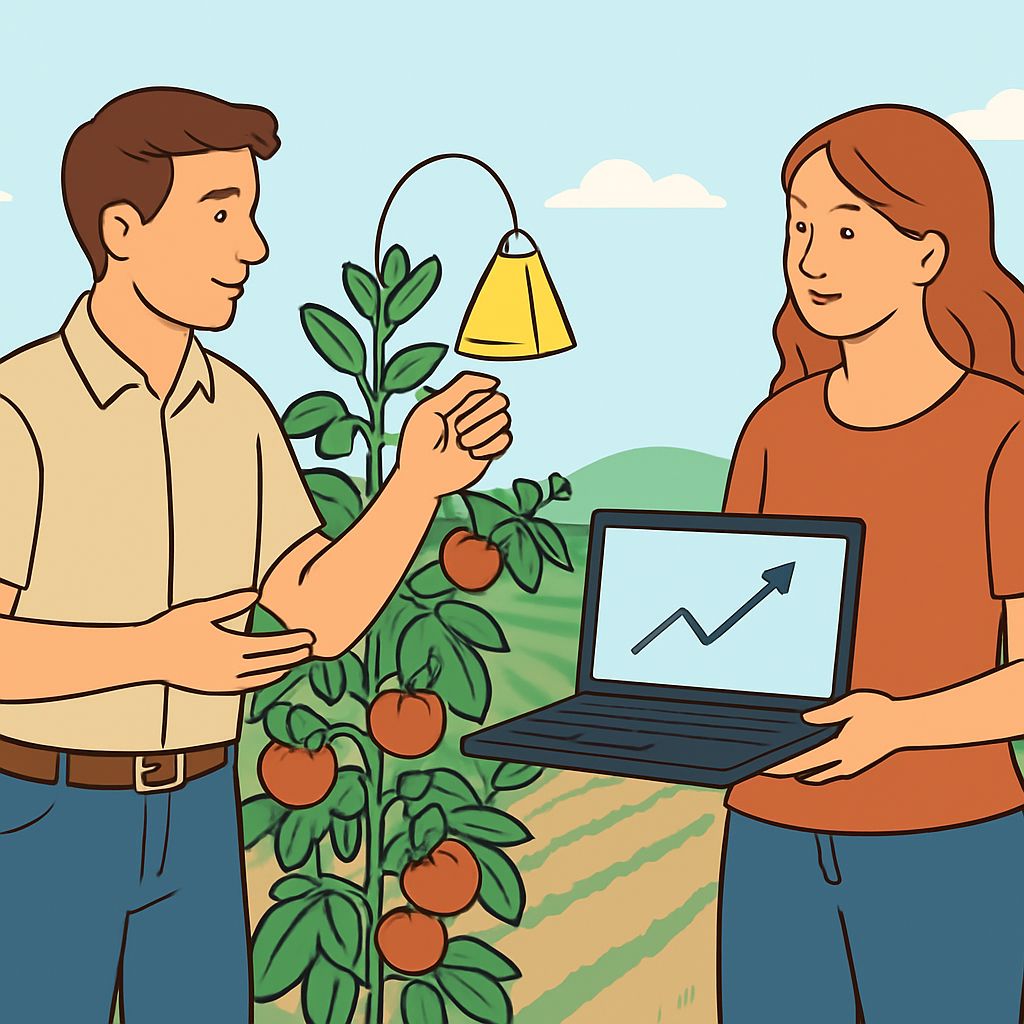
Effective pest management begins with regular monitoring of crops.
Farmers employ various tools to monitor pest populations accurately.
Monitoring should align with pest life cycles for maximum impact.
Importance of Regular Monitoring
Consistent observation helps detect pest problems early.
Early detection allows farmers to prevent widespread damage.
It also supports sustainable farming practices by protecting beneficial insects.
Tools Used for Monitoring and Scouting
Sticky traps attract and capture flying insects for identification.
Additionally, pheromone traps help target specific pest species.
Visual inspection remains essential for detecting pests on leaves and stems.
Scouting Techniques for Small Farms
Systematic scouting helps record pest presence and pressure precisely.
Farmers should select representative sampling areas across their fields.
Walking crop rows and examining plants provides hands-on information.
Timing and Frequency of Monitoring
Frequent scouting during vulnerable crop stages is critical.
Weekly inspections are recommended during peak pest seasons.
Less frequent checks may suffice during low-risk periods.
Interpreting Monitoring Data
Farmers analyze collected data to make informed decisions.
Understanding pest thresholds guides whether treatment is necessary.
Integrated Pest Management specialists often assist with data interpretation.
Integrating Soil Health and Plant Health in Pest Management Strategies
This section links soil health and plant health in pest management strategies.
Together they reduce pest pressure and lower chemical pesticide reliance.
Implementing both enhances resilience and supports sustainable crop production.
Enhancing Soil Health for Effective Pest Control
Healthy soil forms the foundation of sustainable pest management.
It improves plant resilience and reduces vulnerability to pests.
Farmers like Lucas Andersen have observed fewer pest outbreaks by focusing on soil quality.
First, promoting organic matter increases beneficial microbial activity.
Microbial communities help suppress soil-borne pathogens and pests naturally.
Moreover, diverse crop rotations prevent pest buildup and improve nutrient cycling.
Cover crops, such as clover and rye, protect soil and disrupt pest lifecycles effectively.
Additionally, minimizing soil disturbance preserves soil structure and beneficial organisms.
For example, no-till practices adopted by Green Valley Farms reduced pesticide use significantly.
Showcase Your Farming Business
Publish your professional farming services profile on our blog for a one-time fee of $200 and reach a dedicated audience of farmers and agribusiness owners.
Publish Your ProfileRegular soil testing guides precise nutrient management, strengthening plants against pests.
Promoting Plant Health to Resist Pests Naturally
Robust plants withstand pest damage better and recover faster.
Growers like Maria Gonzalez emphasize selecting pest-resistant plant varieties.
These varieties reduce reliance on chemical treatments and improve yield stability.
Balanced fertilization supports plant immune systems without encouraging pest outbreaks.
Excessive nitrogen may increase pest susceptibility, so monitoring is crucial.
Proper irrigation management prevents plant stress, which attracts pests and diseases.
Implementing timely pruning enhances air circulation, lowering fungal pest risks.
Integrating beneficial insects like ladybugs and lacewings bolsters natural pest control.
Such predators reduce populations of aphids and other common pests sustainably.
Furthermore, companion planting creates environments unfavorable to pests and benefits plant health.
Combining Soil and Plant Health Approaches for Integrated Pest Management
Combining soil and plant health strategies creates a resilient farming system.
It reduces pest pressure through ecological balance instead of chemical dependency.
Adopting these methods, farmers like Ethan Cole have seen healthier crops and fewer pesticide applications.
Integrated approaches include crop rotation, organic amendments, pest-resistant varieties, and biological controls.
Farmers should monitor both soil and plant conditions regularly for early pest detection.
Adapting management practices to evolving field conditions enhances long-term sustainability.
Educational programs led by organizations such as Harvest Cooperative help farmers implement these tactics.
Thus, integrating soil and plant health supports productive, sustainable pest management on small farms.
Case Studies of Successful Integrated Pest Management on Small Farms
This section presents five small farm case studies of IPM practices.
Each case study describes practical strategies used by small farm managers.
Readers can learn replicable tactics from each farm example.
Verdant Valley Farm’s Holistic Approach
Verdant Valley Farm integrated natural predators into its fields to transform pest control.
Emily Fairchild prioritized biodiversity to reduce chemical pesticide use.
She introduced ladybugs and lacewings to manage aphid populations.
Consequently crop health improved noticeably within one growing season.
Additionally the farm used crop rotation and trap cropping to disrupt pest cycles.
Thus pest damage decreased and overall yield increased sustainably.
Furthermore soil health improved due to reduced pesticide residues.
Green Hearth Organic Farm’s Manual and Mechanical Controls
Green Hearth Organic Farm focused on manual pest removal and mechanical barriers.
Owner Mateo Ruiz used row covers and sticky traps to shield plants.
He involved workers in hand picking pests during peak infestations.
Therefore the farm reduced reliance on chemical interventions.
Moreover Mateo improved monitoring by regularly scouting and recording pest activity.
This monitoring allowed timely targeted actions that protected beneficial insects.
As a result Green Hearth maintained organic produce quality while controlling outbreaks.
Silver Pine Orchards’ Use of Cultural Practices
Silver Pine Orchards optimized pest management with precise cultural methods.
Manager Olivia Price adapted irrigation schedules to discourage pest and disease development.
She pruned trees to increase airflow and sunlight within the canopy.
Thus the orchard reduced humidity that favored fungal pests.
Showcase Your Farming Business
Publish your professional farming services profile on our blog for a one-time fee of $200 and reach a dedicated audience of farmers and agribusiness owners.
Publish Your ProfileIn addition Olivia planted pest resistant rootstocks for long term health.
The farm combined these tactics with biological controls such as predatory mites.
Consequently pesticide use fell markedly over three years.
Lakeview Vegetable Farm’s Emphasis on Education and Community
Lakeview Vegetable Farm prioritized education to implement IPM successfully.
Owner Farah Malik trained her team on pest identification and controls.
She held workshops for neighboring farmers to encourage IPM adoption.
Consequently the farm reduced pesticide costs and increased crop diversity.
Collaboration with local extension agents improved proactive pest monitoring.
The farm used cover cropping and insect habitats to enhance natural control.
Moreover community driven efforts strengthened long term pest management.
Key Strategies That Led to Success
The case studies highlight using beneficial insects to control pest populations naturally.
They also emphasize physical and mechanical barriers to limit pest access.
Additionally cultural practices and education helped disrupt pest lifecycles and support farmers.
- Utilize beneficial insects to control pest populations naturally
- Employ physical and mechanical barriers to reduce pest access
- Adopt cultural practices that disrupt pest lifecycles and enhance crop health
- Provide education and foster community collaboration for sustained IPM efforts
- Implement regular monitoring to enable timely targeted pest control measures
Resources and Tools for Farmers
This section lists resources and tools for farmers to improve pest management.
It covers workshops, guides, online platforms, and practical technology tools.
Farmers can use these resources to learn, connect, and solve pest problems efficiently.
Workshops to Enhance Pest Management Skills
Farmers can attend local workshops to learn practical pest control techniques.
Extension services often organize hands-on sessions for integrated pest management.
Furthermore, these workshops encourage networking with experienced growers.
Green Valley Agricultural Institute offers seasonal courses on pest ecology.
Workshops also provide updates on regulations and safe pesticide use.
Guides for Sustainable Pest Control
Sustainable pest management guides offer step-by-step advice tailored to small farms.
Many resources include crop-specific strategies and identification tips for pests.
University of Riverbend publishes continuously updated digital manuals on IPM practices.
These guides emphasize cultural, biological, and mechanical control methods.
Farmers can download free PDFs or order printed copies for reference convenience.
Online Platforms Supporting Farmers
Several online platforms provide valuable tools and community support for pest management.
PestWatchHub allows users to report pest sightings and receive expert recommendations.
Additionally, AgriConnect offers forums moderated by agronomists and entomologists.
Farmers can access video tutorials and crop-specific pest databases on AgroLearn.org.
These platforms facilitate knowledge sharing and troubleshooting in real time.
Leveraging Technology for Effective Pest Control
Mobile apps help farmers monitor pest populations and implement timely interventions.
For instance, PestTrack Pro sends alerts based on regional pest outbreak data.
Drones equipped with multispectral cameras assist in scouting large farm areas efficiently.
Moreover, precision spraying technologies reduce pesticide use while targeting affected zones.
Combining these tools enhances overall pest management outcomes sustainably.