




Introduction to Regenerative Grazing
Understanding Key Principles
Regenerative grazing focuses on improving soil health and forage quality.
This technique involves rotating livestock to enhance pasture resilience.
Healthy grazing methods increase biodiversity in grasslands.
Livestock act as natural tools for land regeneration.
Regenerative practices work by mimicking nature’s own processes.
The goal is to restore ecosystem balance and vitality.
Improving Soil Health
Soil health forms the foundation of successful grazing.
Utilizing diverse plant species enhances soil nutrients and structure.
Deep-rooted grasses stabilize the soil and prevent erosion.
Increased organic matter in the soil improves water retention.
Regenerative grazing positively impacts soil microbial activity.
This leads to enhanced nutrient cycling and fertility over time.
Enhancing Forage Quality
Grazing management directly influences forage quality.
Rotational grazing optimizes forage recovery and growth.
Healthy pastures support livestock health and productivity.
Transform Your Agribusiness
Unlock your farm's potential with expert advice tailored to your needs. Get actionable steps that drive real results.
Get StartedFurthermore, well-managed grazing reduces weed pressure.
This promotes a stronger and more resilient pasture ecosystem.
Key Techniques in Regenerative Grazing
- Holistic Management: Consider all variables affecting grazing.
- Adaptive Grazing: Adjust livestock movement based on forage growth.
- Compaction Prevention: Avoid repetitive grazing in vulnerable areas.
- Mob Grazing: Allow high-density grazing for short periods.
These techniques help create a sustainable grazing system.
Ultimately, this approach supports the health of the land and livestock.
The Role of Soil Health in Regenerative Grazing Practices
Understanding Soil Health
Soil health is essential for productive regenerative grazing.
Healthy soil supports vibrant ecosystems and sustainable agriculture.
It enhances nutrient cycling and water retention capabilities.
Moreover, it fosters beneficial microbial activity in the soil.
Healthy soils contribute to vigorous plant and forage growth.
Impact of Grazing on Soil Health
Regenerative grazing techniques improve soil structure over time.
They promote deeper root systems, which enhance soil stability.
This process facilitates better moisture and nutrient absorption.
Additionally, rotational grazing prevents overgrazing of specific areas.
Benefits of Improved Soil Health
Stronger soils lead to more resilient agricultural systems.
They increase carbon sequestration, reducing atmospheric CO2 levels.
Healthier soils support diverse plant species, enhancing biodiversity.
This diversity further supports a range of wildlife habitats.
Strategies for Sustaining Soil Health in Grazing Systems
Farmers must adopt sustainable practices to ensure soil longevity.
Building soil organic matter is a critical component of this effort.
Additionally, reducing chemical inputs can foster healthier soils.
Farmers can use cover crops to protect and enrich the soil.
Also, integrating livestock can enhance nutrient recycling.
Benefits of Regenerative Grazing for Forage Quality and Quantity
Enhancing Soil Structure
Regenerative grazing techniques improve soil structure significantly.
Livestock manure enriches the soil.
Showcase Your Farming Business
Publish your professional farming services profile on our blog for a one-time fee of $200 and reach a dedicated audience of farmers and agribusiness owners.
Publish Your ProfileTrampling by grazing animals enhances soil aeration.
Aerated soil enables better water infiltration and root growth.
As a result, plants develop healthier root systems.
Increased Nutrient Cycling
These grazing practices promote nutrient cycling in ecosystems.
Livestock help break down organic matter efficiently.
This breakdown releases nutrients back into the soil.
Consequently, plants gain access to essential nutrients.
Healthier plants lead to improved forage quality.
Improvement of Plant Diversity
Regenerative grazing enhances plant diversity significantly.
By rotating pastures, different plant species flourish.
Diverse plants contribute to a more resilient ecosystem.
Moreover, diverse forage options provide better nutrition for grazing animals.
Healthy animals reduce the need for supplementary feed.
Boosting Forage Production
Regenerative grazing techniques can lead to higher forage production.
Allowing land to rest helps plants recover better between grazings.
Rested lands often produce a greater volume of forage.
This increase reduces the reliance on external feed sources.
Consequently, the overall farming operation becomes more sustainable.
Enhancing Water Retention
Effective grazing improves water retention in the soil.
This is particularly beneficial in drought-prone areas.
The enhanced soil structure allows for better moisture absorption.
Furthermore, increased organic matter supports water retention.
As a result, livestock enjoy better grazing conditions even during dry spells.
Economic Advantages of Regenerative Grazing
Regenerative grazing can provide substantial economic advantages.
Increased forage quality leads to healthier livestock.
Healthier livestock often result in lower veterinary costs.
Moreover, improved forage quantity boosts overall farm productivity.
This combination can enhance profit margins for farmers.
See Related Content: Organic Livestock Farming for Local Meat Markets
Different Regenerative Grazing Techniques
Overview of Practices
Regenerative grazing focuses on enhancing soil health and forage quality.
This method utilizes specific practices that mimic natural grazing patterns.
As a result, it promotes biodiversity and improves ecosystem resilience.
Holistic Planned Grazing
Holistic planned grazing involves careful management of livestock movement.
This practice mimics the grazing patterns of wild herbivores.
Consequently, it fosters soil regeneration and higher forage growth.
Farmers can assess grazing impacts and adapt plans accordingly.
Mob Grazing
Mob grazing entails concentrating livestock in small areas.
This technique allows for intense grazing followed by recovery periods.
In doing so, it enhances soil fertility and encourages grass regrowth.
Additionally, it can help control invasive plant species.
Showcase Your Farming Business
Publish your professional farming services profile on our blog for a one-time fee of $200 and reach a dedicated audience of farmers and agribusiness owners.
Publish Your ProfileAdaptive Grazing
Adaptive grazing is flexible and responsive to changing conditions.
Farmers regularly monitor forage quality and animal health.
Thus, they can adjust grazing schedules to optimize productivity.
This approach promotes long-term sustainability in pasture management.
Strip Grazing
Strip grazing involves dividing pastures into smaller sections.
Livestock graze one section at a time, allowing others to recover.
This helps maintain plant diversity and enhances soil structure.
Moreover, it reduces overgrazing and enhances nutrient cycling.
Benefits of Regenerative Grazing Techniques
Many benefits arise from implementing regenerative grazing techniques.
- Improved soil health and fertility
- Increased carbon sequestration
- Enhanced biodiversity in ecosystems
- Greater resilience to climate change
These practices contribute to sustainable agricultural systems.
You Might Also Like: Beekeeping Benefits for Crop Yield Improvement
The Impact of Grazing Timing on Soil and Forage Health
Understanding Grazing Timing
Grazing timing refers to when animals graze on specific forage types.
Proper timing is critical for regenerating soil and forage quality.
This strategy can significantly affect nutrient cycling in the ecosystem.
The Role of Seasonal Grazing
Seasonal grazing aligns livestock needs with forage growth patterns.
This method allows plants to recover, promoting healthy regrowth.
Optimally timed grazing can improve soil structure and water retention.
Effects on Soil Health
Timely grazing encourages the development of soil microbiomes.
Healthy soil microbiomes enhance nutrient availability for plants.
This balance reduces soil erosion and improves carbon sequestration.
Influence on Forage Quality
Grazing at specific growth stages maximizes forage quality.
Animals benefit from higher nutritional value in fresh forage.
This approach also reduces weed pressure and promotes diverse plant communities.
Implementing Adaptive Grazing Strategies
Farmers should adopt adaptive grazing strategies for optimal results.
These strategies include monitoring forage growth and soil conditions.
Adjustments in timing can improve overall forage health and soil quality.
Advantages of Selecting Proper Grazing Timing
Proper grazing timing leads to healthier pastures and livestock.
This method supports sustainability in agricultural practices.
Moreover, it can enhance profitability through improved animal weight gains.
Find Out More: Transitioning From Conventional To Organic Livestock Production Methods
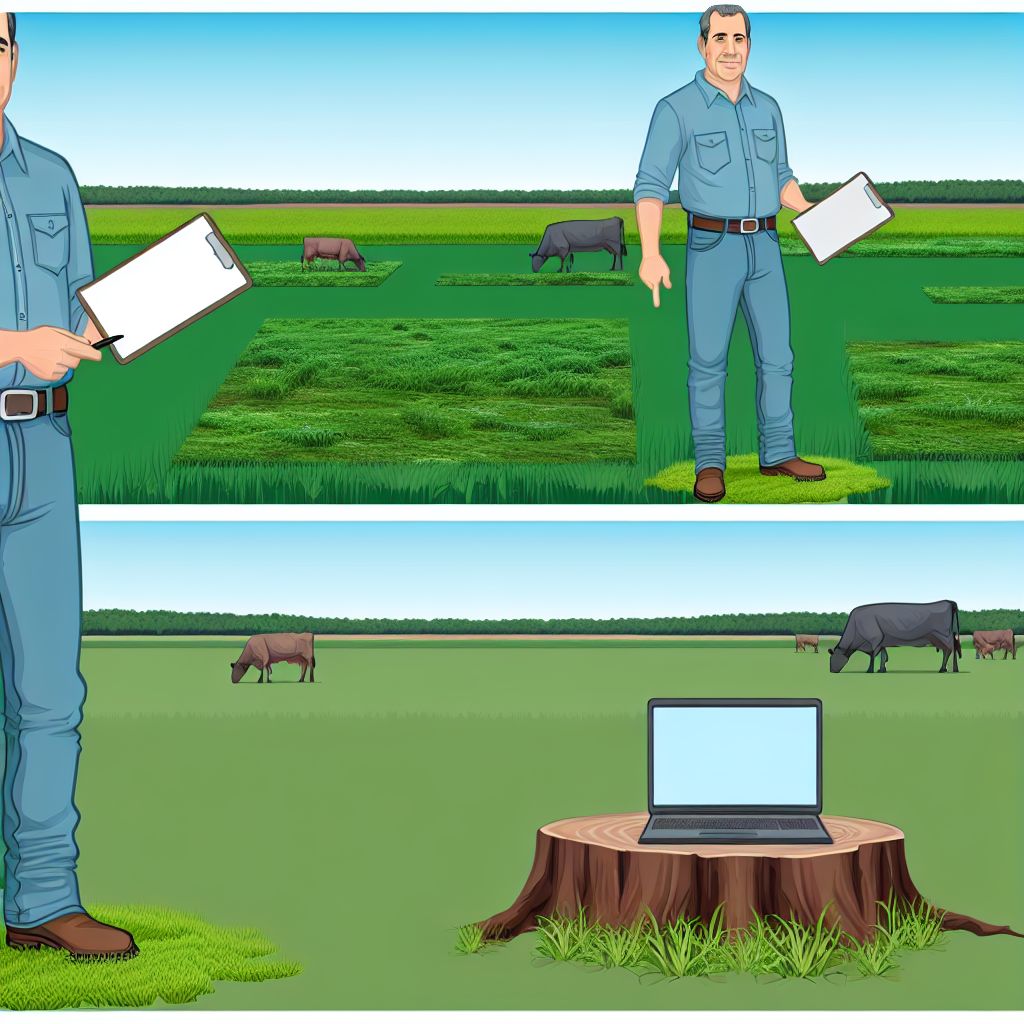
Balancing Livestock Density and Grazing Pressure for Optimal Outcomes
Understanding Livestock Density
Livestock density refers to the number of animals per area of land.
It significantly affects land health and forage quality.
Finding the right balance is essential for sustainable grazing practices.
Effect of Grazing Pressure
Grazing pressure is determined by livestock density and grazing duration.
Excessive pressure can lead to overgrazing, harming vegetation and soil.
Conversely, too little pressure may promote undesirable plant species.
Determining Optimal Livestock Density
Consider the specific needs of your land and livestock.
Analyze factors like forage type, soil health, and climate conditions.
Adjust livestock numbers based on monitoring observations and goals.
Grazing Management Strategies
Implement rotational grazing to distribute grazing pressure evenly.
Showcase Your Farming Business
Publish your professional farming services profile on our blog for a one-time fee of $200 and reach a dedicated audience of farmers and agribusiness owners.
Publish Your ProfileThis technique allows forage to recover between grazing periods.
Additionally, use water and minerals to encourage livestock movement.
Monitoring and Adjusting Practices
Regularly monitor forage growth and soil health indicators.
Adjust livestock density and grazing patterns as necessary.
Flexibility is key for responding to changing environmental conditions.
Benefits of Balanced Grazing
Achieving balance fosters healthy ecosystems and vibrant landscapes.
It enhances soil fertility and promotes biodiversity in forages.
Optimally managed grazing also contributes to livestock health.
You Might Also Like: Balancing Protein Supplements For Maximizing Dairy Cattle Milk Production
Case Studies: Successful Implementation of Regenerative Grazing
Impactful Results at Green Hills Farm
Green Hills Farm showcases successful regenerative grazing strategies.
Farm manager Sarah Lawson adopted adaptive grazing techniques.
These practices improved soil health significantly over three years.
Increased organic matter enhanced moisture retention in the soil.
Moreover, forage production doubled as a result of these changes.
This approach also boosted biodiversity across the farm.
Wildflowers and native grasses flourished alongside livestock.
Consequently, the farm saw a remarkable increase in pollinator species.
Innovations at Oak Meadow Ranch
Oak Meadow Ranch implemented a rotational grazing system effectively.
Owner Mark Thompson noticed improved pasture quality with this method.
Livestock rotated through paddocks, allowing forage to recover fully.
This led to healthier animals and better meat quality for consumers.
Specifically, beef quality ratings increased significantly after one year.
Additionally, the ranch reduced feed costs due to improved pastures.
Overall, customer satisfaction improved as a result of these changes.
Success Stories from Riverbend Farm
Riverbend Farm adopted diverse grazing practices successfully.
Owner Emily Chen planted cover crops to enhance soil fertility.
With this initiative, soil health improved remarkably over time.
The farm also witnessed a decrease in erosion and nutrient runoff.
Consequently, production of high-quality forage has increased.
Livestock showed improved health, reducing veterinary costs significantly.
Farmers in the area have since shown interest in her techniques.
Insights and Future Directions in Regenerative Grazing
Each case provides valuable insights into regenerative grazing benefits.
Farmers can improve both soil and livestock health through innovative methods.
Collaboration among farmers enhances knowledge sharing and adoption.
Future research will further validate these successful practices.
Continued education and support will encourage broader adoption.
Ultimately, regenerative grazing holds promise for sustainable farming.
Future Trends in Regenerative Grazing and Soil Management
Innovative Grazing Techniques
Emerging grazing methods will enhance soil health significantly.
Farmers will adopt adaptive techniques to maximize pasture productivity.
Mob grazing mimics natural herd behavior.
Showcase Your Farming Business
Publish your professional farming services profile on our blog for a one-time fee of $200 and reach a dedicated audience of farmers and agribusiness owners.
Publish Your ProfileThis improves soil structure.
Integrating livestock into perennial cropping systems will become more common.
This integration will create synergistic effects on the ecosystem.
Technological Advancements
Technology will play a crucial role in regenerative grazing.
Farmers will utilize drones to monitor pasture health and livestock locations.
Data analytics will guide grazing decisions with precision.
Smart sensors will help optimize water usage and forage management.
These innovations will support sustainable agricultural practices.
Consumer Demand for Sustainability
Consumer preferences are shifting towards sustainably produced food.
Regenerative grazing will attract environmentally conscious buyers.
Brands will promote transparency in their supply chains to gain trust.
This demand will encourage farmers to adopt regenerative practices.
Ultimately, sustainable grazing will enhance brand loyalty and profitability.
Policy and Support Initiatives
Government policies will increasingly favor regenerative agriculture.
Subsidies will support farmers implementing sustainable practices.
Research funding will promote advancements in regenerative grazing techniques.
Collaborations between farmers and researchers will drive innovations.
This support will facilitate a broader transition to regenerative systems.
Community Engagement and Education
Community programs will elevate awareness of regenerative grazing benefits.
Farmers will engage in knowledge-sharing with their peers.
Workshops and field days will educate others about innovative practices.
Building a community of practice encourages collaborative problem-solving.
Such engagement fosters a sustainable mindset among all stakeholders.
Additional Resources
Managing Grazing to Restore Soil Health, Ecosystem … – Frontiers