




Introduction to Extreme Weather and Agricultural Relevance
Extreme weather includes events that differ greatly from typical climatic conditions.
These events vary in duration, intensity, and frequency.
They can also influence temperature, precipitation, and wind patterns.
Defining Extreme Weather
Extreme weather refers to conditions that depart markedly from normal climate patterns.
Such events may last briefly or continue for extended periods.
Their intensity and frequency can also vary across agricultural areas.
Relevance to Agricultural Systems
Agricultural systems depend on stable environmental conditions for predictable production.
Therefore, weather changes can disrupt planting, crop growth, and harvest cycles.
Moreover, extreme events can change soil moisture and local water availability.
Key Pathways of Impact
Several pathways explain how extreme weather affects farm operations and outcomes.
These effects can reduce productive capacity and increase management complexity.
They can also influence soil conditions, water needs, pests, and diseases.
- Extreme events can directly damage crops and farm infrastructure.
- Soil erosion and degradation can reduce long term fertility.
- Water stress can change irrigation needs and water management.
- Shifts in pests and diseases can increase management complexity.
Implications for Land Use and Management
Land managers may adjust practices in response to changing weather risks.
Consequently, these adaptations can influence long term land planning and stewardship.
Additionally, management changes can affect the desirability of specific parcels.
Transform Your Agribusiness
Unlock your farm's potential with expert advice tailored to your needs. Get actionable steps that drive real results.
Get StartedScope of This Section
This section introduces core concepts related to extreme weather and agriculture.
It also explains how weather conditions can affect agricultural systems.
Furthermore, it prepares readers for later discussion of economic implications.
Increasing Frequency and Intensity of Extreme Events
Extreme events now show changing patterns in frequency, strength, and duration.
These shifts affect heat, rainfall, drought, storms, and wildfire conditions.
The following events illustrate the main types of observed change.
- Heat waves have grown more frequent and stronger.
- Drought periods last longer and reach greater severity.
- Heavy precipitation brings more intense rainfall and flooding.
- Severe storms produce higher wind and precipitation extremes.
- Wildfires occur more frequently and cover larger areas.
Observed Patterns in Extreme Events
Extreme events now occur with greater regularity.
Additionally, individual events often reach higher magnitudes than before.
Some events also last longer than previously recorded durations.
Seasonal and Geographic Shifts
Seasonal timing has shifted for several types of extreme events.
Furthermore, impacts now appear across broader geographic areas.
Consequently, previously less affected regions now face new exposures.
Compound and Cascading Event Impacts
Multiple extreme events can occur close together and compound their impacts.
For example, drought followed by intense rain can create complex damage patterns.
These sequences can produce effects that differ from individual events.
Monitoring and Information Needs
Improved monitoring supports clearer understanding of changing event patterns.
Meanwhile, long-term records help track shifts in frequency and intensity.
Ongoing observation also informs adaptive land management decisions.
Implications for Agricultural Land Value
Changing patterns of extreme events can influence perceptions of land risk.
Consequently, stakeholders may reassess the value of certain parcels.
They may also reconsider the desirability of land facing new exposures.
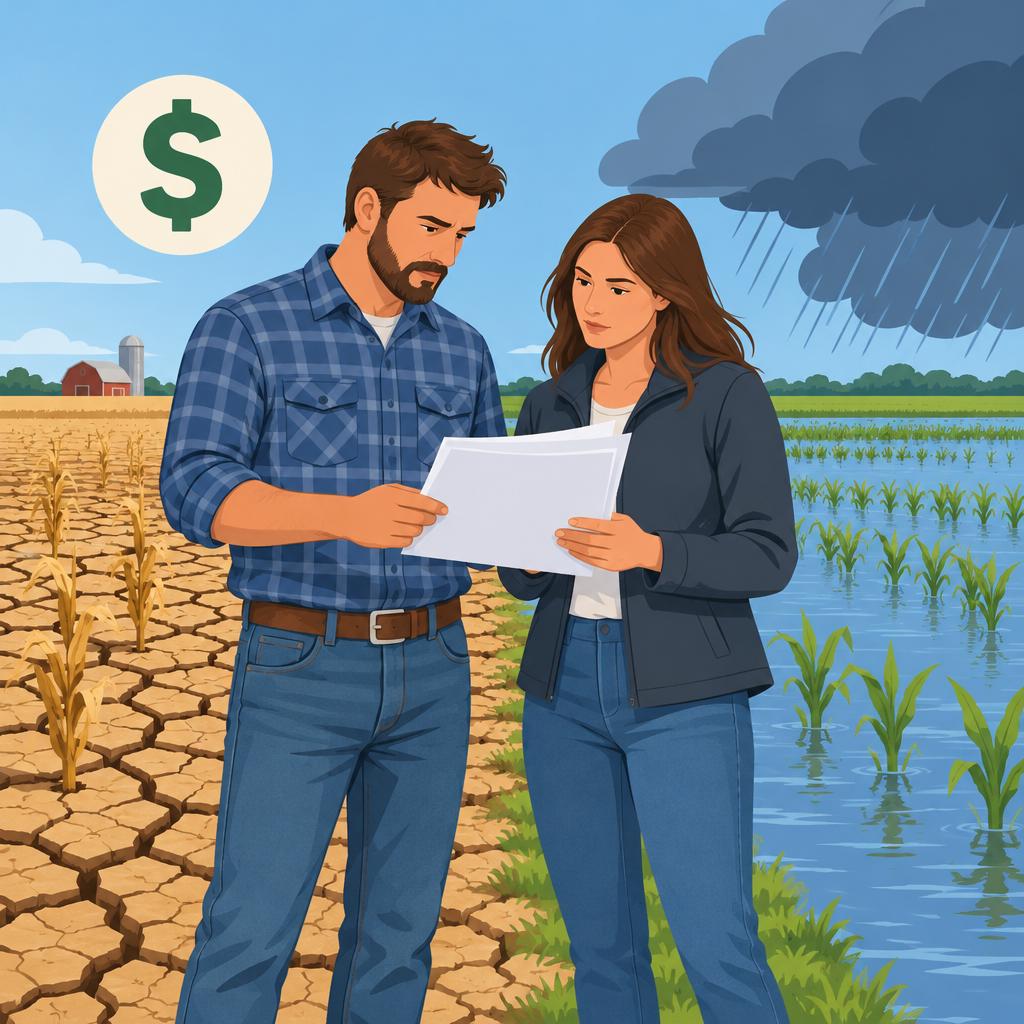
Impact of Droughts on Soil Health and Agricultural Productivity
Droughts can damage soil functions while reducing water available for crops.
Dry conditions alter soil structure, biological activity, and nutrient movement.
These changes can reduce productivity and affect agricultural land value over time.
Showcase Your Farming Business
Publish your professional farming services profile on our blog for a one-time fee of $200 and reach a dedicated audience of farmers and agribusiness owners.
Publish Your ProfileSoil Moisture and Structure
Droughts reduce soil moisture and make plant water uptake more difficult.
Consequently, dry soils become more vulnerable to compaction and surface crusting.
Moreover, low moisture limits soil aggregation and pore formation.
Soil Organic Matter and Biology
Droughts slow decomposition and limit soil organic matter accumulation.
Furthermore, dry conditions suppress microbial activity that supports nutrient cycling.
Therefore, plants receive fewer available nutrients during prolonged dry conditions.
Key Soil Impacts
Several processes can weaken soil quality and restrict future plant growth.
In addition, drought-related changes can reduce soil resilience during later growing seasons.
These effects can combine to limit root development and nutrient access.
- Loss of topsoil reduces the soil depth available for roots.
- Increased erosion removes nutrient-rich surface material.
- Salinization can occur when irrigation concentrates salts over time.
- Concentrated contaminants can impair soil biological functions.
Agricultural Productivity Effects
Droughts reduce crop water supplies and slow plant growth.
Consequently, yields often decline when drought overlaps with key growth stages.
Moreover, farmers may delay planting or change crop choices to manage dry conditions.
Farm Management Responses and Soil Recovery
Producers adopt moisture conservation practices to protect soil and crop yields.
Regular soil assessments help farmers track degradation and recovery.
However, soils may need time to regain full function after drought.
Furthermore, recovery often depends on repeated favorable weather and careful management.
Implications for Agricultural Land Value
Reduced and variable productivity can lower perceived land reliability and worth.
Consequently, markets may value land less when drought risk threatens long-term yields.
Additionally, higher drought management costs can influence buyer interest.
Discover More: Impact of Extreme Weather on Farmland Prices in the United States
Flooding Effects on Crops and Land Usability
Flooding affects crops, soils, and farm management decisions.
It can reduce yields, alter fertility, and delay essential field operations.
Repeated flooding may also reduce land value and long term suitability.
Immediate Impacts on Crops
Floodwaters can submerge crops and cause rapid plant failure.
Additionally, prolonged saturation reduces oxygen availability around roots.
Consequently, affected crops often produce lower yields during that growing season.
Soil and Nutrient Changes
Flooding can erode soil and remove valuable topsoil.
Moreover, deposited sediments may settle unevenly and change surface contours.
Also, nutrient leaching can reduce fertility in affected fields.
Furthermore, floodwaters can introduce contaminants that alter soil chemistry.
Land Usability and Farm Management
Waterlogged fields can prevent farmers from planting and harvesting on time.
Therefore, farmers may leave fields fallow while soils recover.
Additionally, drainage improvements often become necessary to restore arability.
Moreover, repeated flooding can reduce long term suitability for certain crops.
Consequently, farmers may shift toward more flood tolerant practices.
Indicators and Management Actions
Farmers should assess soil structure and compaction before replanting.
They can perform nutrient testing to guide fertilizer applications.
They may also improve or install drainage to lower water tables.
- Assess soil structure and compaction before replanting.
- Perform nutrient testing to guide fertilizer applications.
- Improve or install drainage to lower water tables.
- Consider temporary crop adjustments to reduce future risk.
Long Term Soil Structure and Value Implications
Over time, repeated floods can degrade soil structure and porosity.
Thus, land value may decline when recovery becomes more difficult.
Showcase Your Farming Business
Publish your professional farming services profile on our blog for a one-time fee of $200 and reach a dedicated audience of farmers and agribusiness owners.
Publish Your ProfileHowever, restoration measures can improve productivity and usability over time.
Find Out More: How Smart Irrigation Technology Supports Sustainable Land Development
Role of Hurricanes and Storms in Coastal Land Valuation
Hurricanes and storms influence coastal agricultural land values through several connected effects.
Some effects resemble flooding impacts discussed in earlier sections.
These events affect ownership costs, buyer interest, and long-term investment decisions.
Direct Physical Damage and Repair Costs
Hurricanes and storms cause physical damage to coastal agricultural land.
Consequently, owners face repair and restoration expenses after these events.
Therefore, expected repair costs can lower perceived land value.
Perception of Risk and Market Demand
Buyers often adjust their offers based on perceived storm risk.
Moreover, risk perception influences demand for coastal plots.
Consequently, areas with higher storm frequency may see reduced buyer interest.
Insurance, Financing, and Regulatory Influences
Insurance availability affects land affordability and investment appeal.
Furthermore, lenders consider storm exposure when approving loans for land.
Also, regulatory changes can alter permitted land uses after storms.
Adaptation Measures and Long-Term Investment Decisions
Land managers adopt adaptation measures to retain value over time.
For example, some managers implement structural and landscape modifications.
Additionally, these measures can influence buyer confidence and valuations.
These actions can help retain land value during long-term investment decisions.
- Structural reinforcements can reduce vulnerability.
- Drainage and soil management can mitigate water impacts.
- Vegetative buffers can provide natural protection for land.
- Risk planning and monitoring support long-term decision making.
Uncover the Details: Sustainable Irrigation Methods for Preserving Agricultural Land Value
Long-Term Effects on Land Market Trends and Property Values
This section examines long-term influences on land markets and property values.
Earlier sections outlined how extreme weather impacts agriculture.
These influences shape decisions about ownership, investment, financing, and land use.
Shifts in Buyer and Investor Behavior
Buyers increasingly consider climate and disaster risk when evaluating land.
Consequently, some investors favor lower-risk parcels and resilient features.
Moreover, market expectations can prompt faster sales in perceived high-risk areas.
- Buyers prioritize parcels with lower exposure to extreme events.
- Investors value visible resilience measures and proven adaptive management.
- They diversify holdings to spread climatic and market risk.
Insurance availability and cost directly influence land affordability.
Therefore, rising premiums can reduce buyer budgets and suppress prices.
Likewise, lenders may adjust loan terms based on perceived climate risk.
- Underwriting practices can restrict financing for high-risk parcels.
- Regulatory changes can shift land use and affect long-term value.
- Insurance availability can determine whether owners manage recovery costs.
Land Use Changes and Economic Adaptation
Landowners may alter land use in response to persistent extreme weather.
Consequently, some parcels may transition to nonagricultural uses or conservation.
Additionally, owners can invest in adaptive infrastructure to maintain productivity.
- Landowners implement infrastructure and management changes to reduce exposure.
- They diversify crop choices and revenue streams to hedge risks.
- They may lease land rather than sell to preserve long-term options.
Valuation Methods and Risk Assessment Changes
Appraisers and analysts increasingly incorporate long-term risk into valuations.
Therefore, valuation models can apply risk premiums or adjusted discount rates.
Moreover, scenario planning helps estimate future income and costs under uncertainty.
- Analysts include stress tests for prolonged productivity declines.
- They consider adaptation and recovery costs in discounted cash flows.
Market Volatility and Long-Term Price Trajectories
Markets can exhibit greater volatility as perceptions of climate risk evolve.
Consequently, some areas may experience long-term depreciation pressure.
Meanwhile, land with proven resilience can command price premiums over time.
Furthermore, transaction timing can have larger effects on realized returns.
Long-term weather trends will reshape market dynamics and property values.
Therefore, stakeholders must adapt strategies for buying, selling, and valuing land.
Showcase Your Farming Business
Publish your professional farming services profile on our blog for a one-time fee of $200 and reach a dedicated audience of farmers and agribusiness owners.
Publish Your ProfileYou Might Also Like: Sustainable Irrigation Systems for Drought-Resistant Farming
Case Studies and Regional Analyses
Regional case studies compare how agricultural land markets respond to extreme weather exposure.
These analyses connect land use, economic conditions, market behavior, and institutional settings.
They also support careful comparisons across regions with different characteristics.
Selection Criteria for Regional Case Studies
Analysts select regions based on observable exposure to extreme weather events.
Additionally, they consider agricultural diversity and the availability of relevant data.
Moreover, analysts include regions with varied market structures for comparison.
Sub-Outlines for Each Case Study
Every case study follows a consistent sub-outline to support comparability.
This structure organizes regional, economic, methodological, institutional, and interpretive information.
Consequently, readers can compare findings without treating regions as identical.
- Regional profile and land use characteristics.
- Economic context and market history.
- Data sources, indicators, and methodological notes.
- Stakeholder perspectives and institutional settings.
- Limitations and interpretation considerations.
Regional Profile
This section describes land use patterns and demographic context.
It identifies characteristics that help explain regional differences in agricultural activity.
Furthermore, the profile establishes context for interpreting later market indicators.
Economic Context
Analyses summarize historical land market conditions and prevailing economic factors.
They examine how market history provides context for observed regional patterns.
In addition, economic conditions help frame changes in land transactions and values.
Data Sources and Indicators
Researchers list the economic indicators and data sources used in analysis.
They explain how these materials support comparisons among selected regions.
Moreover, methodological notes clarify the scope and interpretation of the evidence.
Data and Economic Indicators Analyzed
Analysts examine trends in land values and transaction activity.
In addition, they track rental rates and investment patterns where available.
Moreover, studies assess fiscal and credit conditions that influence land markets.
Comparative Regional Patterns
Researchers compare regions to identify commonalities and differences.
Consequently, they highlight heterogeneity without asserting uniform outcomes.
Similarly, analyses explore temporal dynamics and short-term versus long-term considerations.
Stakeholder Responses and Market Signals
Case studies document choices made by landowners and market participants.
Moreover, they examine signals from buyers, lenders, and local institutions.
Next, analyses consider how expectations shape transactional behavior and pricing.
Policy and Institutional Context
Researchers describe relevant policy frameworks and institutional responses around affected regions.
Furthermore, they assess how governance shapes market resilience and recovery options.
These institutional factors provide context for regional differences in market responses.
Limitations and Interpretation Guidance
Analysts acknowledge data gaps and potential confounding factors in regional studies.
Therefore, they recommend cautious interpretation of correlations and observed associations.
Finally, studies emphasize the need for longitudinal data and repeated assessments.
Strategies for Mitigating Risks to Agricultural Land Value
Landowners can reduce weather-related risks through coordinated planning, management, investment, and monitoring.
These strategies address soil, water, infrastructure, financial, and community considerations.
Furthermore, layered actions can support agricultural land value over time.
Risk Assessment and Planning
Landowners should regularly assess vulnerabilities to extreme weather and related land value risks.
They should also track changes in soil, water, and infrastructure resilience.
Then, managers can develop adaptive plans with clearly defined response protocols.
Showcase Your Farming Business
Publish your professional farming services profile on our blog for a one-time fee of $200 and reach a dedicated audience of farmers and agribusiness owners.
Publish Your ProfileSoil and Water Management
Conservation practices can improve soil structure and increase organic matter.
Additionally, water management can reduce runoff and erosion risks.
Flexible irrigation and drainage approaches can help managers respond to changing conditions.
Diversification and Land Use Strategies
Crop diversification can spread weather-related production risks across different activities.
Income diversification can also reduce reliance on one agricultural outcome.
Moreover, noncropping land uses can help buffer extreme events and support flexible planning.
Infrastructure and Protective Measures
Resilient on-farm infrastructure can help protect land operations during disruptive weather.
Protective landscape features can further reduce exposure to damaging conditions.
Reinforced drainage, access routes, and storage locations can improve operational resilience.
Financial and Market Strategies
Financial planning can help landowners manage value volatility caused by extreme weather.
Contracts and leases can distribute weather-related risks between participating parties.
Transparent records should document land conditions and completed management actions.
Monitoring, Technology, and Adaptive Management
Ongoing monitoring can reveal emerging risks before they affect land management decisions.
Technology can support timely observation of changing soil, water, and infrastructure conditions.
Managers should adjust practices when observations or new information indicate changing risks.
Policy and Community Engagement
Local stakeholders can coordinate regional responses to shared agricultural risks.
Community coordination can improve knowledge sharing and support consistent land management.
Land practices should align with evolving policy and planning frameworks.
Implementation Priorities
Landowners should assess vulnerabilities before selecting resilience investments.
They should prioritize practical measures that remain adaptable as conditions change.
Regional collaboration can strengthen knowledge sharing and distribute weather-related risks.
- Assess vulnerabilities and prioritize actions accordingly.
- Plan adaptive measures that remain practical over time.
- Invest where resilience will most strongly support land value.
- Monitor outcomes and revise strategies as conditions change.
- Collaborate regionally to share knowledge and spread risk.
Preparing for Continued Changes in Weather Patterns
Earlier sections explored how weather affects agricultural land value.
Weather patterns will continue to influence agricultural land value.
Landowners and managers can prepare by assessing vulnerability and updating management plans.
Priorities for Landowners and Managers
Landowners should assess vulnerability across their properties.
Additionally, they should update management plans regularly.
They can also document adaptive measures and associated costs.
- Conduct routine vulnerability assessments.
- Diversify land uses and income streams.
- Invest in soil and water conservation measures.
- Document adaptive measures and associated costs.
Policy and Planning Directions
Policymakers should integrate resilience into land use planning.
Furthermore, they should design incentives for resilient practices.
Planning should also consider long-term variability in weather patterns.
Financial and Market Considerations
Investors should price risk to reflect evolving weather uncertainties.
Consequently, markets can reward resilient land management decisions.
Financial tools should also support upfront investments in resilience.
Monitoring and Adaptive Practices
Land managers must monitor conditions and adjust practices quickly.
Therefore, they should establish regular monitoring routines for soil and water.
Moreover, managers should schedule periodic reviews of adaptation outcomes and costs.
Collaborative Action and Next Steps
Stakeholders should coordinate across sectors and scales.
Additionally, communities should share lessons and practical approaches.
Finally, pilot projects can test scalability before wider adoption.
These actions can help agricultural land values withstand future weather changes.
Showcase Your Farming Business
Publish your professional farming services profile on our blog for a one-time fee of $200 and reach a dedicated audience of farmers and agribusiness owners.
Publish Your Profile


