




Introduction to Drought and Agricultural Impacts
Drought describes a prolonged period with limited water availability.
Its intensity and duration can vary across different circumstances.
Therefore, drought can create different challenges for agricultural communities.
How Drought Affects Agricultural Systems
Drought influences multiple elements of agricultural systems.
For example, drought can limit water resources for crops and livestock.
Additionally, limited water can affect production decisions and daily farm activities.
- Soil moisture and soil health can decline.
- Crop growth and crop yields may suffer.
- Livestock health depends on available forage and water.
- Farm operations and farm costs can change.
Transmission Pathways to Broader Economic Considerations
Drought can alter decisions about land use and investment.
Consequently, producers may assess changing conditions beyond immediate production needs.
These effects connect agricultural conditions with broader economic considerations.
Temporal and Spatial Dimensions
Drought effects can appear quickly or develop over longer periods.
Moreover, conditions can vary across different areas within one region.
As a result, agricultural responses may differ across locations and time periods.
Implications for Stakeholders
Farmers face operational choices when drought conditions arise.
Additionally, landowners and investors monitor changing conditions and potential risks.
Therefore, understanding basic drought dynamics supports informed decision making.
Transform Your Agribusiness
Unlock your farm's potential with expert advice tailored to your needs. Get actionable steps that drive real results.
Get StartedHistorical Overview of Droughts and Agricultural Shifts
Drought patterns shaped agricultural decisions across historical periods.
Farmers encountered changing conditions involving rainfall and water availability.
These pressures encouraged repeated adjustments in land use.
Patterns of Historical Droughts
Droughts appeared at recurring intervals throughout historical periods.
Consequently, rainfall and water availability varied significantly for farmers.
Furthermore, each event differed in severity and duration.
Therefore, communities faced repeated pressure to adapt land use.
Responses in Farming Practices
Farmers adjusted techniques and choices during prolonged dry spells.
- They diversified crops to spread risk.
- They altered planting schedules to match available moisture.
- They invested in water management where possible.
- Consequently, land management practices shifted toward resilience.
Land Use and Real Estate Implications
Droughts influenced decisions about which parcels remained in production.
Consequently, some landowners repurposed land for alternative uses.
Furthermore, market interest shifted toward properties with reliable water access.
Therefore, land value perceptions began incorporating water risk.
Policy and Institutional Adaptations
Governments and institutions adjusted rules to address recurring water shortages.
Moreover, planners promoted strategies to stabilize agricultural production.
Additionally, funding priorities shifted toward water resilience measures.
Consequently, institutional change affected land management incentives.
Longer-Term Agricultural Shifts
Over time, drought encouraged diversified rural economies.
Therefore, stakeholders reassessed long-term land planning.
They also reassessed investment criteria.
Current Trends in Agricultural Real Estate Linked to Drought Events
Drought events influence how buyers evaluate agricultural real estate.
Meanwhile, sellers increasingly address water reliability when presenting properties.
These market responses shape investment decisions, valuations, and land use choices.
Emerging Market Patterns
Buyers now place greater emphasis on reliable water access when evaluating agricultural land.
Additionally, properties with water management features attract focused interest from prospective buyers.
Showcase Your Farming Business
Publish your professional farming services profile on our blog for a one-time fee of $200 and reach a dedicated audience of farmers and agribusiness owners.
Publish Your ProfileFlexible land uses also appeal to buyers seeking options during changing water conditions.
- Buyers increasingly examine legal water access and established water rights.
- Investors show stronger interest in irrigation and water storage infrastructure.
- Land that supports alternate crops or uses can attract broader demand.
Investor Behavior and Financing
Investors now include drought risk when they evaluate agricultural acquisitions.
Consequently, lenders may request disclosures addressing water-related risks.
Furthermore, investors assess operational flexibility when estimating long-term property value.
Property Valuation and Land Use Changes
Appraisers increasingly consider expected water availability when valuing agricultural properties.
Therefore, some owners shift land toward uses requiring less water.
Land managers also explore additional revenue sources to offset drought-related pressures.
Adaptation Strategies Adopted by Owners
Owners use conservation practices to help maintain productive capacity.
Moreover, they upgrade on-site systems to improve efficiency and storage.
Lease arrangements may also clarify how participants manage water responsibilities.
Market Signals and Early Indicators
Early market signals reveal changing preferences among agricultural buyers and sellers.
For example, buyers increasingly ask about water access and property resilience.
Similarly, listings and leases increasingly describe water infrastructure, conservation, and allocation responsibilities.
- Buyer inquiries increasingly mention water access or resilience.
- Listing descriptions increasingly highlight water infrastructure and conservation features.
- Lease contracts may specifically address water allocation responsibilities.
Gain More Insights: How Extreme Weather Affects Agricultural Land Value in the USA
Regional Variations in Drought Impacts
Drought affects agricultural zones differently because water conditions vary across regions.
Furthermore, soils, crops, infrastructure, and markets shape each area’s response.
Therefore, regional conditions determine how agricultural land manages moisture stress.
Differing Water Availability Patterns
Regions experience distinct water availability patterns that shape drought effects.
Consequently, some agricultural zones face prolonged moisture deficits more frequently.
Meanwhile, other zones experience brief droughts and recover quickly.
Soil and Crop Vulnerability Variations
Soil types influence how drought reduces agricultural productive capacity.
Moreover, crop mixes determine sensitivity to limited water supplies.
Therefore, some zones maintain yields longer during moisture stress.
Irrigation Dependency and Infrastructure Differences
Irrigation access changes how drought affects agricultural land values.
However, infrastructure quality varies between zones and influences resilience.
Thus, robust systems help some areas buffer drought effects.
Market and Property Value Responses
Local markets respond differently across agricultural zones during drought.
Additionally, buyers may prioritize features according to regional conditions.
Consequently, property demand reflects regional water realities and risk profiles.
Adaptive Land Management Practices
Farmers and landowners adopt adaptations that match regional constraints.
For example, rainfed and irrigated zones require different strategies.
These practices help land managers control moisture demand and exposure.
- Soil conservation measures increase water retention capacity.
- Rotational cropping and fallow periods help manage moisture demand.
- Water storage and efficient delivery systems reduce drought exposure.
Planning and Policy Considerations
Regional planning affects how agricultural land responds to prolonged dry conditions.
Moreover, zoning and incentives influence investment in drought resilience measures.
Therefore, policymakers tailor responses to each zone’s distinct needs.
Economic and Social Implications
Drought creates varied economic pressures across agricultural zones.
Consequently, community responses and labor dynamics shift by region.
Thus, regional planning must address economic and social dimensions.
You Might Also Like: Impact of Extreme Weather on Farmland Prices in the United States
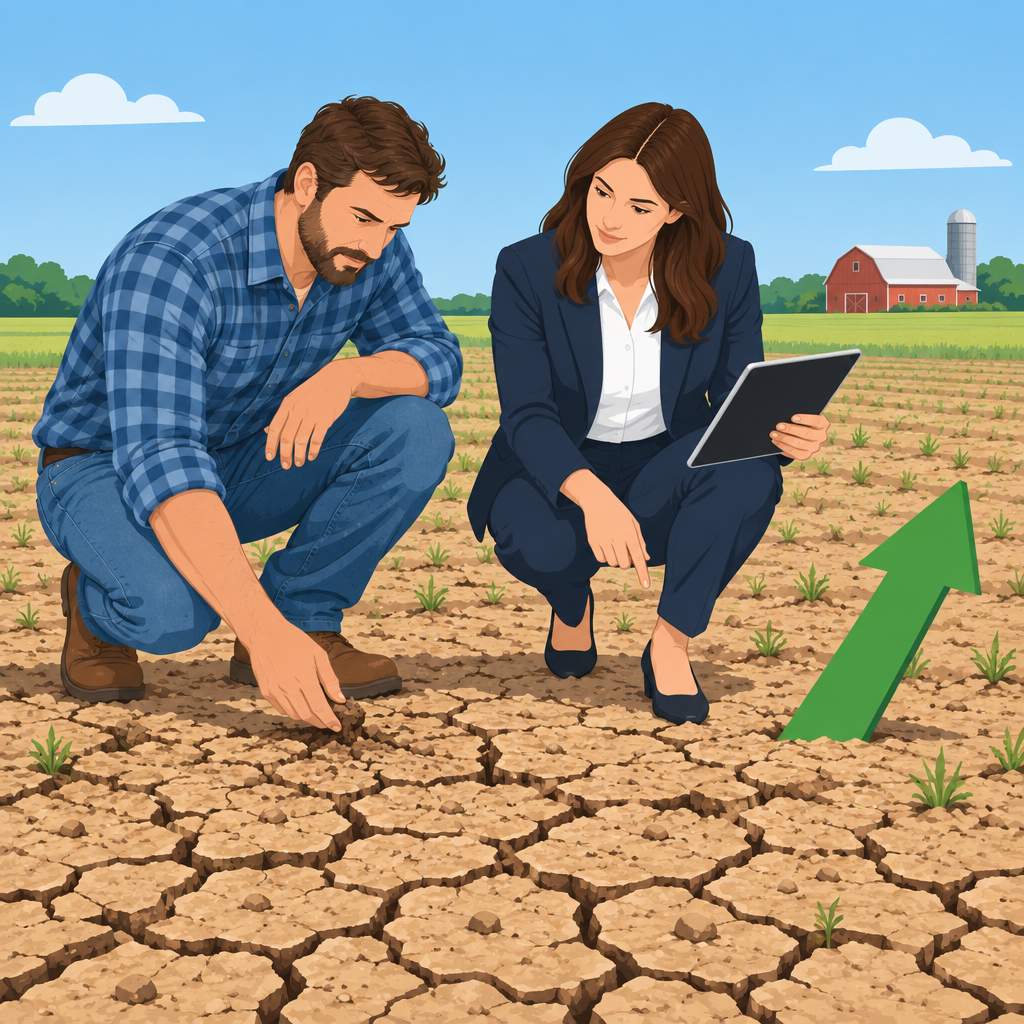
Economic Implications of Drought-Induced Changes in Land Use
This section analyzes economic consequences of drought-driven land use changes.
Showcase Your Farming Business
Publish your professional farming services profile on our blog for a one-time fee of $200 and reach a dedicated audience of farmers and agribusiness owners.
Publish Your ProfileFurthermore, it highlights channels through which land uses alter local and broader markets.
These effects influence property decisions, production choices, financing, employment, and public planning.
Land Value and Market Dynamics
Drought shifts perceived land productivity and changes market demand.
Consequently, buyers and sellers adjust reservation prices and sale timing.
Moreover, rental markets respond as available land use options change.
Agricultural Production and Profitability
Farmers reallocate acreage across crops or leave land fallow in response.
As a result, revenue streams and input costs can shift materially.
Therefore, long-term profitability estimates require adjustments for new land uses.
Investment, Financing, and Insurance
Investors reassess asset risk profiles when land use changes persistently occur.
Consequently, lenders may tighten credit or alter loan terms for agricultural properties.
Additionally, insurance markets face shifting exposure and may change coverage offerings.
Labor Markets and Local Economies
Land use transitions affect seasonal and permanent agricultural employment patterns.
Therefore, local businesses may experience altered demand levels.
Service providers also respond when agricultural activity changes within local economies.
Policy, Tax Revenue, and Public Services
Municipal revenues reflect changes in property values and land productivity.
Consequently, public service funding may shift as tax bases change.
Moreover, policy responses can influence economic incentives for different land uses.
Adaptation Costs and Long-Term Valuation
Owners face upfront adaptation costs when converting land to alternative uses.
Similarly, investors evaluate discounted future returns under new land use scenarios.
Therefore, land valuation models must incorporate changing drought-related risk factors.
Market Signals and Behavioral Responses
Price signals communicate scarcity and encourage changes in land allocation.
Consequently, producers may adopt diverse strategies to manage economic risk.
These responses connect changing prices with decisions about production and land use.
Key Economic Pathways
Several economic pathways connect drought-driven land changes with broader market outcomes.
These pathways affect owners, renters, investors, governments, and local businesses.
Their combined effects shape both short-term liquidity and long-term asset value.
- Shifts in land value alter investment attractiveness for different buyers.
- Rental rates reflect evolving short-term demand and land productivity expectations.
- Diversification investments can mitigate income volatility for landowners.
- Public revenues and services respond to changing tax bases over time.
- Adaptation expenses reduce short-term liquidity but may preserve long-term asset value.
Implications for Planning and Decision-Making
Stakeholders should integrate expected land use shifts into economic planning processes.
Moreover, scenario analysis helps capture uncertainty and inform robust strategies.
Finally, ongoing monitoring of land use and market signals remains essential.
Discover More: How Smart Irrigation Technology Supports Sustainable Land Development
Technological Innovations in Agriculture to Combat Drought
Farmers use technology to manage limited water supplies during drought.
These tools improve irrigation control, soil management, crop performance, and water conservation.
Furthermore, data systems help producers make timely decisions about available water resources.
Water Management Technologies
Precision irrigation delivers water according to plant needs.
Additionally, targeted applications reduce unnecessary water waste.
- Drip and micro-irrigation apply water directly to root zones.
- Automated scheduling aligns irrigation with plant growth stages.
- Water capture and storage systems collect and retain rainfall.
Monitoring and Data Systems
Soil moisture sensors provide real-time readings of water levels in soil.
Moreover, remote sensing supplies broad information about landscape moisture.
- Weather monitoring supports short-term irrigation planning.
- Data platforms combine sensor inputs for operational decisions.
- Analytics tools translate measurements into actionable irrigation schedules.
Crop and Soil Innovations
Breeding efforts develop plant varieties with improved water efficiency.
Furthermore, soil management practices improve water retention.
- Soil amendments improve structure and increase moisture-holding capacity.
- Cover cropping protects soil and reduces evaporation losses.
- Root zone management optimizes water uptake by crops.
Controlled Environment and Recycling Technologies
Greenhouse systems allow precise control of water and climate conditions.
Showcase Your Farming Business
Publish your professional farming services profile on our blog for a one-time fee of $200 and reach a dedicated audience of farmers and agribusiness owners.
Publish Your ProfileAdditionally, hydroponic approaches minimize water use for each yield.
These systems support controlled production when outdoor water supplies remain limited.
- Closed-loop water recycling reduces freshwater demand.
- Fog and mist systems apply water efficiently in enclosed settings.
Adoption Factors and Implementation Considerations
Initial investment affects how quickly farms adopt new technologies.
However, technical capacity shapes long-term system performance.
Training programs support effective use and maintenance of these tools.
Moreover, collaborative planning helps integrate technologies at scale.
Learn More: Sustainable Irrigation Methods for Preserving Agricultural Land Value
Price Fluctuation Patterns
Drought prompts shifts in agricultural land pricing.
Initially, markets respond to perceived increases in production risk.
Consequently, properties with limited water access often face downward price pressure.
Meanwhile, resilient properties can maintain or increase their value.
Moreover, expectations about future drought frequency influence pricing.
Additionally, uncertainty can increase short-term land price volatility.
Demand Shifts Among Buyers
Drought reshapes buyer priorities in agricultural real estate.
Many buyers emphasize reliable water access and resilient soils.
Consequently, demand can concentrate on properties offering operational flexibility.
Investors and producers may pursue different property attributes.
Furthermore, tenant demand for irrigated land may rise where supplies remain available.
Market Segmentation and Investment Considerations
Drought encourages clearer market segmentation across land types.
Consequently, investors evaluate water risk alongside traditional metrics.
Additionally, perceived policy and regulatory risks affect investor appetite.
Therefore, capital can shift toward assets with lower operational risk.
Meanwhile, some buyers favor adaptive management when selecting properties.
Key Factors Influencing Prices and Demand
- Water access and reliability directly affect perceived land value.
- Infrastructure supporting water management can attract buyer interest.
- Soil resilience and crop suitability shape long-term demand.
- Policy and insurance considerations influence investor risk assessments.
- Operational flexibility and diversification can preserve asset attractiveness.
Short-Term Versus Long-Term Dynamics
Short-term market responses often reflect immediate risk perceptions.
Conversely, long-term trends depend on expectations about drought persistence.
Additionally, long-term investments may favor resilience and diversification strategies.
Therefore, stakeholders often balance short-term reactions with longer-term planning.
Future Projections: Climate Change and Long-Term Drought Impacts on Agriculture
Climate projections will examine how changing conditions could influence drought risks over time.
These projections will also guide expectations about agricultural productivity, land suitability, and water availability.
Meanwhile, stakeholders will need flexible plans because uncertainty affects the timing and severity of future changes.
Projected Climate Patterns and Drought Risks
Analysts will assess how climate change could alter drought conditions across future planning periods.
They will examine precipitation patterns, seasonal variability, and changes in water availability.
Furthermore, analysts will track altered soil moisture regimes and related drought risks.
However, uncertainty will remain around when those changes occur and how severe they become.
Long-Term Agricultural Productivity and Land Suitability
Long-term drought impacts could change which areas support particular farming activities.
Consequently, land that supports certain crops today may lose or gain suitability later.
Sustained moisture deficits could also influence soil health and future cropping decisions.
Nevertheless, local conditions and land manager responses will strongly shape agricultural outcomes.
Implications for Agricultural Real Estate
Long-term drought risks could change how stakeholders evaluate land quality and investment potential.
Therefore, buyers and landholders may assign greater importance to water resilience and lasting viability.
Showcase Your Farming Business
Publish your professional farming services profile on our blog for a one-time fee of $200 and reach a dedicated audience of farmers and agribusiness owners.
Publish Your ProfileMoreover, users could adjust land use plans when durable water availability becomes a stronger concern.
Likewise, owners and lenders may revise strategies to address prolonged climate-related uncertainty.
Adaptation Pathways and Policy Considerations
Adaptation pathways can combine planning, water management, and land use adjustments.
Policymakers may develop frameworks that support resilience and flexible agricultural land use.
Additionally, public and private coordination can influence community responses to drought stress.
Meanwhile, incentives and regulations may guide long-term agricultural land stewardship decisions.
Managing Uncertainty and Scenario Planning
Stakeholders should use scenario planning to examine a range of future drought outcomes.
Scenario analysis can reveal vulnerabilities and identify practical pathways for adaptation.
In addition, monitoring key indicators will help stakeholders update plans as conditions change.
The following elements deserve consistent attention during long-term planning.
- Water availability and trends across relevant planning horizons.
- Shifts in land suitability and productive capacity.
- Policy and institutional responses that affect land use choices.
- Market perceptions and investment behaviors tied to long-term risk.
Finally, proactive planning can improve preparedness for a broad range of drought futures.


