




Canada CEA funding 2026 can help finance a greenhouse project, but a contribution percentage is only the start of the budget. On an illustrative C$1 million of eligible costs, a 50% contribution leaves C$500,000 to finance. Add C$100,000 of ineligible costs and that requirement becomes C$600,000. The peak cash gap could be higher if invoices fall due before reimbursement.
This research guide separates three questions: what costs remain, when you need cash and what you may later repay. The four CSV tools below help you document those questions. They do not assess eligibility, predict an award or replace the programme's application forms.
Rules checked: 6 November 2026. All amounts are Canadian dollars. The examples are original arithmetic scenarios, not observed applicant outcomes. Confirm current terms with Agriculture and Agri-Food Canada (AAFC) before committing expenditure.
What Canada CEA funding 2026 actually covers
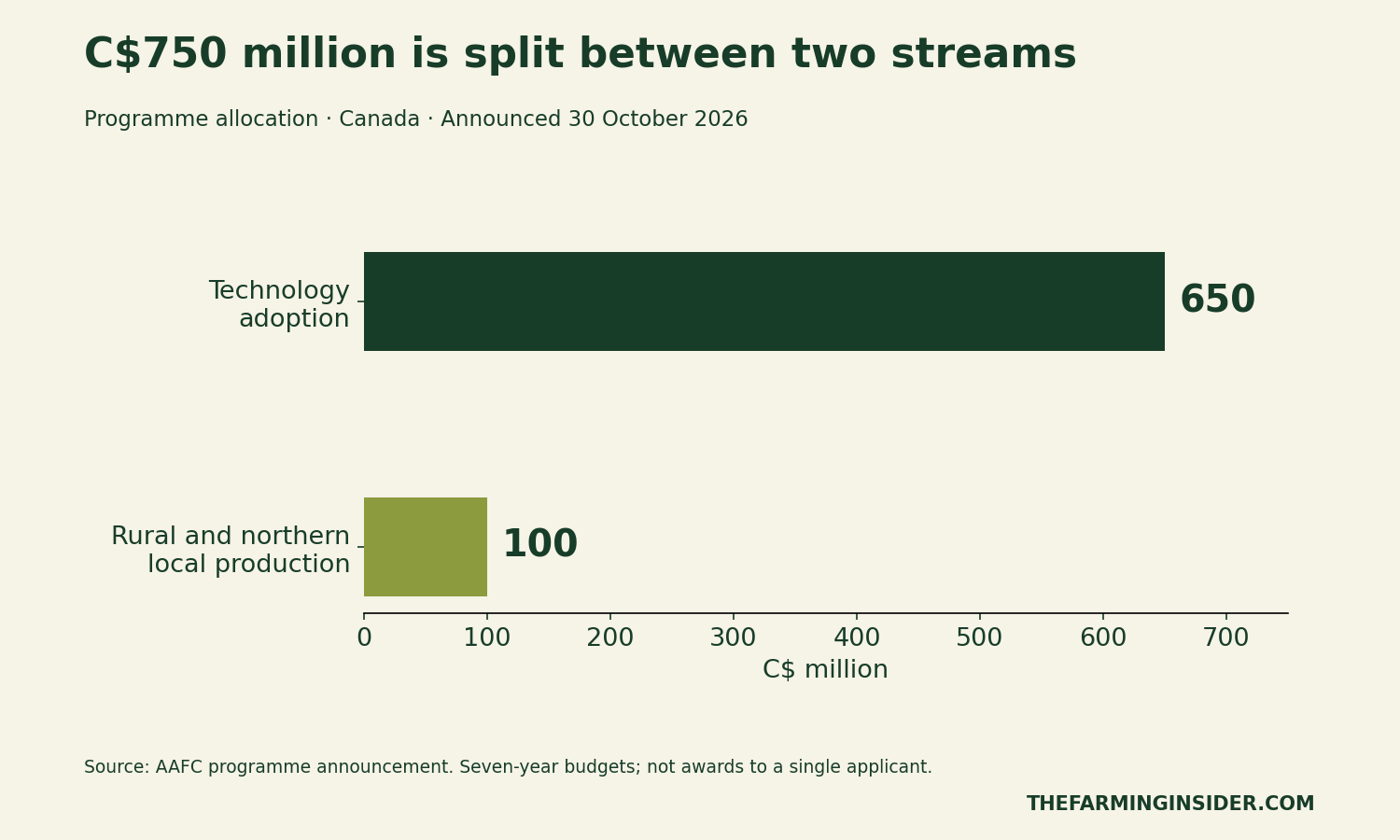
AAFC's 30 October announcement describes a C$750 million programme over seven years. C$650 million goes to technology adoption. A separate C$100 million stream supports local production in rural and northern communities. Their funding rules differ; this article examines the Technology Adoption Stream.
The Technology Adoption rules, modified on 4 November, describe contributions from C$100,000 to C$10 million. The normal maximum is 50% of eligible costs. Qualifying projects may receive up to 60% or 70%; those higher shares require AAFC confirmation. Contributions can be repayable or non-repayable.
Controlled environment agriculture includes systems such as greenhouses and vertical growing. However, a relevant technology alone does not establish eligibility. Read the eligibility page against your organisation, activities and proposed costs. A supplier's quote is evidence of a price, not evidence that AAFC will fund it.
Calculate the project share before the cash timeline
For the initial funding picture, use this identity:
Residual funding requirement = eligible costs + ineligible costs − approved contributions − other confirmed funding.
The residual may need a mix of your own money and financing. Borrowing can cover a payment, but creates a future obligation. Therefore, keep financing sources distinct from non-repayable contributions. Do not count the same funding twice or treat a possible award as confirmed cash.
The table assumes C$1 million of eligible costs, C$100,000 of ineligible costs and no other funding. Each contribution is an assumption, not a prediction.
| Illustrative share | Assumed AAFC contribution | Your eligible-cost share | Ineligible costs | Initial residual |
|---|---|---|---|---|
| 50% | C$500,000 | C$500,000 | C$100,000 | C$600,000 |
| 60% | C$600,000 | C$400,000 | C$100,000 | C$500,000 |
| 70% | C$700,000 | C$300,000 | C$100,000 | C$400,000 |
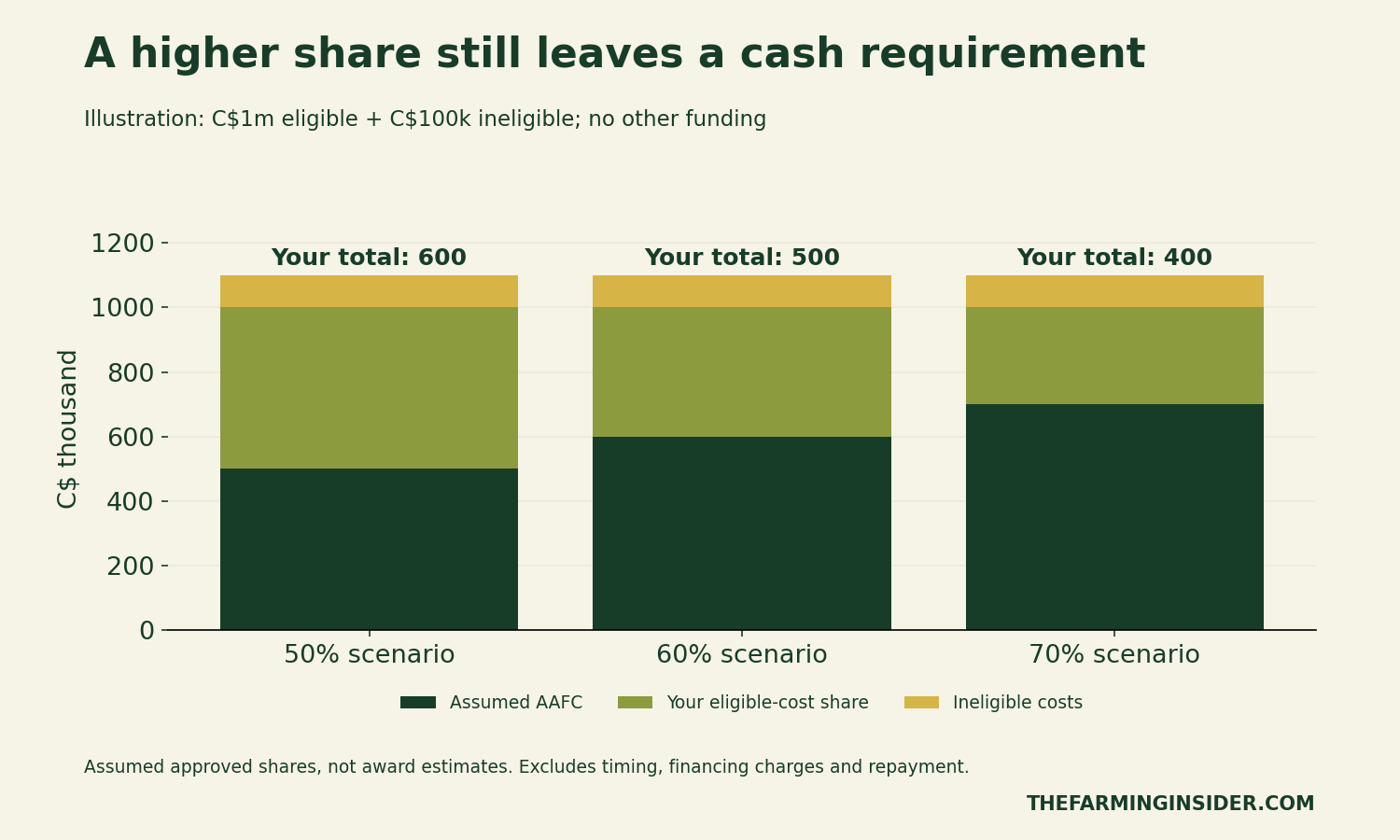
For example, the first row is C$1,100,000 minus C$500,000. The extra C$100,000 does not increase the contribution base. This distinction matters when equipment, installation and other quoted items have different eligibility decisions.
Test ineligible costs instead of hiding them
Leave uncertain costs visible in your working budget. Give each a reference, an eligibility question and a person responsible for resolving it. You can then test the financial effect without claiming that the programme has accepted or rejected the item.
At a 50% assumed share, the residual on C$1 million of eligible costs is C$500,000 before ineligible costs. It becomes C$750,000 if ineligible costs reach C$250,000. At a 70% assumed share, the corresponding figures are C$300,000 and C$550,000.
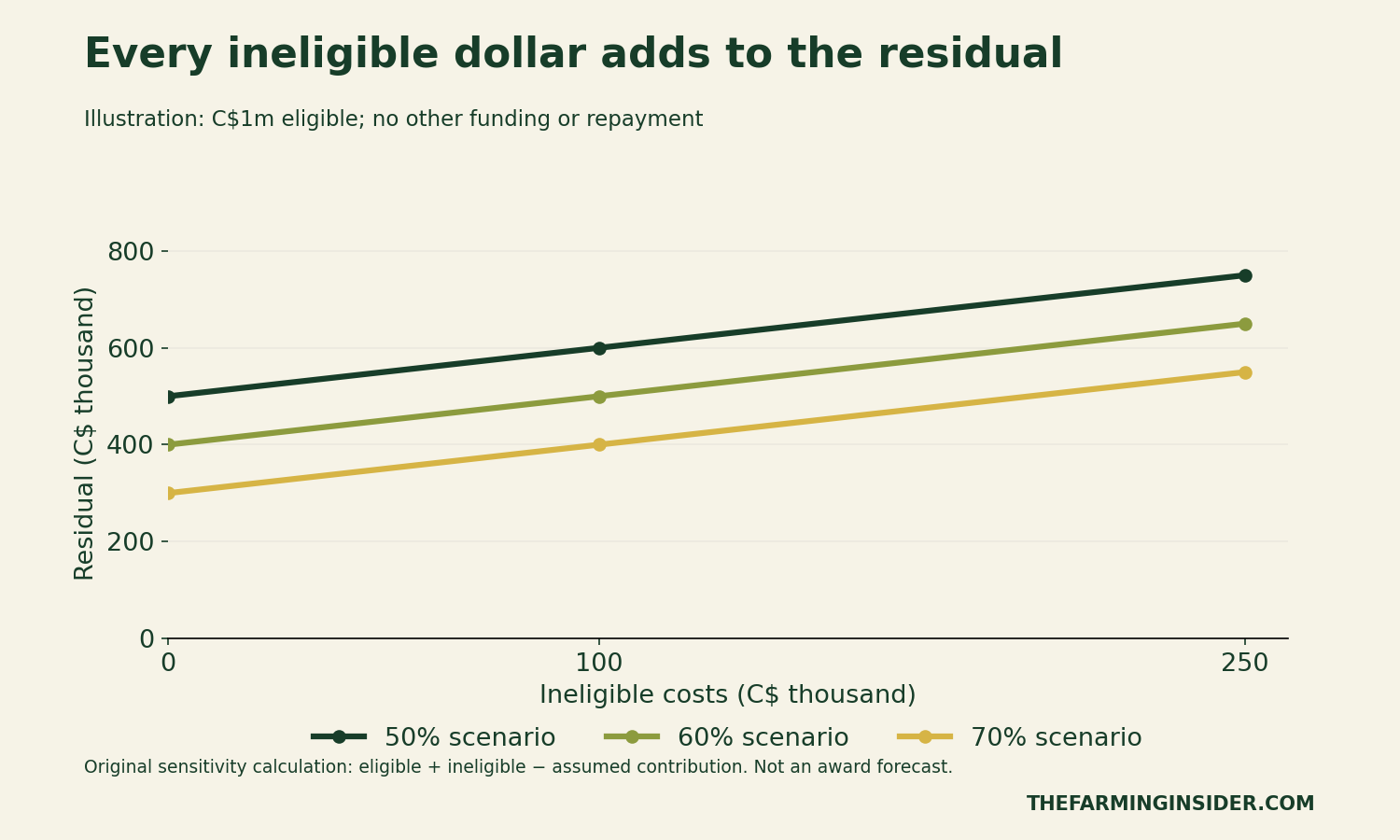
These are funding gaps, not profit estimates. They say nothing about crop margins, future energy costs or whether the proposed facility is commercially viable. Keep those business questions in a separate operating forecast.
Map the peak cash gap by payment date
A final residual of C$600,000 does not mean C$600,000 is enough at every stage. Suppose a fictional project pays C$400,000, then C$400,000, then C$300,000. Only afterwards does it receive an assumed C$500,000 contribution. The cumulative gap reaches C$1.1 million before falling to C$600,000.
Transform Your Agribusiness
Unlock your farm's potential with expert advice tailored to your needs. Get actionable steps that drive real results.
Get Started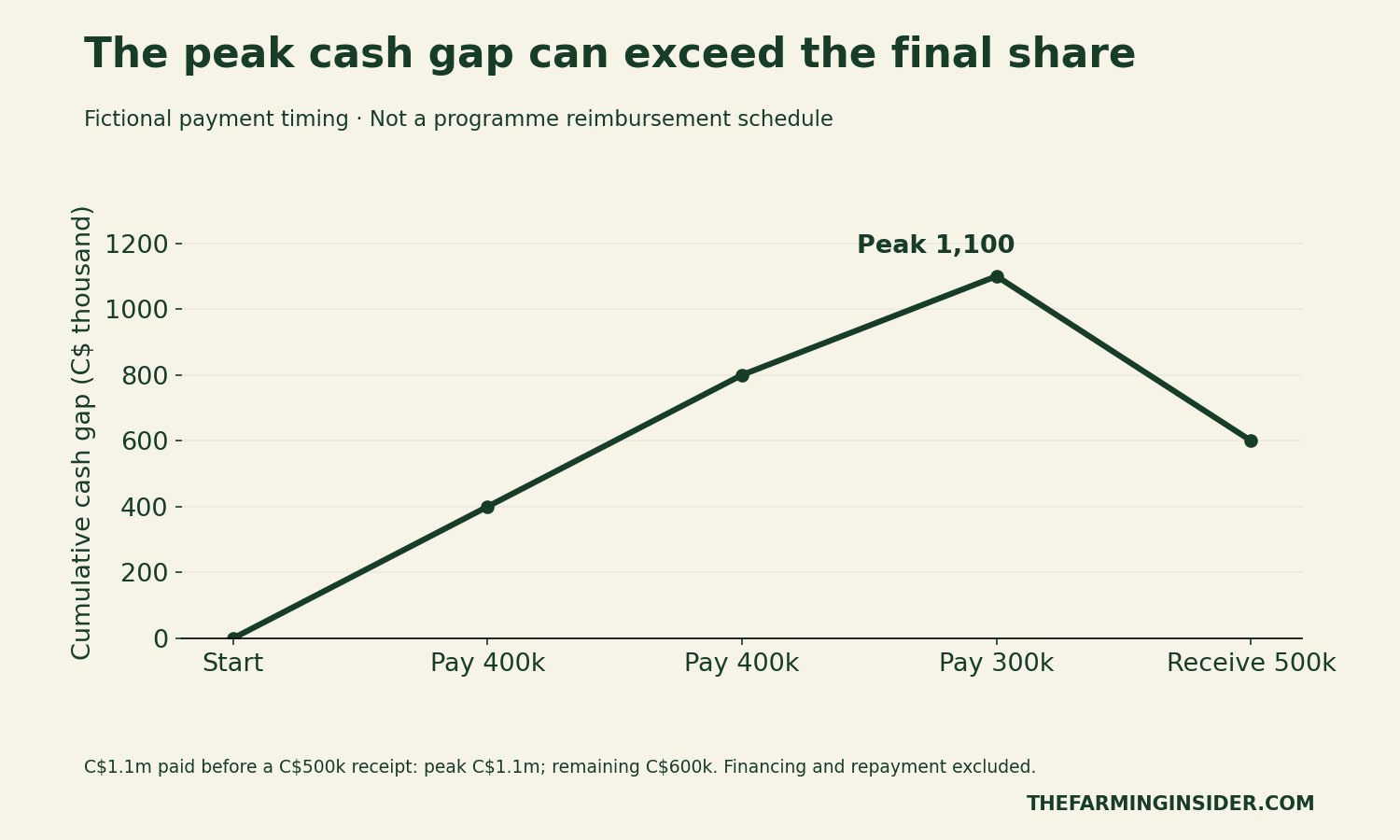
Use dates from actual payment terms rather than this example's numbered stages. Enter confirmed financing availability alongside invoices and anticipated receipts. A loan facility that starts too late does not cover an earlier invoice, even if the total facility looks sufficient.
AAFC's after-application guidance says reimbursement authority depends on a signed contribution agreement. The eligibility guidance also warns that spending before both parties sign may remain your responsibility. Do not turn the earliest potentially eligible cost date into permission to spend safely.
Check combined government support separately
The before-application guidance gives a normal government-funding ceiling of 85% of eligible project costs. It describes a different ceiling for Indigenous applicants. This is a combined government limit, not an automatic increase in AAFC's own share.
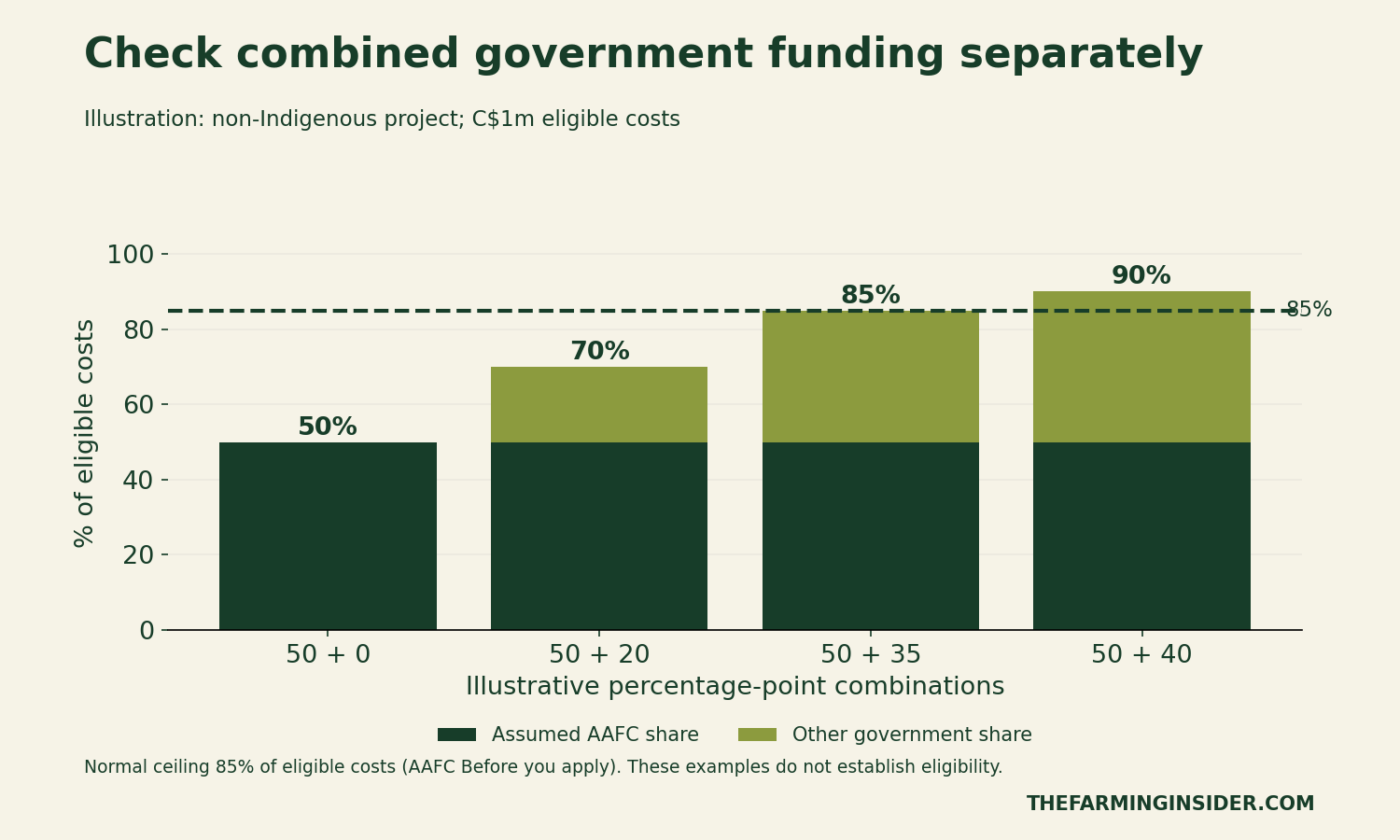
For a C$1 million eligible-cost example, an assumed C$500,000 AAFC contribution plus C$350,000 from other government sources reaches C$850,000. Adding C$400,000 instead reaches C$900,000. Ask AAFC how your actual package fits the rules before treating every proposed funding source as additive.
Keep repayment outside the initial share calculation
A repayable contribution helps finance costs initially, but it can also create a later cash outflow. Record the amount, start date and instalments from the signed agreement. An initial residual calculation alone does not show the lifetime financing burden.
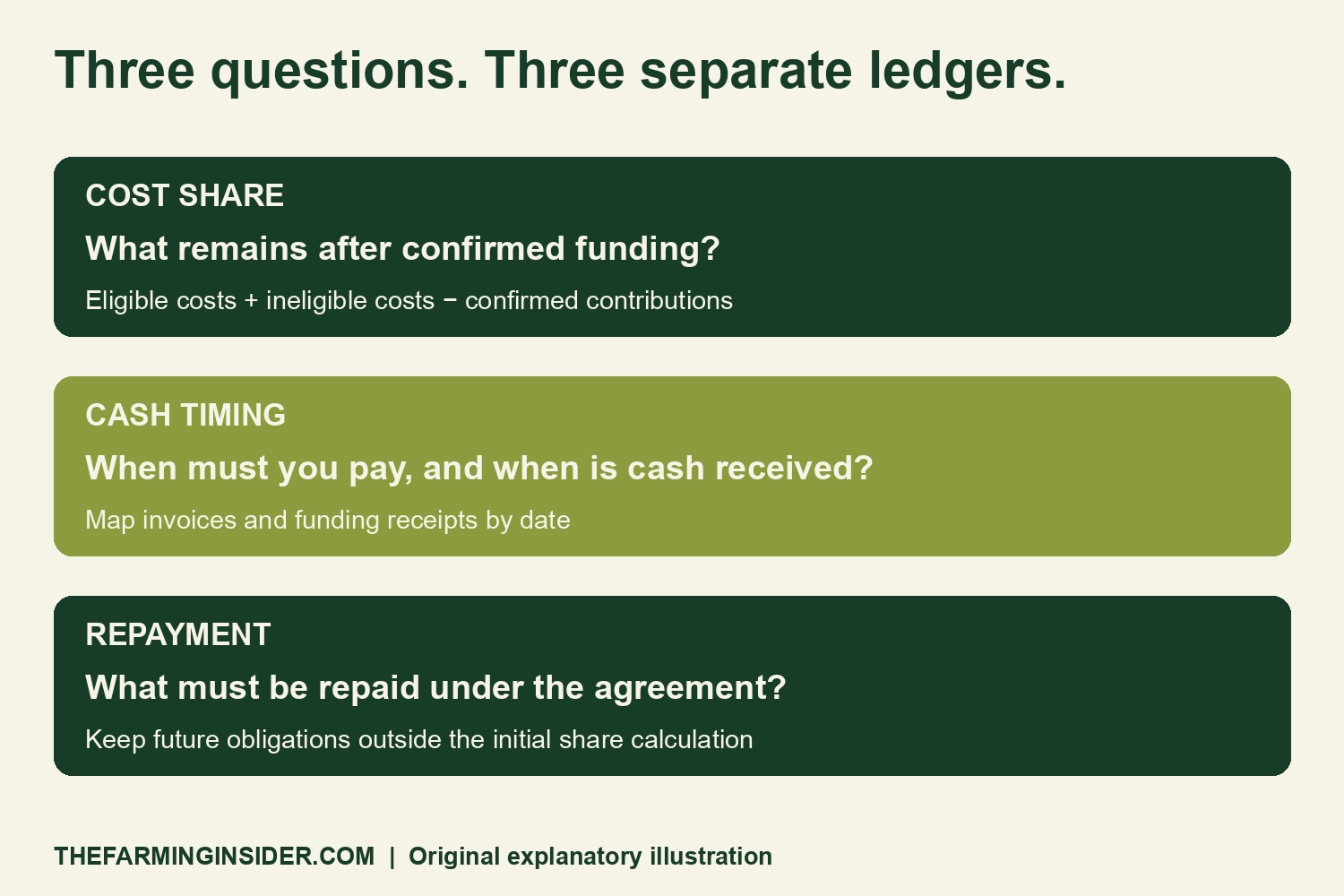
For Canada CEA funding 2026, the planning question is therefore broader than “What percentage might I receive?” Ask whether the project remains financeable when payments, operating commitments and agreement terms are considered together. The worksheet deliberately leaves unknown repayment terms blank.
Prepare the application evidence
The application instructions start with a Project Summary Form. A full application follows an invitation. That package includes financial statements, a detailed budget, financing agreements and supporting quotes, among other documents. Check the complete current list rather than relying on this summary.
As checked on 6 November, intake runs to 23 December 2026 at noon Eastern Time. Monitor the programme page for changes or earlier closure. A submitted summary is not an award, and an invitation does not make every budget item eligible.
Before spending, ask the programme officer to clarify the stream, eligible items, contribution type, other funding and reimbursement conditions. Our SFIS two-letter checklist illustrates a different jurisdiction's paperwork problem; its Northern Ireland rules do not apply to Canada. For another example of separating historical observations from planning assumptions, see the Victoria water-budget analysis.
Download the four research tools
Worked cash-share scenarios (CSV) retains the three example rows, currency units and caveats.
Blank funding and timing ledger (CSV) provides fields for eligibility, invoice dates, approved funding, expected receipts and repayment references.
Source and document checklist (CSV) links each programme question to its official guidance.
Fictional payment-timing example (CSV) supplies the four-stage arithmetic behind Figure 4. Replace its values with your own documented dates and amounts; it is not an AAFC payment schedule.
These CSV files are editable records, not automatic calculators or official forms. Keep commercial records private. No financial statements or application details need to be sent to this website.
Methods, limitations and citation
The Farming Insider checked AAFC's public announcement and guidance on 6 November 2026. We calculated the scenarios using subtraction, held eligible costs at C$1 million and changed only the stated assumptions. The sensitivity chart changes ineligible costs; the timing chart accumulates payments less receipts. We did not analyse applicant-level awards, measure programme outcomes or estimate approval chances.
The illustrations exclude taxes, financing charges, inflation, operational losses and repayments unless a field explicitly records them. A budget cap is not a forecast of availability. Programme objectives and proposed performance indicators are not achieved efficiency gains. Only AAFC can determine your project's terms.
Suggested citation: The Farming Insider, “Canada CEA Funding 2026: Calculate Your Cash Share,” 6 November 2026. Cite the linked AAFC pages for official rules and this article's CSVs for the original scenarios.


