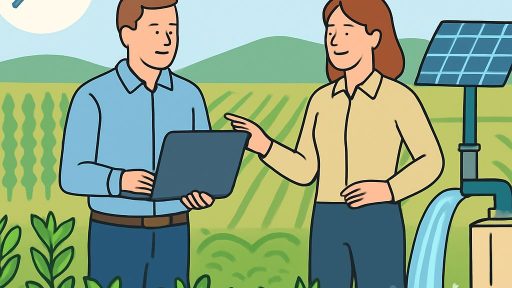




Overview of Drought and Its Definition in Agriculture
Drought is a prolonged period of inadequate precipitation.
This phenomenon adversely affects agriculture, reducing crop yields.
Understanding drought’s characteristics is essential for farmers.
It typically leads to soil moisture depletion, impacting plant health.
Furthermore, drought can stress water resources significantly.
Defining Drought
Drought is more than just a dry spell.
It is defined by various factors, including duration and intensity.
For instance, meteorological drought occurs when rainfall is below normal.
Agricultural drought refers specifically to soil moisture shortages affecting crops.
Consequently, these definitions are important for effective responses.
Types of Drought
There are several types of drought relevant to agriculture.
- Meteorological drought: a lack of precipitation over time.
- Agricultural drought: insufficient moisture for crops.
- Hydrological drought: reduced water levels in rivers and reservoirs.
- Socioeconomic drought: impacts on water supply and economic activities.
Each type presents unique challenges for farmers.
Impact on Crop Production
Drought severely limits crop growth and development.
Reduced water availability can lead to lower yields.
This situation may force farmers to modify planting schedules.
Transform Your Agribusiness
Unlock your farm's potential with expert advice tailored to your needs. Get actionable steps that drive real results.
Get StartedAdditionally, it can lead to increased costs for irrigation solutions.
Farmers must prepare for these challenges to sustain production.
Historical Impact of Drought on Agricultural Productivity
Drought significantly reduces agricultural productivity worldwide.
This climatic phenomenon affects crop yields adversely.
Farmers often experience decreased income during drought periods.
Overview of Drought Effects
Consequently, food supply chains face critical disruptions.
Historical data shows devastating droughts impacted agriculture across various regions.
Climate change increases the frequency and severity of droughts.
Case Studies of Historical Droughts
For example, the Dust Bowl in the 1930s led to massive declines in crop production.
Farmers in the American Midwest faced severe economic challenges.
Additionally, prolonged droughts in Australia have led to extensive farming losses.
Long-Term Consequences of Drought
Drought can result in long-term soil degradation and desertification.
This degradation decreases the land’s agricultural viability over time.
Furthermore, communities dependent on agriculture may suffer from economic instability.
Shifts in Crop Cultivation Practices
Drought influences farmers to adapt their cultivation practices.
For instance, many farmers shift to drought-resistant crop varieties.
This approach helps mitigate yield losses during dry spells.
Future Outlook and Adaptive Strategies
As a result, proactive measures become essential for farmers.
Investing in water conservation technologies proves vital for sustainability.
Moreover, policies promoting sustainable farming practices offer long-term benefits.
Economic Implications of Drought on Agricultural Real Estate Values
Drought has profound effects on agricultural real estate values.
Reduced crop yields directly lower land value.
When drought occurs, farmers often face lower income.
Lower farm income can reduce demand for agricultural land.
Showcase Your Farming Business
Publish your professional farming services profile on our blog for a one-time fee of $200 and reach a dedicated audience of farmers and agribusiness owners.
Publish Your ProfileConsequently, land prices may decrease significantly.
Additionally, lenders may hesitate to finance property purchases.
That hesitation further weakens real estate values.
Market Dynamics during Drought
Drought conditions cause fluctuations in the agricultural market.
Under financial pressure, farmers may sell land quickly.
Consequently, increased supply can create a buyer’s market.
As a result, prices can fall below fair market value.
Long-term Value Impacts
Long-term drought can alter agricultural investment landscapes.
Investors may lose confidence in the viability of affected regions.
Therefore, potential buyers may avoid drought-prone areas.
Consequently, such reluctance can cause lasting damage to property values.
Mitigation Strategies for Investors
Investors can explore strategies to safeguard their investments.
Additionally, diversification can help mitigate drought risks.
Investing in properties across different regions diversifies exposure.
Furthermore, buyers should seek properties with sustainable water practices.
Such properties tend to be more resilient during droughts.
Delve into the Subject: Climate-Resilient Farming Practices for Agricultural Real Estate Owners
Geographical Variations in Drought Effects on Farming Lands
Drought effects vary significantly based on geographical locations.
Climate influences drought severity in different areas.
The type of soil also plays a crucial role in drought response.
Regional Analysis of Drought Impact
In the Midwest, reduced rainfall leads to diminished corn and soybean yields.
Conversely, the Southwest often contends with water scarcity all year round.
This region faces extended dry periods, affecting various crops.
Climate Considerations
Areas with a Mediterranean climate may see seasonal droughts.
These impacts can disrupt traditional farming cycles.
Tropical regions might face temporary droughts amidst heavy rains.
Soil Type and Drought Resilience
Sandy soils drain quickly, resulting in faster moisture loss.
Clay soils, while retaining moisture, can become compacted and less usable.
Farmers need to understand their soil characteristics for better management.
Crops Affected by Geographic Drought Variations
Different crops exhibit varying levels of drought tolerance.
For instance, millet and sorghum thrive in arid regions.
On the other hand, wheat and rice might suffer significant yield losses.
State Policies and Drought Management
Government policies impact drought management across states.
Some states offer financial assistance for drought-affected farmers.
Others implement conservation measures to optimize water usage.
Adapting to Future Drought Scenarios
Farmers must adapt their strategies to future drought scenarios.
Utilizing drought-resistant seed varieties can be one effective approach.
Furthermore, implementing water conservation techniques will prove beneficial.
Collaboration with local agricultural extension services can aid adaptation efforts.
Find Out More: Sustainable Land Use Planning With Renewable Farming Technologies
Showcase Your Farming Business
Publish your professional farming services profile on our blog for a one-time fee of $200 and reach a dedicated audience of farmers and agribusiness owners.
Publish Your ProfileCase Studies of Areas Severely Affected by Drought
This set of case studies focuses on regions affected by drought.
Each section describes local impacts and adaptation strategies observed.
Readers can compare regional approaches to water scarcity.
California’s Central Valley
California’s Central Valley is a crucial agricultural hub in the U.S.
However, it faces intense drought conditions.
Farmers reported significant reductions in crop yields over recent years.
Moreover, the water supply for irrigation has dwindled drastically.
This situation has led many farmers to seek alternative crops that require less water.
For instance, almond production saw a decline, shifting towards more drought-tolerant varieties.
The Great Plains Region
The Great Plains is known for its vast agricultural fields.
Yet, drought has severely impacted wheat and cattle production.
Farmers like Robert Hale have struggled with low precipitation levels.
Consequently, many ranchers have reduced their cattle herds to conserve resources.
Additionally, crop insurance claims have increased in recent years.
This emphasizes the urgent need for better water management strategies.
Texas Panhandle
The Texas Panhandle has experienced persistent drought cycles.
Local farmers face challenges in maintaining sustainable production levels.
Crop rotations and conservation tillage have become more common practices.
Furthermore, many farmers are implementing rainwater harvesting systems.
These practices aim to mitigate the effects of drought on their farms.
Innovative irrigation techniques are also making a difference in conservation efforts.
Australia’s Outback
Australia’s Outback regions are familiar with drought-like conditions.
Drought has affected agricultural real estate profoundly.
Land value has fluctuated based on drought severity and duration.
Many farmers have adapted by diversifying their crops.
For instance, some are adopting native plants that require minimal water.
This shift not only aids in sustainability but also enhances soil health.
Regional Strategies and Lessons
The case studies show diverse effects of drought across these regions.
Each region implemented specific strategies to reduce water scarcity impacts.
Other areas can examine these approaches to inform local drought planning.
Explore Further: Land Investment Benefits of Climate-Resilient Agriculture
Sustainable Practices for Drought Resilient Agriculture
Drought resilience enhances the ability of farms to endure dry periods.
Farmers adopt practices that maintain productivity amidst water scarcity.
This approach minimizes economic losses while safeguarding the environment.
Understanding Drought Resilience
Drought resilience increases farm capacity to cope with limited rainfall.
Practices that conserve soil moisture help farms remain productive.
As a result, losses decline and environmental quality improves.
Soil Management Techniques
Healthy soil is crucial for drought resilience.
Farmers add organic matter and plant cover crops to improve soil health.
These practices enhance structure, water retention, and nutrient availability.
Showcase Your Farming Business
Publish your professional farming services profile on our blog for a one-time fee of $200 and reach a dedicated audience of farmers and agribusiness owners.
Publish Your ProfileMulching also reduces evaporation and helps maintain moisture levels.
Irrigation Efficiency
Efficient irrigation systems optimize water use on farms.
Drip irrigation and soil moisture sensors significantly reduce water waste.
Farmers should adjust schedules based on weather forecasts for better results.
Capturing rainwater can enhance supplies during dry spells.
Diverse Crop Strategies
Crops suited for dry conditions yield more during droughts.
Farmers can rotate drought-resistant varieties to build resilience.
Diversity reduces risk and provides alternative income streams.
Integrating perennial plants supports more consistent yields over time.
Restoration of Natural Habitats
Restoring wetlands and natural landscapes helps mitigate drought impacts.
These ecosystems capture and retain water across the landscape.
Conservation practices such as reforestation support regional water cycles.
Furthermore, they create habitats that promote biodiversity.
Community Collaboration
Farmers can join local networks to share knowledge and skills.
Collaborative efforts improve understanding of drought challenges within communities.
Participating in shared water management initiatives strengthens resilience.
Community-supported agriculture connects farmers directly with consumers.
Find Out More: Mitigating Pest Risks in Agricultural Real Estate Under Climate Stress

Risk Mitigation Strategies for Agricultural Real Estate Investors
Diversifying crop types can effectively mitigate risks associated with drought.
Implementing efficient water management techniques is crucial.
Technology plays a vital role in managing agricultural risks.
Understanding Drought Risks
Drought poses significant risks to agricultural real estate investments.
Farmers face reduced yields and lower profitability during droughts.
Property values may decline as a result of these impacts.
Investors must understand these risks to make informed decisions.
Diversification of Crop Types
Growers can plant drought-resistant varieties to ensure resilience.
Furthermore, diversification allows for a broader income base.
This strategy can buffer against total crop failure.
Water Management Techniques
Investors should consider irrigation systems that conserve water.
Rainwater harvesting systems can also supplement irrigation needs.
Moreover, using soil moisture sensors can optimize water usage.
Using Technology for Monitoring
Investors should utilize predictive analytics to forecast drought conditions.
Drones and satellite imagery can offer real-time monitoring of crops.
This information helps in making timely decisions based on conditions.
Creating Contingency Plans
Establishing contingency plans is essential for managing unforeseen circumstances.
Investors should outline clear steps to take during drought scenarios.
This could include strategies for replanting or altering cropping practices.
Flexibility in planning can minimize losses significantly.
Financial Risk Management
Investors should consider various financial products to manage risks.
Crop insurance can protect against losses due to drought.
Showcase Your Farming Business
Publish your professional farming services profile on our blog for a one-time fee of $200 and reach a dedicated audience of farmers and agribusiness owners.
Publish Your ProfileAdditionally, futures contracts may help lock in prices ahead of time.
These financial tools can provide stability in unpredictable conditions.
Government Policies and Support Programs for Drought-Affected Farmers
Government policies aim to assist farmers in overcoming drought challenges.
These policies often include financial support and technical resources.
Furthermore, programs enhance resilience against future droughts.
Financial Assistance Options
Farmers may access low-interest loans for urgent needs.
Grants and subsidies help cover operational costs during droughts.
Additionally, crop insurance programs provide critical safety nets.
Research and Development Initiatives
The government funds research on drought-resistant crops.
This research aims to improve agricultural sustainability and productivity.
Collaborations with universities enhance innovation in farming practices.
Community Support and Resources
Local agricultural extension offices offer valuable resources.
These offices provide education on drought management strategies.
Networking opportunities help farmers share experiences and solutions.
Long-Term Plans and Strategies
Governments are investing in infrastructure to manage water resources.
These strategies include building reservoirs and modernizing irrigation systems.
Additionally, promoting conservation practices ensures better resource management.
Technological Solutions to Address Drought Challenges
Modern irrigation systems play a critical role in conserving water.
Rainwater harvesting systems collect and store rainwater effectively.
Data analytics can forecast drought conditions accurately.
Advanced Irrigation Techniques
Drip irrigation delivers water directly to the roots of crops.
This method minimizes evaporation and runoff.
Similarly, smart irrigation controllers optimize water usage.
They adjust watering schedules based on weather conditions.
Soil Moisture Monitoring
Soil moisture sensors provide real-time data on moisture levels.
This technology helps farmers make informed irrigation decisions.
By using this data, farmers can reduce water waste.
Moreover, it helps identify areas in need of moisture retention.
Drought-Resistant Crop Varieties
Genetic engineering allows the development of drought-resistant crops.
These crops require less water than traditional varieties.
Additionally, they maintain yield levels under dry conditions.
Farmers can increase their resilience against drought with these crops.
Rainwater Harvesting
This harvested water can supplement irrigation needs.
Implementing this technique enhances water availability during droughts.
Furthermore, it reduces pressure on local water supplies.
Data Analytics and Predictive Models
Farmers can benefit from predictive modeling for crop planning.
These models help identify the best planting times.
As a result, they can mitigate risks associated with water scarcity.
Furthermore, farmers can use analytics to optimize resource allocation.
Future Trends: Climate Change and Preparing for Increased Drought Frequency
Climate change alters global weather patterns.
Showcase Your Farming Business
Publish your professional farming services profile on our blog for a one-time fee of $200 and reach a dedicated audience of farmers and agribusiness owners.
Publish Your ProfileIt increases the risk of severe droughts.
As a result, agricultural real estate faces greater risk.
Farmers and landowners must adapt their practices.
Predicting Drought Frequency in the Coming Years
Experts anticipate that drought occurrences will increase.
Many regions are likely to see more prolonged dry spells.
Understanding these trends supports strategic agricultural planning.
Proactive measures can reduce potential losses for farms.
Innovative Water Management Techniques
Investing in advanced irrigation systems improves water efficiency.
Drip irrigation can maximize the use of limited water resources.
Additionally, rainwater harvesting systems capture and store rainfall.
Landowners should evaluate these technologies for long term sustainability.
Crop Diversification for Resilience
Cultivating a variety of crops enhances farm resilience.
Diverse crops help maintain soil health and reduce risk.
This approach can stabilize income streams for farmers.
Farmers should research drought resistant plant varieties.
Community Collaboration and Support
Strong community networks enable cooperative resource management.
Sharing knowledge among farmers improves adaptive strategies.
Engaging with local agricultural organizations can provide support.
Collaborations often foster innovative solutions to drought challenges.
Financial Strategies for Risk Mitigation
Farmers should consider crop insurance for drought scenarios.
Financial planning secures funding for necessary farm improvements.
Investing in drought mitigation measures can protect livelihoods.
Diversifying income sources reduces overall financial strain.
Advocating for Sustainable Practices
Promoting sustainable agricultural practices benefits local communities.
Efficient water use helps protect ecosystems and resources.
Farmers can campaign for policies that support sustainability.
Active engagement with environmental organizations amplifies farmer efforts.