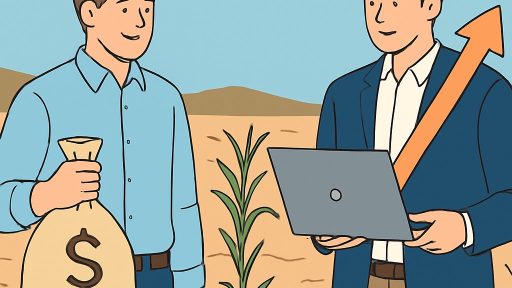




Overview of Long-Term Farming Investments and Climate Change Impacts
Long-term farmland investments aim to preserve and grow land value over many years.
Investors focus on steady income and resilient land management for future uncertainty.
They incorporate flexibility to adapt to changing environmental conditions.
Investment Time Horizons and Objectives
Long-term investments emphasize value across multiple decades.
Investors prioritize reliable income streams and strong land resilience.
They plan for adaptability as environmental conditions evolve.
Climate Change Impacts on Farmland Productivity
Climate change modifies temperature patterns and precipitation regimes.
Consequently, crop growth windows and input needs may shift.
Moreover, extreme weather events can damage soil structure and reduce yields.
Key Environmental Factors to Monitor
- Soil health influences long-term productivity and carbon storage.
- Water availability determines irrigation needs and yield reliability.
- Climate variability alters season length and planting windows.
- Pest and disease pressures may rise with shifting climates.
- Infrastructure and market access influence returns and adaptability.
Management Strategies for Long-Term Value
- Diversify crop types and management approaches to spread risk.
- Enhance soil health through conservation practices.
- Conserve and manage water resources proactively.
- Monitor environmental signals and adjust management plans accordingly.
Risk Assessment and Adaptive Planning
Assessing risk requires scenario thinking and monitoring frameworks.
Therefore, investors should set thresholds that trigger management changes.
Regular review helps align investments with evolving climate realities.
Understanding Soil Health and Its Role in Crop Selection
Healthy soil supports resilient crop performance over many seasons.
Investors should prioritize soil health when selecting long-term farmland.
This priority helps maintain soil function for future seasons.
Transform Your Agribusiness
Unlock your farm's potential with expert advice tailored to your needs. Get actionable steps that drive real results.
Get StartedKey Soil Properties to Assess
- Soil structure influences root penetration and water movement.
- Texture determines water retention and aeration.
- Organic matter supports nutrient cycling and soil aggregation.
- Soil pH affects nutrient availability and crop suitability.
- Biological activity indicates overall soil function and resilience.
Assessing Soil Health
Assess soil health using physical, chemical, and biological indicators.
These indicators reveal constraints and management needs.
Then, apply assessment findings to inform field practices.
Physical Indicators
Observe surface crusting and compaction to gauge physical condition.
Also note root depth and soil aggregation visually and mechanically.
Assess infiltration and water movement patterns across fields.
Chemical Indicators
Evaluate pH levels regularly.
Assess overall nutrient balance regularly.
Track salinity and chemical constraints when present.
Biological Indicators
Monitor soil organism activity as a sign of biological function.
Observe decomposition rates and residue breakdown on the soil surface.
These indicators show overall soil function and resilience.
Implications for Crop Selection
Match crop water needs to soil water holding capacity.
Therefore, select crops that align with soil texture and drainage.
Prefer crops compatible with existing nutrient availability.
Also, diversify crop choices to spread risk and protect soil health.
Management Practices to Maintain Soil Health
- Use cover crops to protect soil and add organic matter.
- Reduce tillage to preserve soil structure and microbial habitats.
- Apply organic amendments to build and sustain fertility.
- Rotate crops to balance nutrient use and lower pest pressure.
- Adjust nutrient management to match soil conditions and crop needs.
Monitoring and Adaptive Strategies
Implement regular soil assessments to detect changes early.
Next, adapt crop choices and management based on assessment findings.
Keep records to guide long-term farmland decisions.
Top Climate-Resilient Crop Profiles for Sustainable Investment
This section presents five climate-resilient crop profiles for long-term farmland investment.
Additionally, it describes investment and management considerations for each profile.
Investors should balance profiles to spread climate and market risks.
Drought-Tolerant Perennial Crops
These crops persist across seasons and require less frequent replanting.
Moreover, they often withstand extended dry periods better than annuals.
Showcase Your Farming Business
Publish your professional farming services profile on our blog for a one-time fee of $200 and reach a dedicated audience of farmers and agribusiness owners.
Publish Your ProfileThey can provide steady biomass or yield streams.
Why They Appeal to Investors
- They can reduce replanting costs over time.
- They may lower irrigation demands in dry years.
- They can provide steady biomass or yield streams.
Management Considerations
- Establishing perennials requires upfront investment and planning.
- Diversified establishment techniques can mitigate early losses.
- Adaptive irrigation strategies support resilience during establishment.
Flood-Resilient Cereal and Grass Species
These profiles tolerate periodic waterlogging and variable moisture conditions.
Consequently, they suit low-lying or poorly drained parcels.
They reduce production risk in flood-prone areas.
Heat-Adaptive Legumes and Pulses
These crops perform under higher temperature ranges and provide nitrogen benefits.
Furthermore, they can support crop rotations and nutrient renewal within systems.
They enhance cropping system resilience and diversity.
Salt-Tolerant Forages and Halophytic Species
These profiles suit areas with elevated salinity or coastal influences.
Consequently, they help utilize marginal land for productive use.
They can convert underused saline land into productive acreage.
Short-Season High-Value Annual Vegetables
These profiles offer rapid turnover and market flexibility in changing climates.
Therefore, they enable adaptive crop selection and responsive management.
They allow diversification across markets and growing windows.
Investment Strategy and Risk Diversification
Balance crop profiles to spread climate and market risks across portfolios.
Furthermore, combining profiles supports both short-term returns and long-term stability.
Assess land characteristics against each crop profile suitability.
Key Considerations for Portfolio Design
- Assess land characteristics against each crop profile suitability.
- Consider capital needs and operational capacity for each profile.
- Monitor changing conditions and adapt crop mixes over time.
Learn More: Agricultural Land Value and the Role of Climate-Resilient Crops
Evaluating Market Demand for Emerging Crops in Changing Climates
This document evaluates market demand for emerging crops.
It focuses on changing climate impacts on market demand.
It guides farmers and investors on market research and strategies.
Purpose and Scope
Clarify the specific market questions you need to answer.
Define geographic and temporal boundaries for your analysis.
State the types of buyers and channels you will examine.
Market Landscape Assessment
Map current demand patterns across relevant markets.
Identify gaps that emerging crops could potentially fill.
Monitor seasonal and long term demand shifts for signs of change.
Buyer Segments and End Uses
Describe wholesale buyer expectations for volume and delivery schedules.
Explain processor priorities for uniform quality and technical specifications.
Note retail and institutional needs for traceability and stable supply.
- Wholesale buyers often require consistent volumes and delivery schedules.
- Processors may value uniform quality and specific technical specifications.
- Retail and specialty markets may seek traceability and distinct product qualities.
- Institutional buyers may prioritize stable supply and cost predictability.
Supply Chain and Logistics Considerations
Assess transport options and typical lead times for target markets.
Evaluate storage and handling needs for the crop type.
Consider local infrastructure constraints that could affect delivery reliability.
Price Signals and Risk Analysis
Monitor price trends to detect emerging premiums or sustained declines.
Evaluate price volatility and its impact on revenue projections.
Incorporate contingency plans for market disruptions and demand shocks.
Market Research Methods for Farmers and Investors
Use buyer interviews to capture qualitative preferences and purchasing criteria.
Run small pilots to test product acceptance and logistical feasibility.
Gather feedback from intermediaries about quality and packaging expectations.
Market Signals to Watch
Watch for price premiums tied to specialty qualities or certifications.
Track shifts in buyer sourcing priorities and supply chain strategies.
Showcase Your Farming Business
Publish your professional farming services profile on our blog for a one-time fee of $200 and reach a dedicated audience of farmers and agribusiness owners.
Publish Your ProfileObserve emerging consumer preferences and changes in distribution channels.
- Price premiums for specialty qualities or certifications.
- Shifts in buyer sourcing priorities and supply chain strategies.
- Emerging consumer preferences that create new demand niches.
- Changes in distribution channels or storage technology adoption.
Strategies to Capture Market Value
Develop value added options like processing or differentiated packaging.
Pursue voluntary certifications when buyers reward verified product attributes.
Negotiate forward contracts to secure demand before major investments.
Diversify buyers across channels to spread market and counterparty risk.
Learn More: Drought-Resistant Crops for Sustainable Farm Investments
Case Studies of Successful Long-Term Investments in Diverse Crops
This section offers frameworks for analyzing long term crop investment case studies.
It stresses diversified crop approaches rather than single crop reliance.
Additionally, it highlights management, governance, and adaptive strategies.
Case Study Framework
Use a consistent structure when describing each case study.
Begin with investment context and stakeholder roles.
Then describe production systems and management models used.
Background and Investment Structure
Summarize the initial investment goals and time horizons.
Also outline ownership arrangements and partnership models.
Furthermore, detail capital sources and financing approaches.
Management Practices
Describe rotational or integrated production approaches where applicable.
Also describe labor, mechanization, and operational decision processes.
Moreover, explain any crop diversification strategies and scheduling.
Risk Management and Diversification
Discuss how investments addressed exposure to singular production risks.
Include descriptions of portfolio composition and contingency planning.
Additionally, consider environmental variability and market fluctuations.
Economic and Governance Arrangements
Describe revenue sharing and cost allocation mechanisms.
Also explain decision making structures and conflict resolution methods.
Moreover, outline long term maintenance and reinvestment plans.
Monitoring and Adaptive Responses
Explain monitoring indicators and frequency of review.
Then describe triggers for management adjustments.
Furthermore, outline learning loops and iterative planning processes.
Common Strategic Themes
Common themes include diversification across crop types and timeframes.
Additionally, they stress proactive risk management and flexible operations.
Moreover, governance clarity and adaptable financing recur as strategic priorities.
Evaluating Case Study Relevance for Your Investment
First, assess similarity in scale and investment objectives.
Also compare management capacity and governance models.
Then evaluate time horizon alignment and risk tolerance.
Finally, consider transferability of practices to your context.
Checklist for Reviewing Case Studies
Use the checklist to guide structured case study reviews.
Confirm that each item aligns with your investment needs.
Ensure monitoring and financing details are clearly stated.
- Identify the investment objectives and performance indicators used.
- Confirm governance and ownership structures align with your needs.
- Review adaptive management triggers and monitoring details.
- Evaluate financial assumptions and capital commitment timelines.
- Assess scalability and potential barriers to replication.
Translating Case Study Insights into Strategy
Use case study frameworks to inform your investment due diligence.
Subsequently, tailor strategies to your unique operational and financial context.
Moreover, iterate plans as new information emerges over time.
Showcase Your Farming Business
Publish your professional farming services profile on our blog for a one-time fee of $200 and reach a dedicated audience of farmers and agribusiness owners.
Publish Your ProfileExplore Further: Climate-Resilient Crops for Profitable Agricultural Real Estate
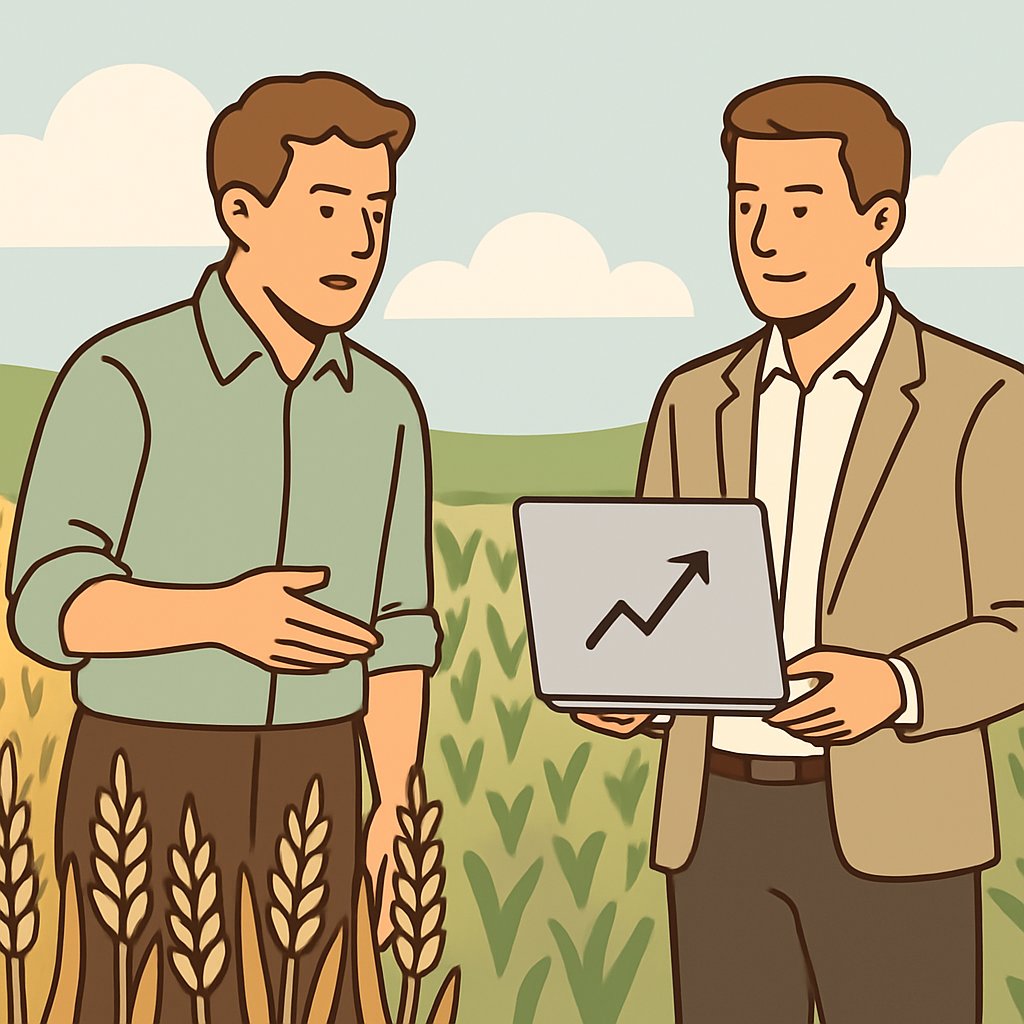
The Importance of Crop Rotation and Diversity for Soil Sustainability
Crop rotation and diversity support soil sustainability.
They help maintain soil function across seasons.
Diversity also spreads production risk among crops.
Principles of Rotation Planning
Plan rotations that change crop types across growing periods.
Vary plant traits to increase system diversity.
Monitor outcomes and adjust rotation plans over time.
Benefits for Soil Sustainability
Diverse rotations support sustained soil function.
They enhance resilience to changing environmental conditions.
Rotations also help distribute agronomic risks across enterprises.
Implementing Diversity in Farm Systems
Begin with small trials to test rotation patterns.
Then scale practices that align with sustainability goals.
Consider resource needs and labor when designing rotations.
Practical Steps
Use an iterative approach to refine crop sequences.
Map field areas and identify current crop patterns.
Test new sequences on limited plots before broad adoption.
- Map field areas and their current crop patterns.
- Test new sequences on limited plots before adoption.
- Record observations and update plans based on results.
Monitoring and Adaptive Management
Track soil indicators and crop performance regularly.
Use those observations to refine rotations and diversity levels.
Record results and adjust timing and inputs as needed.
Integration with Long-Term Investment Goals
Align rotation strategies with long term farmland investment objectives.
Communicate practices clearly to investors and other stakeholders.
Adapt strategies as climate and market conditions evolve over time.
Explore Further: Crop Resilience Strategies for Sustainable Farmland Investments
Technology and Innovation in Crop Cultivation Under Climate Variability
Technology and innovation address crop cultivation challenges under climate variability.
This section covers monitoring, breeding, mechanization, and decision support.
It emphasizes integration of biological and technological approaches.
Digital Monitoring and Data Analytics
Farmers use digital monitoring to track field conditions in real time.
Additionally, they collect environmental and crop data for analysis.
Furthermore, data analytics help identify trends and variability across seasons.
Environmental and Crop Monitoring
Sensors measure moisture, temperature, and other environmental variables continuously.
Moreover, remote observations capture spatial variability across fields.
Together, these tools reveal spatial and temporal patterns for field management.
Data Analytics and Predictive Insights
Algorithms process collected data to generate actionable insights for management.
Consequently, farmers adjust practices based on observed patterns and forecasts.
Predictive outputs support timely and targeted management decisions.
Breeding and Genetic Approaches
Breeding programs pursue traits that enhance crop resilience under variable climates.
Moreover, genetic approaches focus on traits relevant to water and temperature variability.
Breeders evaluate trait performance across environments and seasons.
Trait Targeting and Evaluation
Field evaluation identifies varieties that perform consistently across diverse conditions.
Additionally, breeders monitor performance over multiple seasons for robustness assessment.
Showcase Your Farming Business
Publish your professional farming services profile on our blog for a one-time fee of $200 and reach a dedicated audience of farmers and agribusiness owners.
Publish Your ProfileEvaluations compare varieties across seasons and conditions.
Mechanization and Automation
Mechanical solutions reduce labor demands and increase planting consistency.
Furthermore, automation supports timely field operations during narrow weather windows.
Automation enables precise timing for key agronomic tasks.
Robotic and Autonomous Tasks
Autonomous machines perform repetitive tasks with consistent timing and precision.
Moreover, they enable operations that align with optimal biological windows for crops.
Robotic systems execute tasks when crop biology requires action.
Decision Support and Planning Tools
Decision tools integrate monitoring data to inform planting and management choices.
Additionally, planners evaluate risk and opportunity under variable climate scenarios.
These tools guide adaptive choices under changing conditions.
Economic and Risk Assessment
Tools help estimate potential risks and inform long term investment decisions.
Consequently, investors can align strategies with anticipated variability and resilience goals.
Risk assessments support planning for financial and operational resilience.
Implementation and Adoption Considerations
Adoption depends on cost, knowledge, and perceived benefits among stakeholders.
Furthermore, training and extension support facilitate effective use of innovations.
Stakeholder engagement shapes whether technologies are adopted at scale.
Barriers and Enablers
Financial constraints and complexity often slow technology uptake on farms.
Moreover, collaborative networks and accessible information enable wider adoption of innovations.
Collaborations and information access support broader uptake.
Emerging Integration Strategies
Integration combines biological and technological approaches for holistic crop management.
Additionally, systems thinking promotes resilience across production and ecological components.
Combined strategies aim to strengthen resilience across farm systems.
Key Innovation Areas
Key innovation areas summarize major technological and biological focuses.
These areas inform adaptive management and investment choices.
The list below highlights monitoring, breeding, mechanization, and decision support.
- Monitoring and data analytics for adaptive management.
- Breeding strategies that target resilience traits.
- Mechanization and automation for timely operations.
- Decision support for risk-informed planning.
Climate Adaptation Strategies for Farmers Considering Long-Term Investments
This section outlines practical strategies for adapting long-term farmland investments to changing climates.
Additionally, it complements earlier topics without repeating details.
Collectively, these strategies inform resilient long-term farmland investments.
Risk Assessment and Scenario Planning
Begin with a structured risk assessment that identifies climate hazards and vulnerabilities.
Then develop plausible scenarios to test investment resilience under varied conditions.
Moreover, prioritize flexible actions that perform across multiple scenarios.
- Map potential hazards and sensitivity of assets.
- Estimate plausible future conditions and ranges.
- Identify thresholds that trigger management adjustments.
Diversify Crops and Income Streams
Diversify crop choices to reduce exposure to any single climate outcome.
Also diversify income with complementary uses and services on the land.
Integrate on-farm value additions and services.
- Combine longer and shorter term production cycles.
- Integrate on-farm value additions and services.
- Explore leasing or conservation payment options.
Water Management and Infrastructure Investment
Prioritize water management measures that improve reliability and efficiency.
Meanwhile, invest in infrastructure that allows operational flexibility.
Plan infrastructure for incremental upgrades over time.
- Improve storage and on-demand delivery capacity.
- Enhance drainage and erosion control where necessary.
- Plan infrastructure for incremental upgrades over time.
Adaptive Management and Monitoring
Establish monitoring systems to track indicators and performance.
Then use data to adjust practices and investments iteratively.
Set review intervals and decision triggers based on outcomes.
Showcase Your Farming Business
Publish your professional farming services profile on our blog for a one-time fee of $200 and reach a dedicated audience of farmers and agribusiness owners.
Publish Your Profile- Select measurable indicators that reflect risk and productivity.
- Set review intervals and decision triggers based on outcomes.
- Document actions and results to inform future choices.
Financial Tools and Risk Transfer
Evaluate financial instruments that align with long-term risk profiles.
Consequently, consider options that spread or transfer climate risks.
Explore insurance and contract structures that share risk.
- Assess capital allocation for adaptive investments.
- Explore insurance and contract structures that share risk.
- Plan reserves and contingency funds for extreme events.
Collaboration and Market Flexibility
Build relationships with buyers and local stakeholders to improve flexibility.
Moreover, participate in cooperative arrangements that spread costs and benefits.
Adapt marketing strategies to changing demand and conditions.
- Coordinate shared infrastructure and services with neighbors.
- Adapt marketing strategies to changing demand and conditions.
- Engage advisors and peers for diverse perspectives.
Decision Frameworks for Long-Term Investments
Adopt decision frameworks that account for uncertainty and optionality.
Therefore, prefer investments that allow phased implementation and reversibility.
Use trigger points to guide future investment stages.
- Define clear investment objectives and acceptable risk levels.
- Use trigger points to guide future investment stages.
- Balance short-term returns with long-term resilience goals.