




Introduction to Irrigation Methods
Overview of Drip Irrigation Systems
Drip irrigation delivers water directly to plant roots through a network of tubes and emitters.
This method reduces water wastage by minimizing evaporation and runoff losses.
Farmers like Carlos Mendoza have successfully implemented drip systems on their vegetable farms.
Moreover, drip irrigation allows precise control over water application rates and timing.
It supports healthy plant growth by maintaining consistent soil moisture levels.
Despite higher initial costs, many agronomists recommend drip irrigation for water-scarce regions.
Overview of Sprinkler Irrigation Systems
Sprinkler irrigation sprays water across fields using overhead pipes and rotating nozzles.
It mimics natural rainfall and covers larger areas more uniformly than drip systems.
Agricultural companies like Evergreen Farms utilize sprinkler systems for cereal and forage crops.
Sprinklers offer flexibility by adjusting spray patterns and pressure for different terrains.
However, this method is vulnerable to water loss from evaporation and wind drift.
Still, sprinkler irrigation remains popular for its moderate installation cost and ease of use.
Water Efficiency: Comparing Water Usage in Drip vs. Sprinkler Irrigation
Precision in Water Delivery
Drip irrigation delivers water directly to plant roots with exceptional accuracy.
Sprinkler systems spray water over a broad area, including non-plant zones.
Consequently, drip irrigation reduces water waste through targeted application.
Transform Your Agribusiness
Unlock your farm's potential with expert advice tailored to your needs. Get actionable steps that drive real results.
Get StartedThis precise delivery minimizes evaporation and runoff compared to sprinklers.
Therefore, drip systems generally use less water to achieve the same crop yield.
Impact of Environmental Factors
Sprinkler irrigation experiences significant water loss from wind and evaporation.
Especially in hot or windy conditions, sprinklers may lose 30% or more water.
Meanwhile, drip irrigation pipes conserve water beneath the soil surface.
This reduces exposure to environmental elements and conserves moisture.
Farm manager Lucas Ramirez reports improved water retention during dry seasons with drip irrigation.
Comparative Water Usage Efficiency
Studies show drip irrigation can save 30 to 50 percent more water than sprinklers.
Such savings result in lower utility and pumping costs for farmers.
Additionally, companies like Evergreen Agro Solutions advocate drip irrigation for water conservation.
However, initial installation costs for drip systems are typically higher.
Yet the long-term water savings often justify the upfront investment.
Maintaining Soil Health Through Efficient Irrigation
Drip irrigation prevents waterlogging and soil erosion more effectively than sprinklers.
It promotes deeper root growth by maintaining consistent moisture levels.
In contrast, sprinklers often cause surface runoff and soil compaction.
Consequently, drip irrigation supports sustainable soil management practices.
Local agronomist Maya Chen recommends drip systems to improve farmland resilience.
Advantages of Drip Irrigation Water Usage
- Drip irrigation provides precise water delivery to plant roots.
- It limits evaporation and wind-driven water loss.
- Drip systems use 30-50% less water than sprinklers.
- They reduce soil erosion and improve crop water uptake.
- Higher installation costs balance out through long-term savings.
Soil Health Impact
Effect on Soil Moisture Retention
Drip irrigation delivers water directly to the plant roots.
This focused delivery reduces water evaporation significantly.
Consequently, soil moisture levels remain more stable throughout the day.
Moreover, drip systems limit water runoff and deep percolation losses.
In contrast, sprinkler irrigation sprays water over larger areas.
This method increases evaporation due to water exposure above the soil.
Additionally, windy conditions cause uneven water distribution with sprinklers.
Showcase Your Farming Business
Publish your professional farming services profile on our blog for a one-time fee of $200 and reach a dedicated audience of farmers and agribusiness owners.
Publish Your ProfileTherefore, soil moisture can fluctuate more drastically under sprinkler irrigation.
Influence on Soil Structure and Aeration
Drip irrigation promotes consistent moisture without saturating the soil.
This consistent moisture helps maintain healthy soil pore structure.
Farmers like Elena Martinez of Sunnybrook Orchards observe better soil crumb formation with drip.
Additionally, stable moisture supports beneficial microbial activity within the soil.
On the other hand, sprinkler irrigation sometimes leads to surface crusting.
Surface crusting can reduce soil aeration and hinder root growth.
Michael Turner, an agronomist with Evergreen Crop Advisors, notes compaction risks increase under sprinkler systems.
Furthermore, excessive wetting from sprinklers can cause nutrient leaching.
Reduction of Soil Erosion Risks
Drip irrigation applies water gently and gradually.
This gentle application reduces soil displacement and erosion significantly.
For example, Maple Ridge Farm reported less topsoil loss after switching to drip irrigation.
Conversely, sprinkler irrigation delivers water more forcefully.
This force can dislodge soil particles and increase erosion risks.
Therefore, sprinkler systems may require additional erosion control measures.
Key Soil Health Benefits of Drip Irrigation Compared to Sprinklers
- Drip irrigation stabilizes soil moisture and enhances microbial life.
- It prevents soil compaction and limits nutrient loss.
- Sprinkler irrigation can cause greater moisture variability and surface crusting.
- It increases erosion risks without proper management strategies.
Learn More: Strategies for Preventing Soil Degradation in Residential Landscapes
Crop Yield Analysis
Productivity Differences Between Drip and Sprinkler Systems
Farmers often compare drip and sprinkler irrigation based on crop yields.
Drip irrigation delivers water directly to the plant roots.
This method enhances efficiency significantly.
Therefore, it increases water availability where plants need it most.
Consequently, drip systems tend to reduce water stress in crops during dry periods.
Sprinkler irrigation spreads water over a larger area by spraying it above the crops.
This method mimics natural rainfall but may cause more evaporation losses.
As a result, sprinkler systems sometimes provide less precise water application.
Research by Evergreen AgroTech showed a 15% higher yield with drip irrigation for tomatoes.
Similarly, Mountain Valley Farms observed improved cucumber productivity using drip systems over sprinklers.
However, sprinkler irrigation still offers benefits for crops needing uniform water coverage.
For instance, leafy vegetables like lettuce often respond well to sprinklers.
Transitioning between systems depends on crop type, soil condition, and water availability.
Moreover, drip irrigation reduces weed growth by limiting wet soil areas.
This indirectly contributes to higher crop yields by minimizing resource competition.
In contrast, sprinkler irrigation may encourage weed proliferation due to broader wetting.
Farm consultants like Elena Martinez emphasize tailoring irrigation strategies to specific crops.
Additionally, irrigation system maintenance impacts long-term productivity.
Properly maintained drip systems sustain their yield advantages efficiently.
Meanwhile, clogged sprinkler nozzles can reduce uniformity and lower yields.
Thus, irrigation choice directly influences farmland productivity and sustainability.
Learn More: Federal and State Incentives for Climate-Resilient Farm Investments
Energy Consumption
Comparing Pumping Requirements of Drip and Sprinkler Systems
Energy consumption plays a vital role in evaluating irrigation sustainability.
Drip irrigation typically requires lower pumping energy due to lower water pressure.
Showcase Your Farming Business
Publish your professional farming services profile on our blog for a one-time fee of $200 and reach a dedicated audience of farmers and agribusiness owners.
Publish Your ProfileIt operates efficiently at pressures ranging from 10 to 30 psi.
Conversely, sprinkler irrigation demands higher pressure, often between 30 and 60 psi.
This difference directly impacts electricity or fuel consumption for pumping.
Furthermore, drip systems apply water directly to the root zone, reducing flow rates.
Sprinkler systems must deliver larger volumes to cover entire field surfaces.
Therefore, drip irrigation generally uses less energy for pumping compared to sprinklers.
Factors Influencing Pumping Energy in Irrigation
Several factors affect pumping energy beyond system type.
Pipe friction losses increase energy needs if piping is long or narrow.
Topographical variations also require pumps to overcome elevation changes.
Water source depth and quality influence the energy needed for extraction.
Moreover, pump efficiency and maintenance status significantly affect energy consumption.
Using energy-efficient pumps can reduce the overall carbon footprint.
Integrating solar or renewable energy sources further enhances sustainability.
Environmental and Economic Benefits of Reduced Energy Use
Lower energy consumption reduces greenhouse gas emissions from fossil fuels.
This contributes to mitigating climate change impacts linked to agriculture.
Additionally, farms save on electricity or fuel costs with energy-efficient systems.
These savings improve the financial viability of sustainable farming practices.
Moreover, reduced energy demand eases strain on local power grids.
Consequently, drip irrigation often emerges as the more sustainable choice for energy use.
Gain More Insights: Rising Insurance Costs for Farms Due to Extreme Weather Events
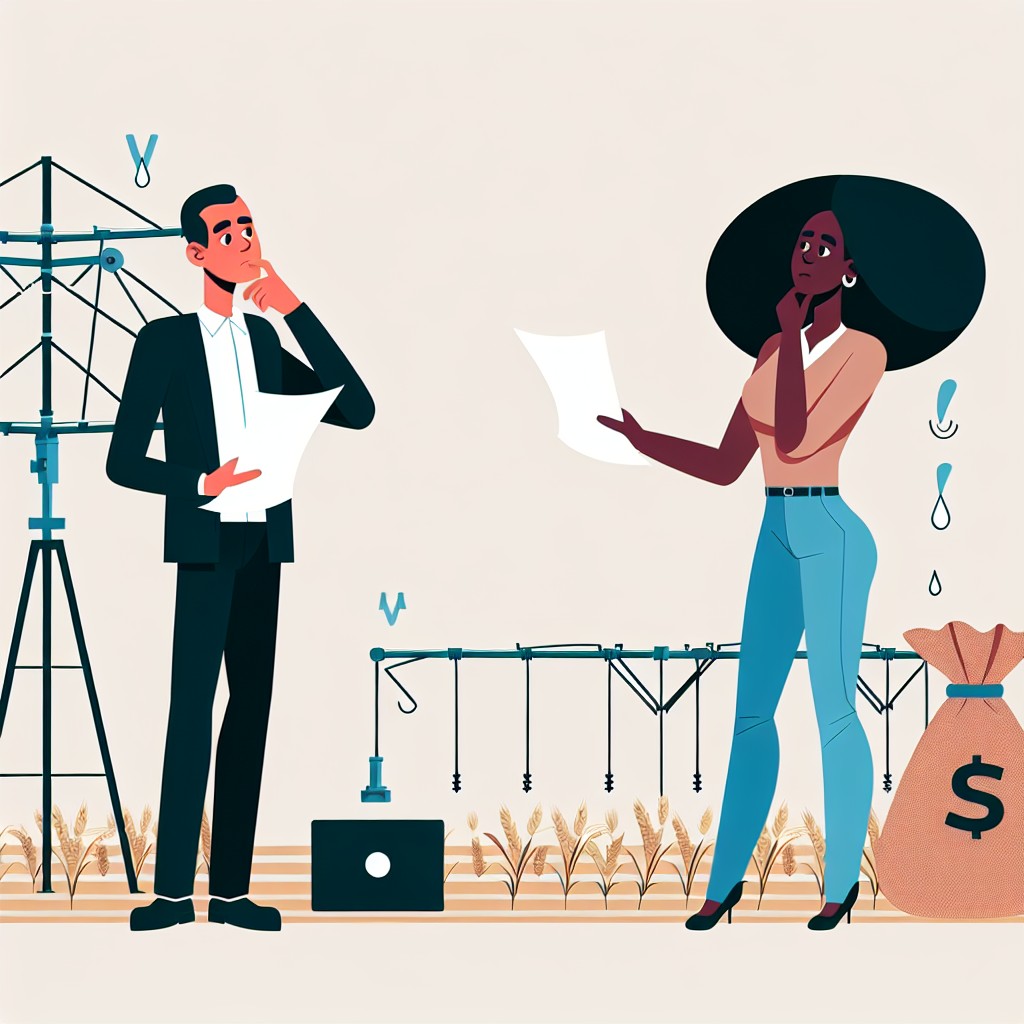
Initial Setup and Maintenance Costs
Financial Considerations for Farmers
Setup Expenses of Drip Irrigation
Farmers invest in drip irrigation face higher upfront costs than most traditional systems.
The expenses mainly stem from purchasing drip lines.
Emitters and filtration units also add to the costs.
Installation requires precise layout design and professional assistance.
For example, Evergreen Valley Farms recently allocated a big portion of their budget to drip system setup.
Despite the cost, drip irrigation offers precise water application.
This can justify the investment effectively.
Setup Expenses of Sprinkler Irrigation
Sprinkler systems generally demand lower initial costs compared to drip irrigation.
The basic equipment includes sprinklers, pipes, pumps, and control valves.
Farmers such as Rivera Agro find sprinklers more affordable to install across large crop areas.
However, larger sprinklers and pumps can increase costs significantly on expansive farms.
Installation tends to be quicker and less technical than drip setups.
Ongoing Maintenance Costs
Drip irrigation requires regular maintenance such as flushing lines.
Farmers replace clogged emitters to keep systems running smoothly.
Farm managers like Carlos Mancini schedule routine checks to avoid blockages.
On the other hand, sprinkler systems need upkeep of nozzles and pipes.
Sometimes repair of mechanical parts is necessary.
Frequent exposure to debris and weather can raise maintenance frequency and costs.
Both systems demand dedicated labor for upkeep.
This impacts operational budgets over time.
Showcase Your Farming Business
Publish your professional farming services profile on our blog for a one-time fee of $200 and reach a dedicated audience of farmers and agribusiness owners.
Publish Your ProfileLong-Term Financial Impact
Though initial costs for drip irrigation are higher, water savings reduce overall expenses.
For instance, Clearwater Orchards reports a 30% reduction in water costs after switching.
Conversely, sprinkler irrigation tends to use more water.
This can increase utility bills over time.
Nonetheless, the lower installation cost makes sprinklers appealing for farms with limited capital.
Farmers must weigh immediate expenses against potential savings when choosing a system.
Additional Costs to Consider
Both irrigation types may require system upgrades to adapt to evolving farm needs.
Technology improvements can lead to replacement of control units or automation devices.
Experts like Maria Leng recommend budgeting for occasional hardware updates.
Training expenses should also be considered for farm staff.
Farm finance advisor David Chen emphasizes factoring these expenses for accurate cost planning.
Ultimately, smart financial planning enhances sustainability and farm productivity alike.
Explore Further: How Climate-Resilient Crops Shape Agricultural Property Values
Environmental Impact
Assessing Risks of Runoff
Drip irrigation delivers water directly to plant roots.
This method significantly reduces runoff risks.
Since water application is targeted, less excess water flows off the field surface.
Consequently, nutrient loss through runoff is minimized.
This protects nearby water bodies from pollution.
On the other hand, sprinkler irrigation sprays water over a larger area.
Therefore, it increases the potential for runoff significantly.
Wind and evaporation further affect sprinkler efficiency.
This causes uneven water distribution across the field.
As a result, runoff may carry fertilizers and pesticides into nearby rivers and streams more easily.
Farmers using sprinkler systems often need additional measures to control off-site water movement.
Evaluating Soil Erosion Risks
Drip irrigation helps maintain stable soil.
It applies low-pressure, slow water delivery to the soil.
This gentle watering method preserves soil structure.
The process prevents surface displacement effectively.
As a result, topsoil stays intact over time.
This maintains soil fertility and supports crop productivity.
Conversely, sprinkler irrigation can contribute to soil erosion.
It applies higher volumes of water quickly to the fields.
Heavy water droplets sometimes dislodge soil particles.
This effect is especially common on sloped farmland.
Moreover, sprinkler runoff can create small gullies.
This happens when fields lack proper contouring or cover crops.
Farmers must adopt soil conservation practices to offset these risks when using sprinklers.
Long-Term Soil Health Considerations
Drip irrigation supports long-term soil health effectively.
It minimizes nutrient leaching and soil compaction.
Its controlled water delivery avoids waterlogging.
Showcase Your Farming Business
Publish your professional farming services profile on our blog for a one-time fee of $200 and reach a dedicated audience of farmers and agribusiness owners.
Publish Your ProfileIt also maintains optimal moisture levels for plants.
Thus, beneficial microbial communities remain active longer.
This activity enhances overall soil quality with time.
In contrast, sprinkler irrigation applies water less precisely.
Overwatering of certain areas often occurs repeatedly.
Such over-irrigation may harm root systems gradually.
It can degrade soil structure if continued for extended periods.
Therefore, drip irrigation presents a more sustainable option.
This option helps preserve soil integrity effectively.
Additional Environmental Benefits
Drip irrigation reduces overall water usage on farms.
This lowers demand on local water resources significantly.
Efficient water use also decreases energy consumption.
Energy savings occur in pumping and water distribution processes.
In turn, this reduction lowers the farm’s carbon footprint.
It also reduces operating costs for agricultural businesses.
Sprinkler systems typically consume more water overall.
This raises extraction pressure on underground aquifers.
Furthermore, evaporation losses with sprinklers are higher.
This wastes valuable water supplies that could be conserved.
Choosing drip irrigation helps American farms maintain environmental stewardship.
For example, farms managed by Evergreen Acres benefit greatly from this practice.
Future Trends in Irrigation
Innovations in Drip Irrigation Technologies
Drip irrigation systems have become increasingly sophisticated in recent years.
Agritech companies like VerdantFlow have developed smart emitters that adapt water delivery based on soil moisture.
These smart emitters reduce water waste by targeting only the root zone efficiently.
Moreover, solar-powered drip systems enable off-grid farms to maintain irrigation sustainably.
Additionally, self-cleaning drip lines prevent clogging and reduce maintenance requirements for farmers.
Emerging materials like biodegradable tubing help minimize environmental impacts from plastic waste.
Furthermore, integrating AI-based monitoring software optimizes irrigation scheduling in real-time.
Consequently, farmers such as Miguel Alvarez in California report higher crop yields with lower water use.
Advancements in Sprinkler Irrigation Systems
Sprinkler irrigation technology also experiences notable innovations aimed at sustainability.
Companies like AquaStream Solutions offer variable-rate irrigation sprinklers that adjust flow depending on crop type.
These sprinklers use low-pressure nozzles designed to reduce wind drift and evaporation losses.
Additionally, incorporating weather sensors allows systems to pause watering during rain events automatically.
Recent developments include mobile pivot systems powered by renewable energy to enhance field coverage.
Moreover, precision sprinkler systems incorporate GPS mapping for zone-specific watering tailored to soil variability.
Farmers such as Lila Hassan in Arizona have reported significant savings in water and energy costs.
Finally, ongoing research focuses on integrating IoT devices to create fully automated and data-driven sprinkler networks.
Cross-Technology Developments Driving Sustainable Practices
Both drip and sprinkler technologies benefit from advances in data analytics and sensor networks.
Innovative startups like TerraSense are pioneering soil nutrient sensors compatible with irrigation controls.
These integrations ensure irrigation matches optimal crop needs while conserving resources.
Showcase Your Farming Business
Publish your professional farming services profile on our blog for a one-time fee of $200 and reach a dedicated audience of farmers and agribusiness owners.
Publish Your ProfileFurthermore, cloud-based platforms offer farmers actionable insights, improving decision-making processes.
Collaborative projects between public institutions and private firms expedite the deployment of these smart systems.
Governments increasingly support subsidies encouraging adoption of water-efficient irrigation technologies.
Consequently, farms worldwide move towards precision irrigation, enhancing sustainability on farmland.
Additional Resources
Role of organic farming for achieving sustainability in agriculture …