




Introduction to Eco-Friendly Farming
Definitions of Eco-Friendly Farming
Eco-friendly farming refers to agricultural practices that prioritize environmental health.
This approach focuses on reducing harmful impacts on ecosystems.
It involves using sustainable methods to grow crops and raise livestock.
Techniques such as organic farming and permaculture are integral to this practice.
Farmers often use renewable resources to minimize environmental damage.
Importance of Eco-Friendly Farming
Eco-friendly farming plays a vital role in conserving natural resources.
It helps maintain soil fertility and protect biodiversity.
This approach also addresses climate change by reducing greenhouse gas emissions.
Moreover, it promotes sustainable food production that supports local economies.
Transitioning to eco-friendly methods can enhance the resilience of agricultural systems.
Benefits for Farmers and Consumers
Farmers benefit from reduced input costs through organic practices.
Additionally, they can access premium markets for organic produce.
Consumers gain health benefits from pesticide-free food options.
Furthermore, they contribute to sustainable agricultural practices by supporting eco-friendly farms.
Ultimately, this approach fosters a healthier food system for everyone.
Transform Your Agribusiness
Unlock your farm's potential with expert advice tailored to your needs. Get actionable steps that drive real results.
Get StartedUnderstanding Biomass Types and Sources Suitable for Farming
Introduction to Biomass
Biomass refers to organic material derived from living organisms.
This includes plant materials, waste products, and animal manure.
Furthermore, it can be a sustainable source of energy and fertilizer.
Farmers increasingly rely on biomass for eco-friendly practices.
Types of Biomass in Agriculture
Different types of biomass serve various agricultural needs.
Common categories include crop residues, forestry products, and livestock waste.
Crop Residues
Crop residues consist of leftover materials from harvested crops.
Examples include straw, stalks, and leaves.
These materials can improve soil quality when returned to the ground.
Forestry Products
Forestry products come from managed timberland and forest biomass.
Wood chips and sawdust are often used as organic matter.
These products can enhance soil structure and provide nutrients.
Animal Manure
Animal manure is nutrient-rich and beneficial for crops.
It can be composted or processed into biofuel.
As a result, it reduces waste and supports sustainable farming.
Sources of Biomass
Farmers can obtain biomass from various sources.
These sources often include local farms, agricultural cooperatives, and biomass companies.
Local Farms
Local farms generate large amounts of biomass from their operations.
Collaboration with nearby farms can lead to effective resource sharing.
This practice not only benefits the farms but also the environment.
Agricultural Cooperatives
Agricultural cooperatives can be a rich source of biomass materials.
They often collect and distribute biomass among their members.
This network promotes sustainable farming practices.
Biomass Companies
Biomass companies specialize in processing organic materials.
Showcase Your Farming Business
Publish your professional farming services profile on our blog for a one-time fee of $200 and reach a dedicated audience of farmers and agribusiness owners.
Publish Your ProfileThey provide farmers with ready-to-use biomass products.
Additionally, these companies offer expertise in sustainable practices.
Benefits of Using Biomass in Farming
Using biomass in farming offers numerous advantages.
It can improve soil health, enhance crop production, and reduce emissions.
This eco-friendly approach aligns with sustainable agriculture goals.
The Role of Renewable Fuels in Sustainable Agriculture
Understanding Renewable Fuels
Renewable fuels are derived from natural processes that replenish quickly.
Examples include biofuels, wind energy, and solar power.
These fuels benefit the environment significantly.
Advantages of Using Renewable Fuels
They reduce dependency on fossil fuels.
Renewable fuels also lower greenhouse gas emissions.
Using renewable fuels enhances energy security.
Farmers can produce energy on-site to minimize transportation costs.
Integration with Biomass
Biomass serves as an excellent feedstock for renewable energy production.
It includes plant materials, agricultural residues, and animal waste.
Farmers convert these materials into biofuels like biodiesel and ethanol.
This process also reduces waste disposal issues.
Examples of Renewable Fuel Adoption on Farms
Many farms have effectively adopted renewable fuel technologies.
For example, the Sunnyfield Farm uses solar panels to generate electricity.
Another case is Pine Ridge Organic Farm, which converts biomass into biogas.
These examples demonstrate how renewable fuels support sustainable agriculture.
Future Developments in Renewable Fuels for Agriculture
The future looks promising for renewable fuels in agriculture.
Technological advancements will improve energy efficiency.
Additionally, government support encourages sustainable energy use.
Farmers are expected to lead efforts toward greener practices.
You Might Also Like: Sustainable Irrigation Practices for Reducing Farm Operating Costs
Comparative Analysis: Traditional vs. Biomass-Based Farming
Overview of Traditional Farming
Traditional farming primarily relies on chemical fertilizers and pesticides.
This method harms soil health and biodiversity over time.
Farmers often face high input costs because of chemical dependency.
Additionally, traditional methods contribute to greenhouse gas emissions.
Defining Biomass-Based Farming
Biomass-based farming uses organic materials for energy and nutrients.
This approach enhances soil fertility and reduces chemical reliance.
It promotes sustainability through recycling agricultural waste.
Moreover, biomass farming effectively integrates renewable fuel technologies.
Environmental Impact Comparison
Traditional farming often causes soil degradation and erosion.
Biomass farming, in contrast, improves soil structure and health.
This method supports carbon sequestration, reducing atmospheric CO2.
Ultimately, biomass-based practices lower environmental footprints significantly.
Economic Considerations in Farming Methods
Traditional farming incurs substantial ongoing costs for inputs.
Farmers may encounter fluctuating prices for fertilizers and pesticides.
Biomass farming reduces costs by using locally sourced organic materials.
Showcase Your Farming Business
Publish your professional farming services profile on our blog for a one-time fee of $200 and reach a dedicated audience of farmers and agribusiness owners.
Publish Your ProfileAdditionally, it offers opportunities for energy generation and sales.
Supporting Economic Growth in Local Communities
Traditional farming sometimes overlooks local economic development.
Conversely, biomass farming fosters job creation in renewable sectors.
Communities enjoy enhanced local markets for organic products.
Such practices also promote food sovereignty and resilience.
Advancing Long-Term Agricultural Sustainability
Traditional farming struggles with sustainability due to chemical reliance.
Biomass-based farming supports regenerative practices for future generations.
This approach encourages biodiversity and improves ecosystem services.
Ultimately, it aligns agriculture with climate goals effectively.
Gain More Insights: The Future of Renewable Energy in American Agriculture
Benefits of Eco-Friendly Farming Practices for Soil Health
Enhancing Soil Fertility
Eco-friendly farming practices boost soil fertility effectively.
These methods incorporate organic materials that enrich the soil.
Using biomass as fertilizer increases nutrient content significantly.
Additionally, crop rotation prevents nutrient depletion.
Improving Soil Structure
Such practices enhance the soil structure remarkably.
The use of cover crops prevents soil erosion.
Moreover, organic matter improves soil aeration and drainage.
Boosting Microbial Activity
Eco-friendly techniques stimulate microbial activity in the soil.
A vibrant microbial community is vital for soil health.
These microorganisms help decompose organic matter efficiently.
Furthermore, they enhance nutrient cycling, benefiting plant growth.
Reducing Soil Contaminants
Practicing eco-friendly farming reduces soil contaminants effectively.
By minimizing chemical fertilizers and pesticides, soil quality improves.
This reduction protects beneficial microorganisms and enhances biodiversity.
Supporting Sustainable Water Management
Eco-friendly farming contributes to effective water management.
Healthy soils retain moisture better, reducing irrigation needs.
Additionally, they prevent runoff, protecting nearby water sources.
Promoting Climate Resilience in Soil
These practices lead to soils that are more resilient to climate change.
Healthy soils can better withstand droughts and floods.
Furthermore, soil carbon storage helps mitigate greenhouse gas emissions.
Learn More: How Community-Supported Agriculture Enhances Soil Health and Biodiversity
Innovative Technologies Utilizing Biomass in Farming Operations
Introduction to Biomass Farming
Biomass farming effectively harnesses organic materials for energy and resources.
This practice reduces waste and enhances sustainability in agricultural operations.
Farmers increasingly embrace biomass as a renewable resource for diverse applications.
In this section, we explore innovative technologies advancing biomass use in farming.
Biomass Conversion Technologies
There are several advanced technologies for converting biomass into usable energy.
These processes include anaerobic digestion, gasification, and pyrolysis.
Each method offers unique benefits and applications for farming operations.
For instance, anaerobic digestion produces biogas from organic waste materials.
Farmers can utilize this biogas for heating and electricity generation.
Showcase Your Farming Business
Publish your professional farming services profile on our blog for a one-time fee of $200 and reach a dedicated audience of farmers and agribusiness owners.
Publish Your ProfileAnaerobic Digestion
Anaerobic digestion is a well-established process in modern farming.
This technology breaks down organic materials without oxygen, producing biogas.
Additionally, the process generates nutrient-rich digestate for soil amendment.
Farmers can reduce waste while enhancing soil health simultaneously.
Gasification
Gasification converts biomass into syngas through high-temperature processes.
Syngas can be used for electricity generation or converted into biofuels.
This method allows farmers to utilize a variety of feedstocks, including wood and agricultural residues.
Pyrolysis
Pyrolysis involves heating biomass in the absence of oxygen to produce biochar and oils.
Biochar serves as an effective soil amendment, improving soil structure and fertility.
Moreover, the oils can be upgraded into renewable hydrocarbon fuels.
Biofuels for Agricultural Equipment
Farmers increasingly turn to biofuels to power machinery and vehicles.
Biodiesel, made from vegetable oils and animal fats, reduces reliance on fossil fuels.
This alternative fuel significantly lowers greenhouse gas emissions.
Additionally, bioethanol can be blended with gasoline for farm equipment.
Benefits of Biofuels
- Reduction of carbon footprint through sustainable energy sources.
- Support for local economies by utilizing regionally sourced feedstocks.
- Improved energy security for agricultural operations.
Case Studies Demonstrating Biomass Applications
Numerous farms worldwide successfully implement biomass solutions.
For example, Green Fields Ranch utilizes anaerobic digestion to manage waste.
This practice generates energy and provides fertilization benefits.
Similarly, Silver Creek Farm employs gasification to convert crop residues into energy.
Collaborations Enhancing Biomass Technology
Collaborations between farmers and technology providers enhance biomass utilization.
These partnerships drive innovation and improve efficiency.
For instance, GreenTech Solutions offers advanced biomass energy systems.
Emerging Trends and Future Directions in Biomass Farming
The prospects for biomass farming continue to grow across the globe.
Investments in research and development pave the way for innovative solutions.
As technology advances, the efficiency and effectiveness of biomass systems improve.
Farmers will increasingly leverage these innovations for sustainable operations.
Uncover the Details: Renewable Resource Utilization to Reduce Chemical Dependence
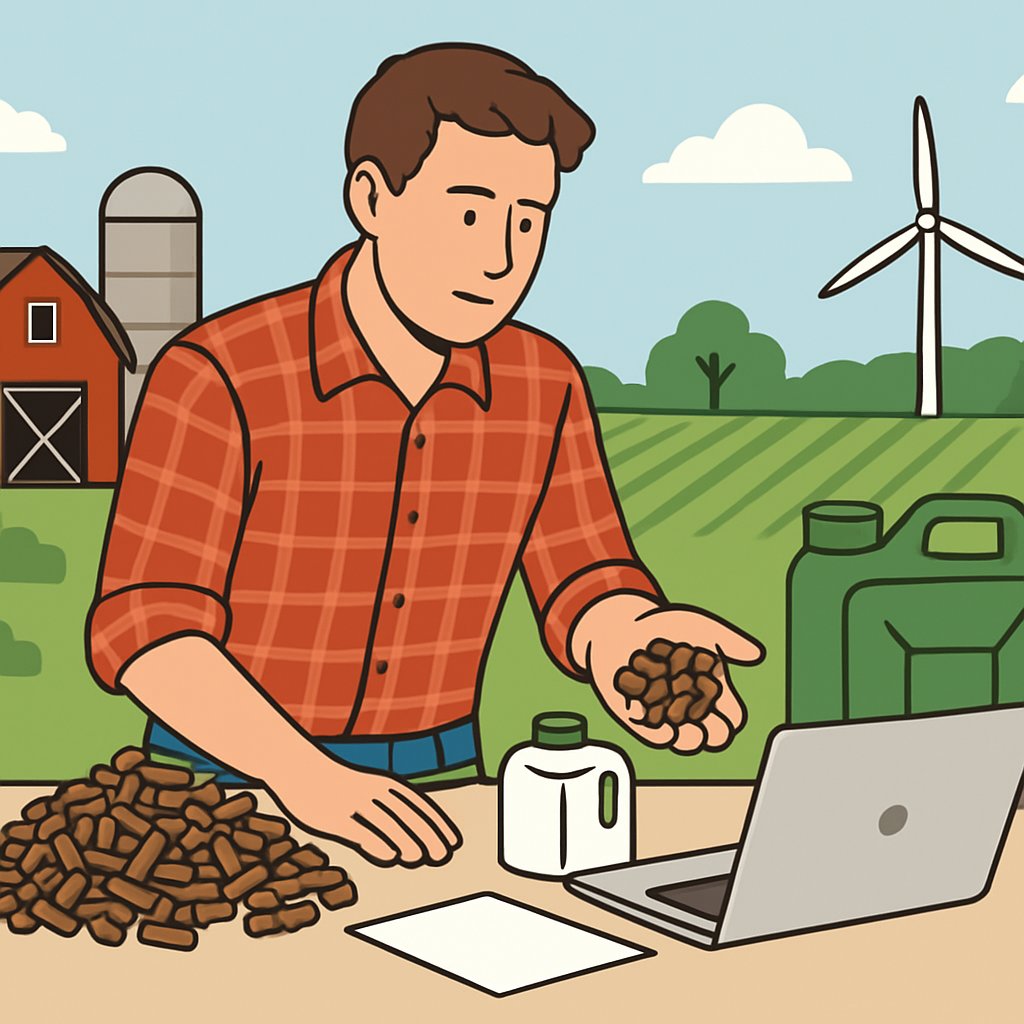
Case Studies: Successful Implementations of Biomass and Renewable Fuels
Innovative Practices at Green Valley Farms
Green Valley Farms successfully integrates biomass energy solutions into their operations.
They utilize agricultural waste to power their machinery.
This approach reduces waste while lowering energy costs.
Moreover, the farm has seen increased crop yields as a result.
They also contribute to local energy needs by supplying surplus energy back to the grid.
Eco-Friendly Initiatives at Sunshine Dairy
Sunshine Dairy adopted innovative renewable fuel technologies in their production processes.
Their use of anaerobic digesters converts manure into biogas.
This biogas powers their transportation fleet and processing equipment.
As a result, the dairy has significantly reduced its carbon footprint.
The initiative also creates a sustainable waste management solution.
Partnership Success at Terra Agro Solutions
Terra Agro Solutions collaborates with local farmers to implement biomass heating systems.
They promote the use of sustainable wood pellets for heating greenhouses.
This initiative helps reduce reliance on fossil fuels for heating needs.
The partnership has improved crop resilience during colder months.
Showcase Your Farming Business
Publish your professional farming services profile on our blog for a one-time fee of $200 and reach a dedicated audience of farmers and agribusiness owners.
Publish Your ProfileFarmers benefit from both cost savings and eco-friendly practices.
Community Engagement at Hilltop Organic Farms
Hilltop Organic Farms actively involves the community in their sustainable practices.
They host workshops on producing biofuels from waste materials.
This initiative educates locals on the benefits of biomass energy.
Furthermore, participants learn to create sustainable energy solutions for their households.
The result is a more informed community committed to eco-friendly practices.
Challenges and Limitations in Adopting Biomass for Farming
Economic Barriers
Adopting biomass for farming often comes with high upfront costs.
Farmers may find it difficult to invest in new technologies.
Furthermore, the financial return on investment can be uncertain.
Many farmers face constraints in accessing funding for biomass initiatives.
Technical Limitations
Implementing biomass solutions requires technical expertise.
Farmers may lack the necessary knowledge for effective biomass utilization.
Additionally, technology for biomass processing can be complex and costly.
Maintenance of biomass systems often demands skilled labor.
Logistical Challenges
Transporting biomass materials can be inefficient and costly.
Farmers may struggle with storage facilities for biomass products.
Moreover, the seasonality of biomass availability complicates planning.
Regulatory Hurdles
Adopting biomass often requires navigating complex regulations.
Farmers may encounter strict compliance requirements imposed by governments.
These regulations can vary significantly between regions.
Perception and Education
Many farmers remain skeptical about the benefits of biomass.
Education on biomass potential is often lacking in farming communities.
As a result, resistance to change can hinder adoption efforts.
Additionally, misconceptions about biomass sustainability persist.
Future Trends: The Potential of Biomass in Enhancing Food Security
Understanding Biomass
Biomass refers to organic material derived from plants and animals.
This renewable resource can produce energy, fuel, and food.
Additionally, it contributes to sustainable farming practices.
Benefits of Biomass for Food Security
Biomass can enhance food security through several means.
It provides renewable energy for agricultural operations.
Consequently, this reduces dependence on fossil fuels.
Moreover, it helps in improving soil fertility and crop productivity.
Innovative Biomass Applications
Farmers can utilize biomass in various innovative ways.
Composting biomass creates nutrient-rich fertilizers.
These fertilizers improve soil health and crop yields.
- Biofuels can power farming equipment.
- Biogas systems can convert waste into valuable energy.
Challenges in Biomass Utilization
Despite its benefits, several challenges arise with biomass use.
One major issue is the competition for land.
This could affect food crop production.
Additionally, managing biomass resources requires significant investment.
Moreover, understanding local climatic conditions is crucial.
Prospects for Biomass in Sustainable Agriculture
The future of biomass in agriculture looks promising.
Showcase Your Farming Business
Publish your professional farming services profile on our blog for a one-time fee of $200 and reach a dedicated audience of farmers and agribusiness owners.
Publish Your ProfileGrowing awareness of sustainable practices fuels interest.
Innovations in technology may lead to more efficient biomass use.
Farmers and researchers must collaborate to unlock its potential.
Ultimately, this synergy can enhance global food security sustainably.
Additional Resources
Renewable energy as an alternative source for energy management …
Role of organic farming for achieving sustainability in agriculture